

Repair
Perimeter drainage repair
Spot repair, one side or full renewal, scoped from camera footage of your drain tile and the age of the pipe around it.
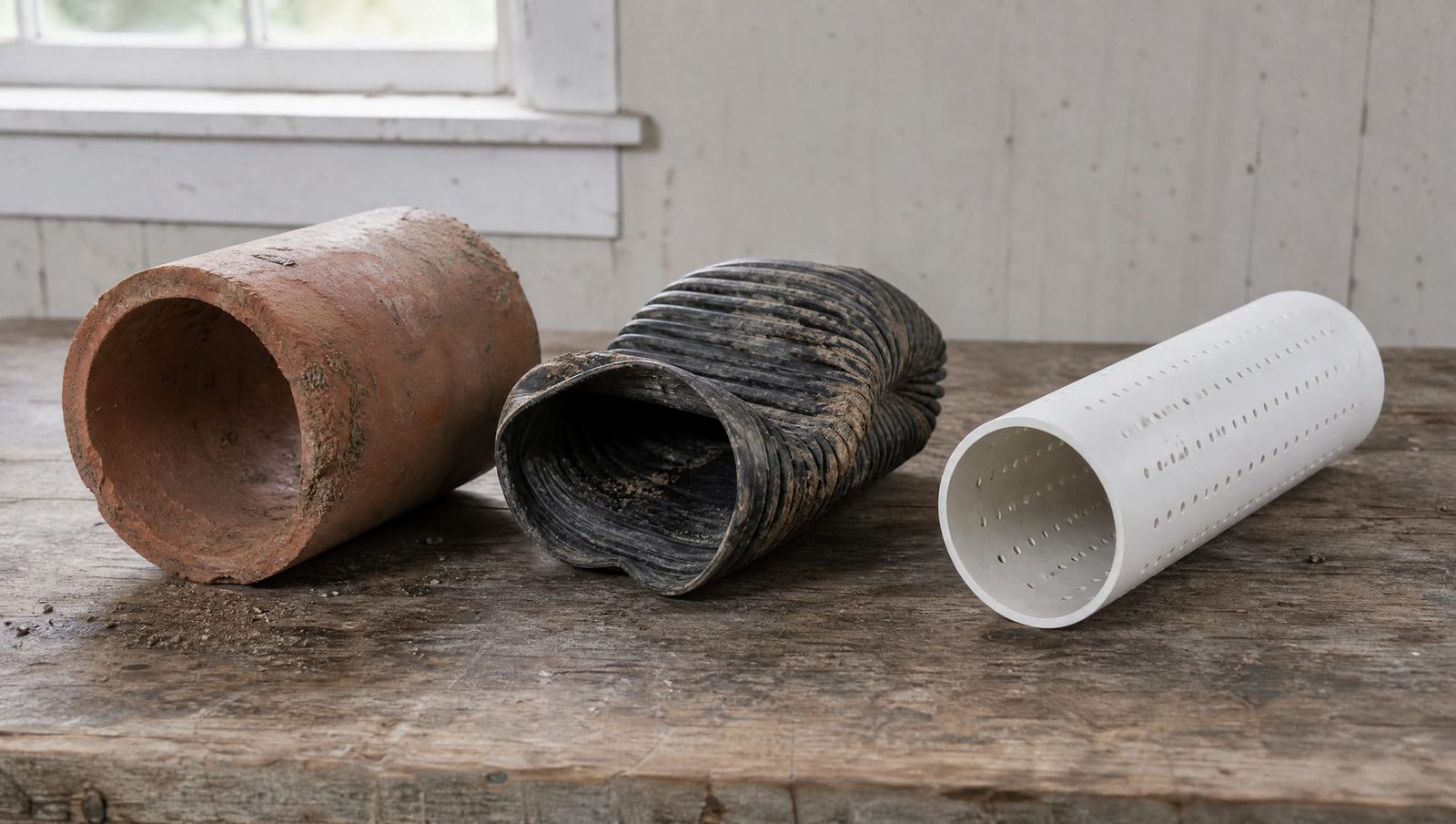
Homes built between 1907 and the late 1970s usually have clay or concrete drain tile, homes from the 1980s and into the 1990s often have corrugated Big-O pipe, and anything installed since the 1990s is typically rigid PVC. The material tells you how old the system is, how it likely fails, and whether repair or replacement makes sense.
By the Drainage Pro team Published Updated
This guide compares the three drain tile (also called drainage tile) materials found under Greater Vancouver homes. For a primer on what the whole system does, see what a perimeter drain is and how it works.
Homes built from 1907 until the late 1970s usually have clay or concrete drain tile. Homes from the 1980s and into the 1990s were commonly fitted with corrugated black plastic pipe, sold under the trade name Big-O, until rigid perforated PVC was introduced. Homes built since then almost always have rigid PVC.
Build year is a starting point, not proof. Renovations, additions and partial repairs mean a house can have more than one system underground, or a newer pipe tied into an older run.
A camera inspection shows the material directly. Clay and concrete sections look like short, dull-coloured pipe lengths with a visible gap at each joint. Big-O looks black and ribbed on the inside, closer to corrugated cardboard in profile than a smooth pipe. PVC is smooth, white or grey, with fitted joints instead of open gaps.
A cleanout or sump pit sometimes exposes a section of pipe, and the material, colour and joint style are visible by eye. If it looks clay-coloured and jointed, or black and ribbed, book a camera pipe inspection to check the rest of the run before assuming it all matches.
Clay and concrete drain tile is the oldest system still found under North Shore and Vancouver homes. It was installed in short, butt-jointed sections laid end to end around the footing, with a small gap left at each joint.
That gap is by design, not a defect. Older drain tile relied on open joints to let groundwater weep into the pipe, which is where the term weeping tile comes from (our guide to weeping tile, perimeter drain and French drain terms sorts out the other names). The same gap that lets water in also lets in fine roots, soil and sediment over time.
Common failures include root intrusion at the joints, sediment build-up that narrows the pipe, and cracked or offset sections from decades of soil movement; clay is brittle enough to crack with little warning.
Clay and concrete tile has an expected service life of 50 to 60 years. A home built in 1965 with its original system is now past that mark. Age alone does not mean total failure, but it does mean the system should be camera-inspected rather than assumed sound.
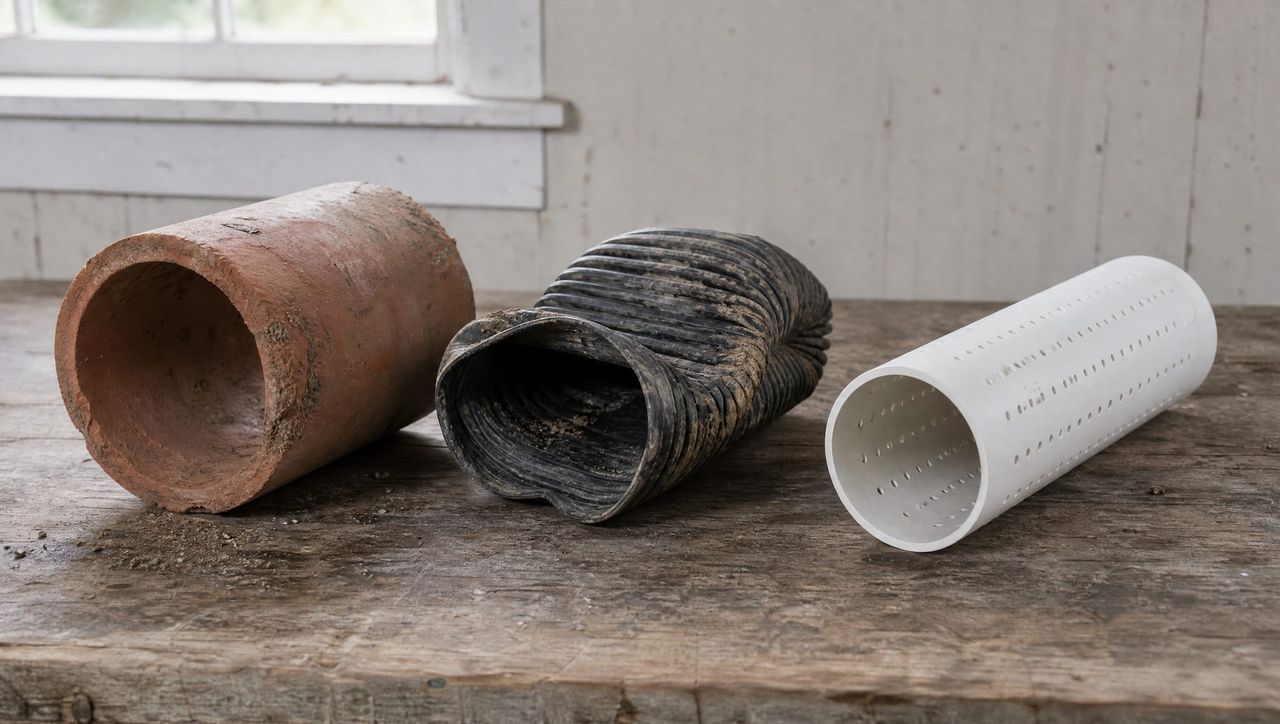
Big-O is the trade name for corrugated black polyethylene drain pipe, and it became the standard choice through the 1980s and into the 1990s because it was cheaper and faster to install than rigid clay sections.
The same ribbed wall that made it flexible also traps sediment and fine debris in the corrugations, which is harder to flush out than a smooth-walled pipe. Older installations often used a fabric filter sock around the pipe, and that sock can clog or fail with age.
Corrugated pipe is also softer than clay or PVC. Under the weight of decades of backfill and soil movement, sections can deform, flatten or crush, especially where compaction was poor at installation. A deformed section restricts flow even if it has not fully collapsed.
On camera, Big-O is easy to identify: black, ribbed and slightly flexible-looking on screen, with sediment often sitting visibly in the low points between the ribs.
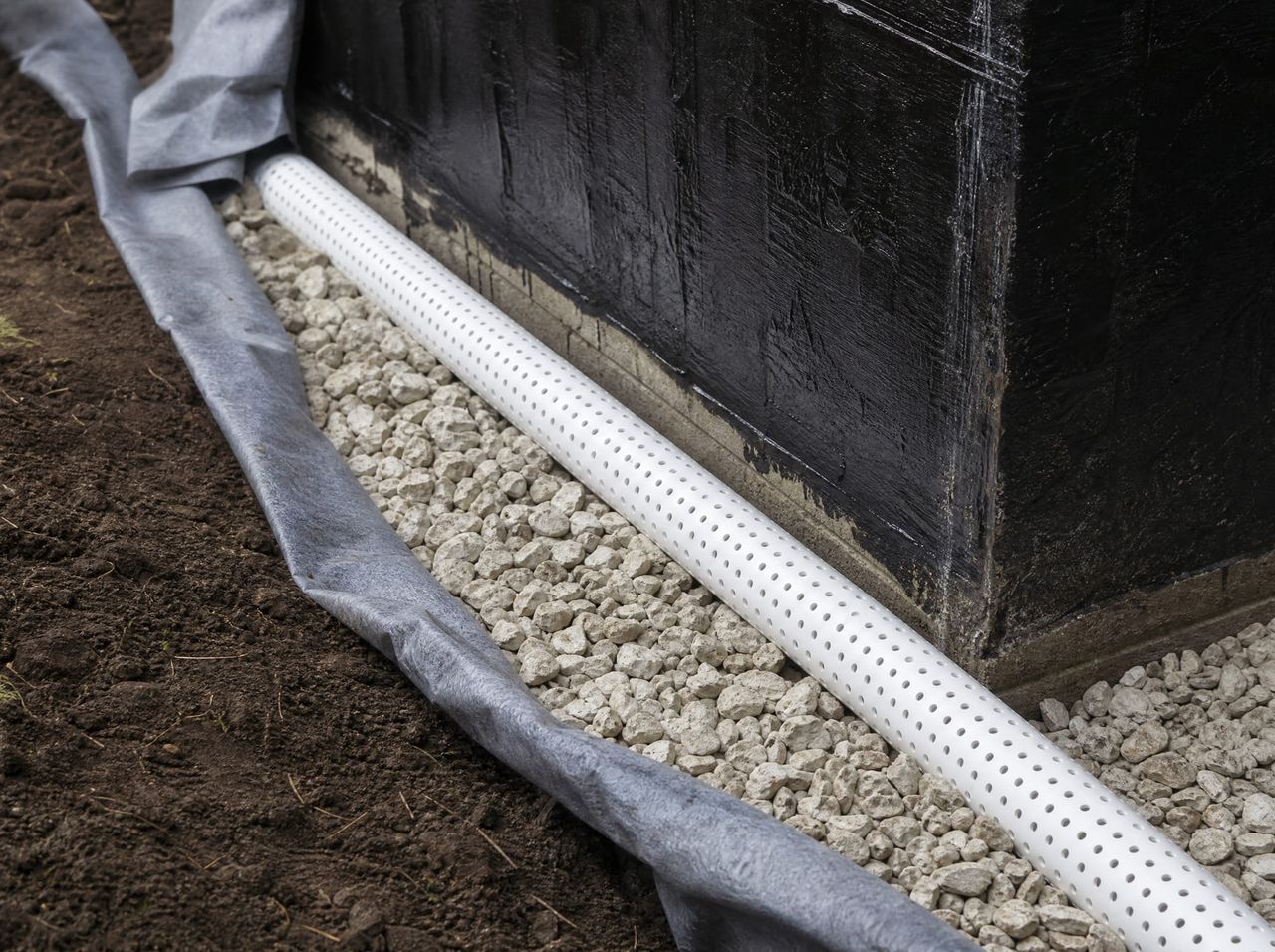
Rigid perforated PVC, what most people mean by a modern PVC perimeter drain, has been the standard drain tile material since the 1990s. The pipe is smooth-walled inside and out, with holes sized to let groundwater in while resisting the sediment build-up that troubles older systems.
Sections join with fittings rather than open butt joints, and PVC resists root intrusion far better than clay or Big-O, which is one reason it is the modern standard.
PVC also holds its shape under load, which means it stays cleaner and is easier to flush with hydro jetting equipment when maintenance is needed. Under the BC Building Code's drainage requirements (Articles 9.14.3.1, 9.14.3.2 and 9.14.5.1), foundation drain pipe must be at least 100 mm in diameter and must drain to a sewer, ditch or dry well, and plastic pipe is explicitly recognized as an acceptable material alongside clay and concrete.
Installed correctly, with the right slope, drain rock, filter fabric and accessible cleanouts, a PVC system stays serviceable for decades rather than being a one-time install you forget about.
| Era | Material | Joints | Typical failures | Camera clues | Expected life | Repairability |
|---|---|---|---|---|---|---|
| 1907 to the late 1970s | Clay or concrete tile | Butt-jointed, open gaps | Root intrusion, cracking, offset joints, sediment | Dull, short segmented sections with visible gaps | 50 to 60 years | Repairable early; usually cheaper to replace once failures multiply |
| 1980s into the 1990s | Corrugated polyethylene (Big-O) | Continuous corrugated pipe with fittings at bends | Sediment trapped in ribs, deformation, crushing, filter sock failure | Black, ribbed interior with sediment sitting in the corrugations | Depends on installation and soil | Repairable; ribbed wall limits cleaning |
| 1990s to present | Rigid perforated PVC | Joined with fittings, no open butt joints | Rare when installed correctly | Smooth white or grey wall with clean joints | Decades, designed for long-term service | Easiest to repair, clean and camera-inspect |
Joint style and wall texture predict how a system fails and how it can be serviced; a camera inspection turns that pattern into an answer for your house.
Big-O's ribbed wall holds sediment in the corrugations, which is harder to flush out, and clay tile's open joints let fine roots, soil and sediment in over time.
Sometimes. A single cracked section, a localized root intrusion or an isolated blockage in an otherwise sound system can often be repaired without touching the rest of the run. Drain tile repair fits when the failure is contained and the surrounding pipe tests clean on camera.
Replacement becomes the more economical choice once a system has multiple failure points. Repairing one section at a time on a system already near 50 to 60 years old often means returning to fix the next section within a few years. At that point, a full perimeter drainage replacement resets the clock instead of chasing repeated repairs.
The camera footage is what makes this a decision rather than a guess. If you are already seeing signs your perimeter drains are failing, one bad joint in an otherwise intact system points toward a repair, while sediment, root intrusion and deformation at several points signal replacement.
Replacing an old clay or Big-O system with rigid PVC means excavating along the foundation, removing the old pipe and, where the wall needs it, addressing the waterproofing membrane while the trench is already open.
The new pipe is laid on compacted soil, wrapped in washed drain rock and filter fabric to keep soil out long-term, and fitted with cleanouts so future inspections and flushing do not require digging. Backfill, compaction and landscape reinstatement finish the job. For typical cost factors, see our guide to perimeter drain replacement cost in Vancouver.
A full replacement carries our 10-year workmanship warranty, a sectional replacement 5 years and a spot repair 2 years, all in writing. The exact terms are in your contract.
A camera inspection is the only reliable way to confirm which system you have, since the clues at a cleanout or sump only show one point in a much longer run.
Book a camera pipe inspection if your home was built before 1990 and has never been inspected, if you notice early warning signs such as a musty basement smell or damp foundation walls, or if you are buying and want to know what is underground before removing subjects.
For homes in North Vancouver, a camera inspection is usually the fastest way to settle the question. Book an inspection whenever you are ready to find out.
Tell us the address and what you're seeing — a backup, a wet wall, a smell, a sinking lawn. We'll tell you what the next step is and what it costs, before anyone digs. Not sure yet? Ask us a question first.
Filed under: drain tile, materials
Rigid PVC. Its smooth wall is the easiest to flush with hydro jetting equipment and the easiest for a camera to read. Big-O's ribbed wall holds sediment in the corrugations, which is harder to flush out, and clay tile's open joints let fine roots, soil and sediment in over time.
Clay and concrete drain tile was built to last for decades, but much of what sits under older Greater Vancouver homes is now at or past its expected service life. That is why a camera inspection matters more than the calendar alone for deciding whether to repair or replace it.
Big-O is the trade name for corrugated black polyethylene drain pipe, common through the 1980s and into the 1990s. Its ribbed interior traps sediment more easily than a smooth-walled pipe, and the material can deform or crush under decades of soil load, both of which reduce flow over time.
Rigid PVC has a smooth interior that resists sediment build-up, joins with fittings instead of open butt joints, and holds its shape under load. Those properties are why it has been the standard drain tile material since the 1990s.
Sometimes. A visible section at a cleanout or sump pit can show the material, colour and joint style by eye. For a full picture of the whole run, a camera pipe inspection is the only reliable way to confirm the material and condition without digging.
Repair
Spot repair, one side or full renewal, scoped from camera footage of your drain tile and the age of the pipe around it.
Inspect
HD video of what is inside your drain and sewer lines, with faults located from the surface, so repairs start from evidence.
More guides from the crew that does the digging
Browse all drainage guidesTalk to the crew
Mon–Fri 7:30am–5pm · Sat–Sun 8am–5pm
Water where it should not be? A person answers, not a call centre. Photos by text tell us the most.
Call (604) 210-3892 Fastest way to reach us Text us Send photos of the wet spot