

Maintain
Vacuum truck services
Suction from the surface for full sumps, flooded pits and silted lines, with the material taken away rather than flushed downstream.
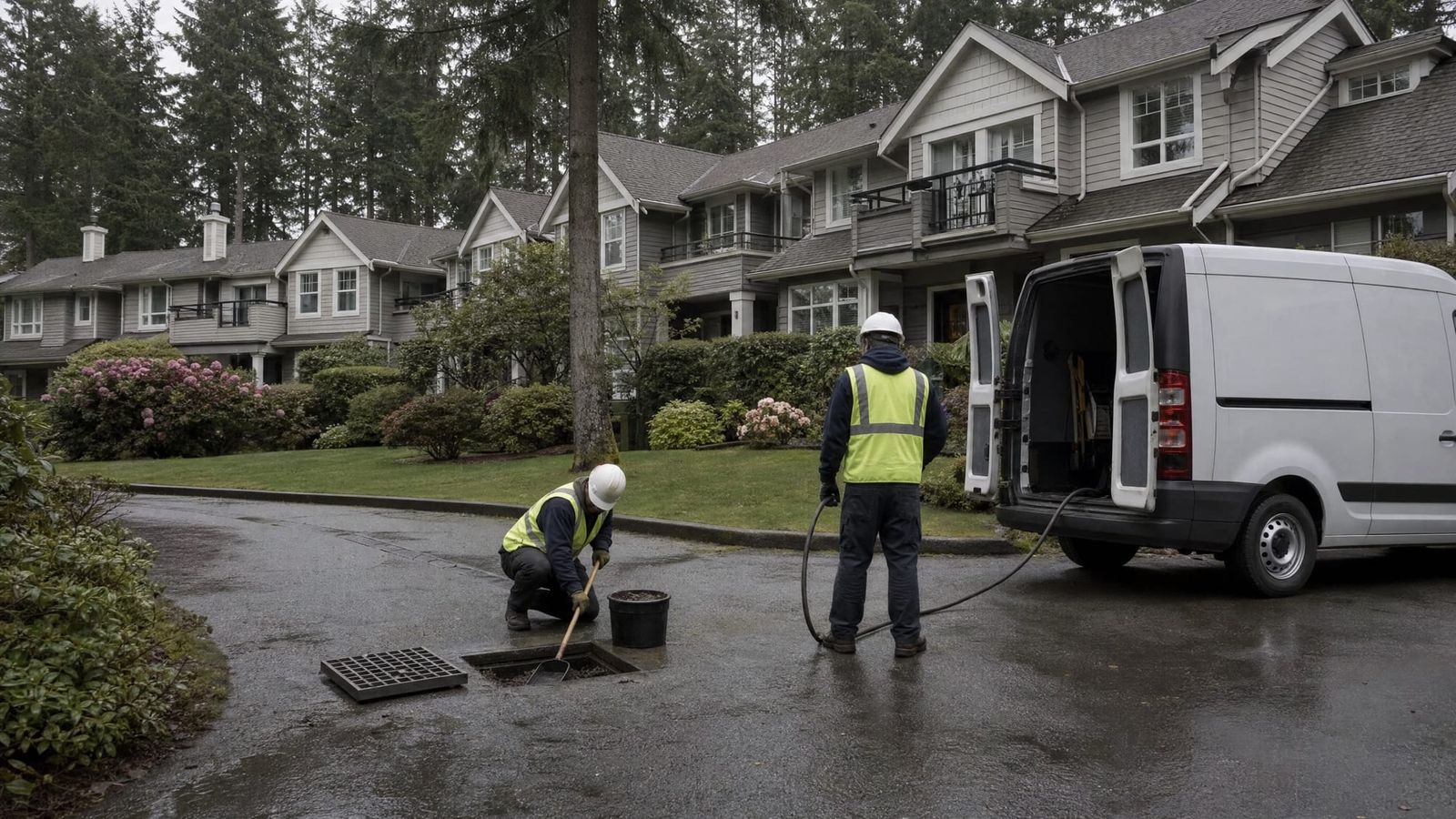
A strata maintenance program puts a strata corporation's shared drainage on one schedule: catch basins, trench drains, sump pumps, and the perimeter and storm runs still worth maintaining. We scope it from a condition assessment, run it through one point of contact, and write up each year in a record council can use for budgets and the depreciation report.
Maintenance does not save a pipe that is already failing. A run with separated joints or a settled bed will need repair, and flushing it on a schedule changes little. What a program protects is the rest of the site: the basins, drains, pumps and runs that rate as sound today and stay sound if the silt and roots are kept down. These are the failures a scheduled visit is built to catch.
Runs rated for repair are named in the program agreement and left off the maintenance schedule. Council still has to budget for them, as repair projects with their own dates.
None of these means the drainage has failed. Each one means nobody is tracking it.
Two complexes of the same age and size can need different programs, because their condition ratings and catchments differ. The scope, and so the price, follows from a short list of facts about the site:
Council gets the scope and price in writing before work starts.
Covered by our Built Better Warranty.
See details of the Built Better WarrantyUnder the Strata Property Act, a strata corporation must repair and maintain its common property and common assets. Its bylaws can make owners responsible for some limited common property, but drainage shared by the whole site usually stays with the corporation.
The province adds a second duty: a depreciation report on a fixed cycle. How drainage evidence feeds that report is set out on our strata drainage assessment page. A buried pipe is hard to judge by eye, so between reports a yearly drainage record gives whoever prepares the next one dated, measured condition to work from. We supply the drainage data; we do not prepare the report.
The BC Building Code 2024, Article 9.14.6.4, calls for a catch basin wherever runoff from a driveway is likely to collect or run into a garage. On a townhouse site with a shared driveway, those basins are usually common property, so keeping them working falls to council.
The City of Burnaby's foundation and surface drainage guide is written for Burnaby, but its two-pipe layout names the parts a program looks after on a house or townhouse site. Across North Vancouver, West Vancouver, Vancouver and Burnaby, the pipe under one complex can be older clay tile, early-generation plastic drain tile or modern PVC, sometimes more than one of them.
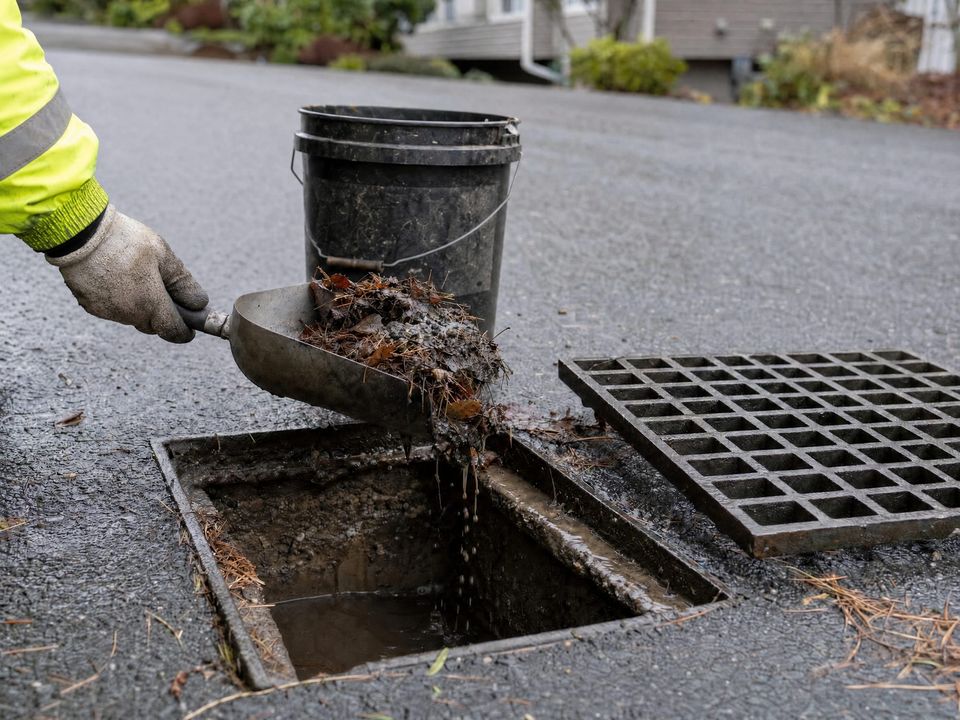
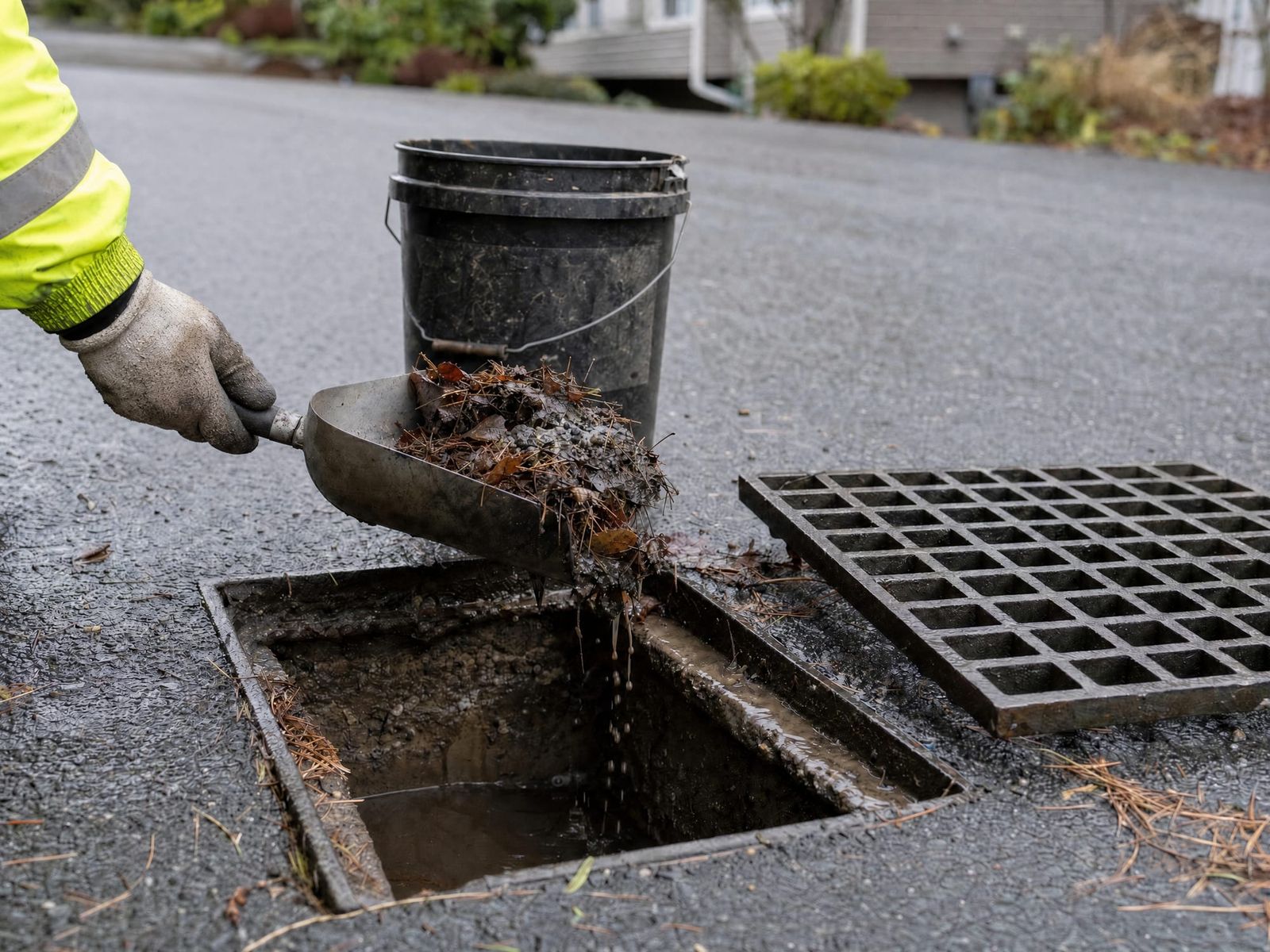
A program covers the parts of the site the condition ratings say are worth looking after. Depending on the site, a year includes some or all of these:
A program year can include checking downspout connections, keeping the cleanout inventory current and walking surface water where units have complained.
Excavation is scoped and quoted as a separate project, not covered by the program. So are the runs on the repair list. Before council signs any program proposal, ours included, ask which runs it leaves out and why.
Councils turn over and managers change, so the record is written for council. The yearly program record belongs to the strata corporation. A program year runs in five steps:
Each year's record sits beside the last, so council can answer an owner who asks why the drainage line in the budget is what it is.
Already on a program with someone else? Send us the agreement and last year's report, and we will tell you whether the scope matches the site's condition.
A program is scheduled work, not an emergency service. If water is coming in now, call or text (604) 210-3892. To start a program, send us the site details: the building count, roughly how many chambers, and whether council holds a drainage assessment or a depreciation report. Drainage Pro scopes the year from there.
Maintain
Suction from the surface for full sumps, flooded pits and silted lines, with the material taken away rather than flushed downstream.
Maintain
Your drain runs filmed every year and set beside last year's footage, so slow change shows up while it is still a finding, not a failure.
Inspect
Condition-rated drainage reports for strata councils and property managers, with footage or a site observation behind every rating.
Related reading
Guide ·
A perimeter drain collects groundwater at the footing and carries it away from the foundation. How it works, how deep it sits, and where the water goes.
Yes, and a recent one. A program is scoped from condition ratings, so without them nobody can say which runs are worth maintaining and which are already past it. We scope a program from a recent drainage assessment by another firm when it is usable.
Yes, where the condition ratings support it. If the perimeter drains rate well, a program covering only the catch basins and sump pumps can be the right scope rather than a reduced one.
The strata corporation. Under the Strata Property Act it must repair and maintain common property and common assets, although its bylaws can make an owner responsible for some limited common property. A program is one way council meets that duty for the drainage everyone shares.
Between depreciation reports, a yearly record shows whether the drainage is holding its condition or slipping, with dates and measurements, so the next report starts from measured condition rather than an age estimate. We supply the drainage data; a member of a designated profession prepares the report.
The yearly program record belongs to the strata corporation. A new manager starts with the full file: the schedule, the runs left off it for repair, and each year's findings.
No. Excavation is scoped and quoted as a separate project, not covered by the program. Runs on the repair list are budgeted the same way, as repair projects with their own dates. Before council signs any program proposal, ours included, ask which runs it leaves out and why.
Reviewed
Tell us the address and what you're seeing — a backup, a wet wall, a smell, a sinking lawn. We'll tell you what the next step is and what it costs, before anyone digs. Not sure yet? Ask us a question first.
Talk to the crew
Mon–Fri 7:30am–5pm · Sat–Sun 8am–5pm
Water where it should not be? A person answers, not a call centre. Photos by text tell us the most.
Call (604) 210-3892 Fastest way to reach us Text us Send photos of the wet spot