

Inspect · Drainage services Buy the house. Not the drainage bill.
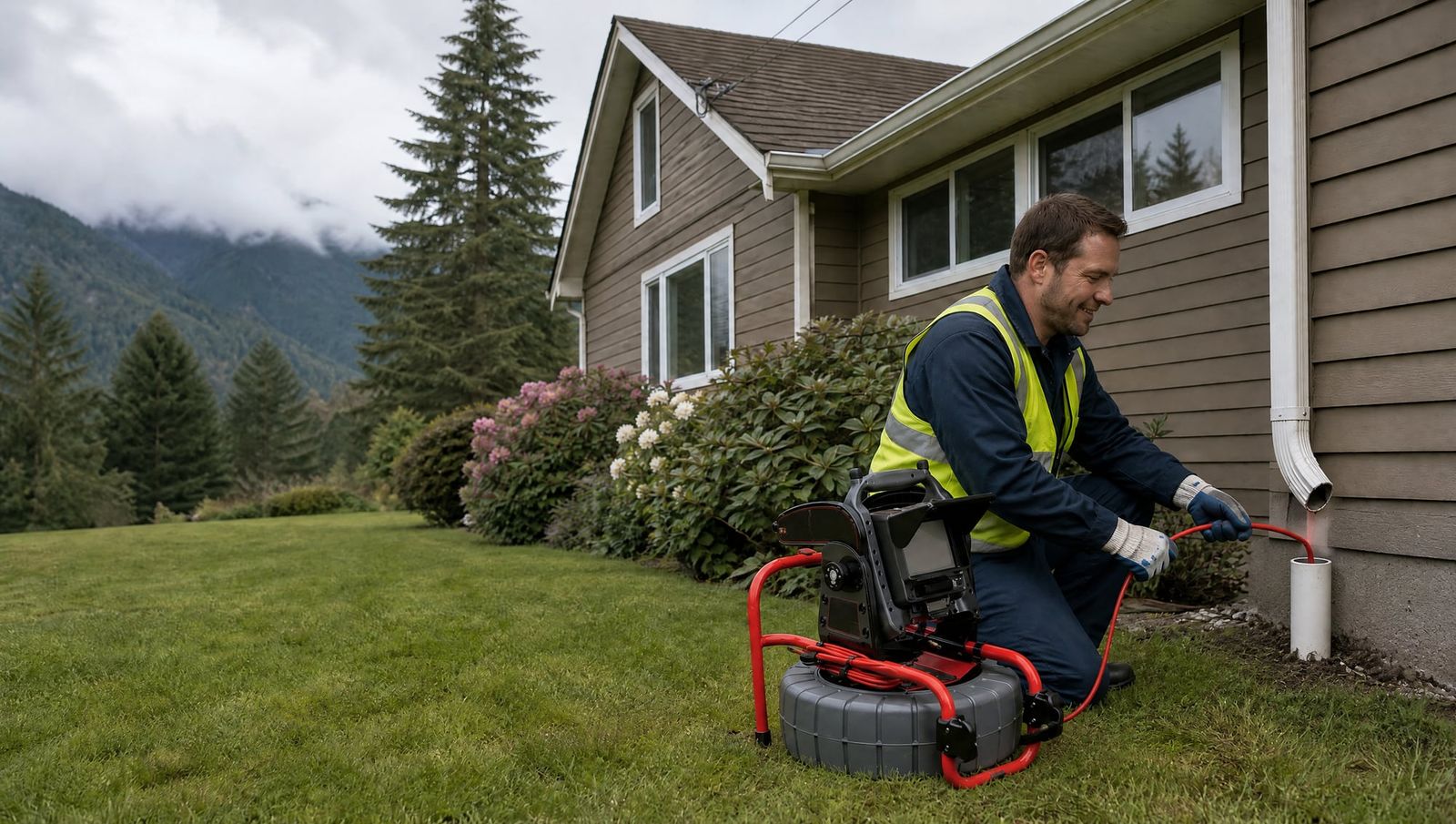
The most expensive thing wrong with a house is usually buried, and your home inspector can't see it — a home inspection is visual only. We put a camera in the drains before you remove subjects, and you get the footage and a written report. Walk away, renegotiate, or buy knowing what's under it. Either way, you decide with the facts instead of after the first November.
Houses worth a closer look
-
Damp, staining or white deposits on a basement wall.
Or a moisture note in the home inspector's report. Water is already reaching the wall; the question is why. -
Downspouts redirected above ground.
When downspouts have been disconnected from the underground line and sent across the yard, the line below is often blocked or broken. -
A house built before 1970.
It's likely still on its original clay or concrete drainage, which may be at or past the end of its service life. -
A finished or tenanted basement.
A drainage failure damages walls and flooring before it shows. A water event means a lengthy repair with a restoration company, a costly rebuild, and interrupted rental income. -
A past water event or insurance claim.
Check the Property Disclosure Statement. If water got in once, find out whether the cause was fixed. -
An estate sale, or a seller with no drainage history.
No records means no one knows the system's condition, including the seller.
If even one of these applies, book the drainage inspection before you commit to the purchase.
The cost of finding out after you own it
On an older home the drainage is the single most expensive thing a home inspection can't see. A drainage inspection doesn't change what's in the ground. It tells you what's there before the cost is yours.
-
Drainage inspection.
Under $1,000. This is the inspection. -
Sectional replacement, one side.
From around $20,000. -
Full perimeter replacement.
Can reach six figures. -
Full replacement plus restoration.
Well into six figures.
Indicative only. Every house is different. Insurance may cover the water damage; the drainage repair that caused it is usually on the owner.
With the report in hand, you have three options before subject removal.
-
Walk away.
The footage shows a system at the end of its life and you'd rather not take it on. -
Renegotiate.
A written record of what the camera found, to put in front of the seller. -
Buy with the repair budgeted.
Go ahead knowing what's coming and roughly when, instead of finding out in November.
Without the inspection there's one option: buy and find out later. Book the drainage inspection for under $1,000, a fraction of a percent of the worst case.
What a home inspection can't see
Consumer Protection BC describes a BC home inspection as visual only, and says the inspector should not give repair estimates. The perimeter drain is buried beside the footing, out of sight. That's not a fault in the inspector's work; a visual inspection is the job. A pre-purchase drainage inspection answers the question it leaves open.
| Issue | Home inspection | Drainage inspection |
|---|---|---|
| What it looks at | What can be seen and checked at the surface | The buried drains on camera, and the grading around the house |
| Damp or white mineral deposits on a basement wall | Noted, and flagged for expert advice where the inspector thinks it's needed | Whether the drain and grading outside that wall carry water away |
| The perimeter drain | Buried, so a visual inspection can't see inside it | Recorded camera footage showing cracks, roots, sags and collapses |
| Repair estimates | Inspectors should not give them | Written repair budget guidance based on what we found |
Book both before you commit to the purchase. They answer different questions, and a drainage inspection is not a substitute for a home inspection.
Covered by our Built Better Warranty.
See details of the Built Better WarrantyWhat the inspection covers
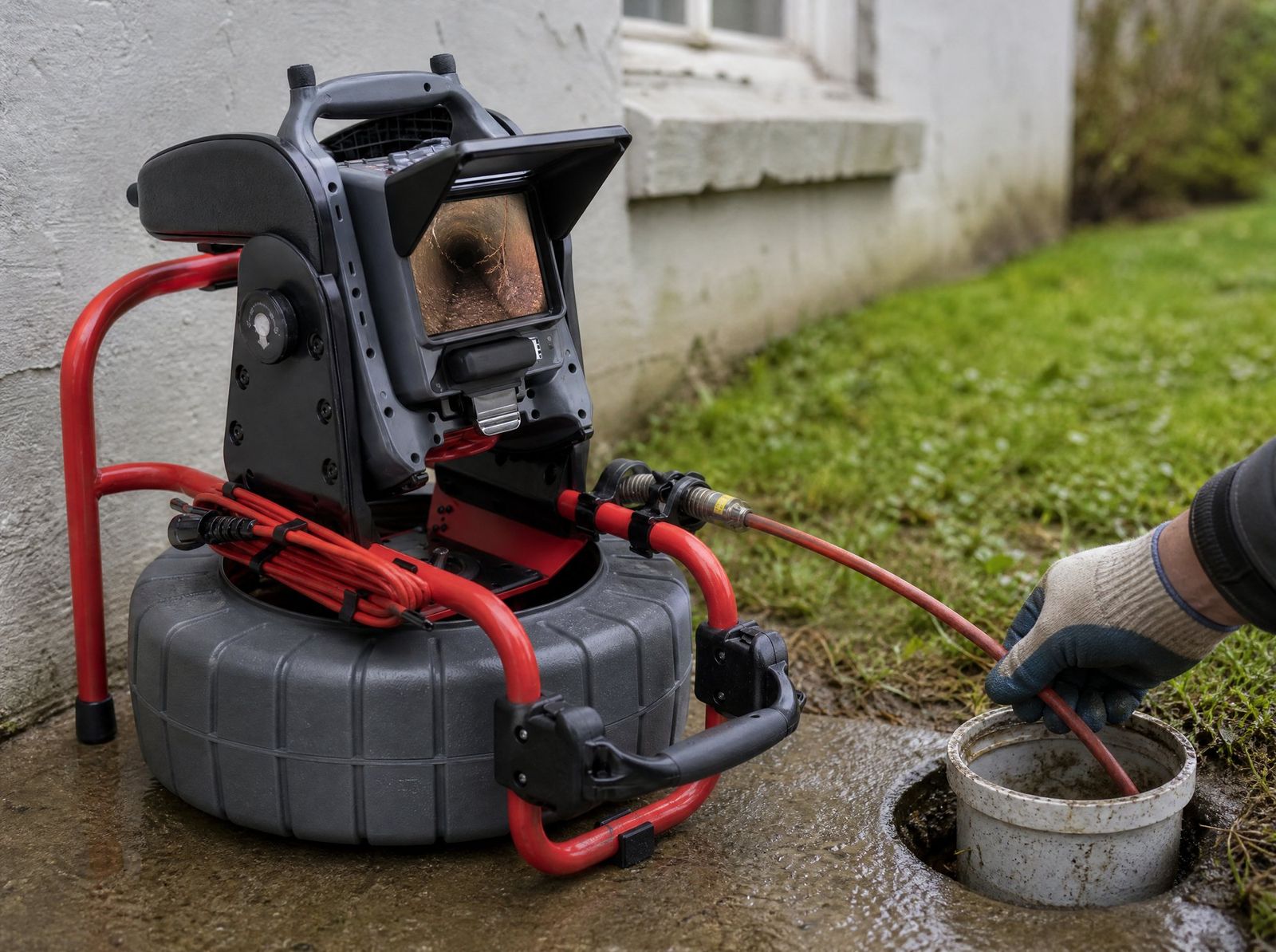
At Drainage Pro, we diagnose before we excavate. We start at the surface: how the ground is graded around the house, and where every downspout sends its water. Then we run an HD camera through the accessible drain lines and record it. You get the footage, photos and a written summary, so you can see the condition of the pipe for yourself. Our guide explains what a perimeter drain is and how it works.
We don't dig or repair anything during the inspection, so the findings stand on their own.
-
Grading & surface water.
Which way the ground slopes around the house, and where water collects against the foundation. -
Downspouts.
Where each one discharges, and whether it's connected, disconnected or broken below grade. -
Perimeter drains.
An HD camera inspection of the pipe beside the footing, showing its apparent material and age, roots, sags, breaks and collapses. -
Sewer line.
A camera run from any accessible cleanout or access point. -
Storm lines & catch basins.
Checked for sediment, blockages, and where they actually connect. -
Foundation walls.
Signs of water pressure at the exterior wall, such as efflorescence, damp patches, cracks and failing parge coat.
What a pre-purchase inspection can find
What the camera can show a buyer:
- Original pipe at the end of its service life. Clay or concrete tile, or early plastic, laid when the house was built. Clay is brittle and can crack or shift at its joints. Concrete tile can soften and crumble. Soft corrugated plastic can deform and silt up. On camera: the pipe material, and cracked, displaced or crumbling joints. What it means: this usually points to replacement. See clay, concrete, Big-O and PVC compared.
- Silt or roots in pipe that's still sound. Fine sediment or roots reduce the pipe's capacity, but the wall is intact. On camera: a layer of silt along the pipe floor, or fine roots at a joint. What it means: often a flush rather than a replacement.
- A sag, an offset joint or a collapse. Ground movement or settled bedding has changed the pipe's line or shape. On camera: standing water in a dip, a step at a joint, or the pipe narrowing or closed off. What it means: cleaning won't fix it. A sag or collapse generally means opening the ground. A single break or offset joint can sometimes be repaired in one spot.
- No access, or no known outlet. There's nothing to enter the line from, or nobody can say where it discharges. That's not a pipe defect, but a buyer should price it in. What we do: where the camera can't get in, we locate the line from the surface instead, and the report states which runs we couldn't reach.
In older homes, most inspections find at least one of the above. If the drainage is sound, the report says so.
Why older North Shore and Vancouver homes need a closer look
Many older homes in North Vancouver, West Vancouver and Vancouver's established neighbourhoods still run on original clay tile or early plastic drainage. Pipe of that age can crack, shift or silt up without any sign inside the house.
The current BC Building Code requires the bottom of every exterior foundation wall to be drained, unless that can be shown to be unnecessary, by tile or pipe around the outside of the foundation or by a layer of gravel or crushed rock (BC Building Code 2024, Article 9.14.2.1). A working drain relieves the pressure of groundwater on the wall. When it fails, water builds up against the foundation.
The City of North Vancouver reviews a new perimeter drain on site, while the system is still visible for inspection. Its perimeter drainage inspection guide names bedding, pipe slope, pipe size, depth and high point cleanouts among the typical items reviewed. A buyer comes along once the trench is backfilled, and only a camera can look inside the pipe.
Water is also seasonal. At the Environment Canada station N Vancouver 2nd Narrows, the 1981–2010 climate normals for total precipitation are 293.36 mm in November and 53.20 mm in July. A viewing in a dry month shows the lot with the ground at its driest.

What clients say about our pre-purchase drainage inspection work
 ★★★★★
Great experience overall. It started with a quick return to my request for service. Easy to deal with and professional work completed. Highly recommend.
Questions we get asked
Should I book a pre-purchase drainage inspection if the home inspection looked fine?
Yes. In BC a home inspection is visual only, and a perimeter drain, a storm line and a sewer line are buried. A clean home inspection report is not a statement about them. That is no criticism of the home inspector, who is working within what a visual inspection can see. A drainage inspection answers the question it leaves open.
What is a perimeter drain inspection?
A camera is run through the perforated pipe that sits beside the footing and carries groundwater away from the foundation. The run is recorded, so you can see the pipe's material and condition instead of guessing from the age of the house.
Does the seller have to agree to the inspection?
Yes. Your agent arranges access with the seller, the same way as for the home inspection. We do not dig or repair anything during the inspection, so there is nothing for the seller to put back afterwards.
Will the report help me negotiate with the seller?
It gives you and your agent something specific to point to: video, photographs, a condition rating and repair budget guidance. What you ask for is between you, your agent and the seller, whether that is a price change, a repair before closing or walking away.
The house is newer. Is a drainage inspection still worth it?
A newer house is often fine, but a major renovation, a lot that slopes toward the house or an outlet nobody can find still call for a look. If none of those apply, a camera run may tell you little you did not already expect.
Can you inspect a townhouse or strata unit before I buy?
We can check the accessible drainage that serves a townhouse or ground-level strata unit. The building's common-property drainage is a different scope, and a strata drainage assessment for the council or property manager is the service that covers it.
My home inspector noted moisture at the foundation. What does the drainage inspection do about it?
A moisture note usually records the effect rather than the cause. The drainage inspection checks one possible cause: whether the drain and the grading outside that wall carry water away from it. A crack, a plumbing leak or an overflowing window well can also put water there. You are welcome to send the home inspector's report when you book.
Reviewed
A less expensive way to buy in Metro Vancouver
Tell us the address and what you're seeing — a backup, a wet wall, a smell, a sinking lawn. We'll tell you what the next step is and what it costs, before anyone digs. Not sure yet? Ask us a question first.