

Protect
Foundation crack repair
Leaking cracks sealed by injection through the wall, once we know why they opened and whether they are still moving.
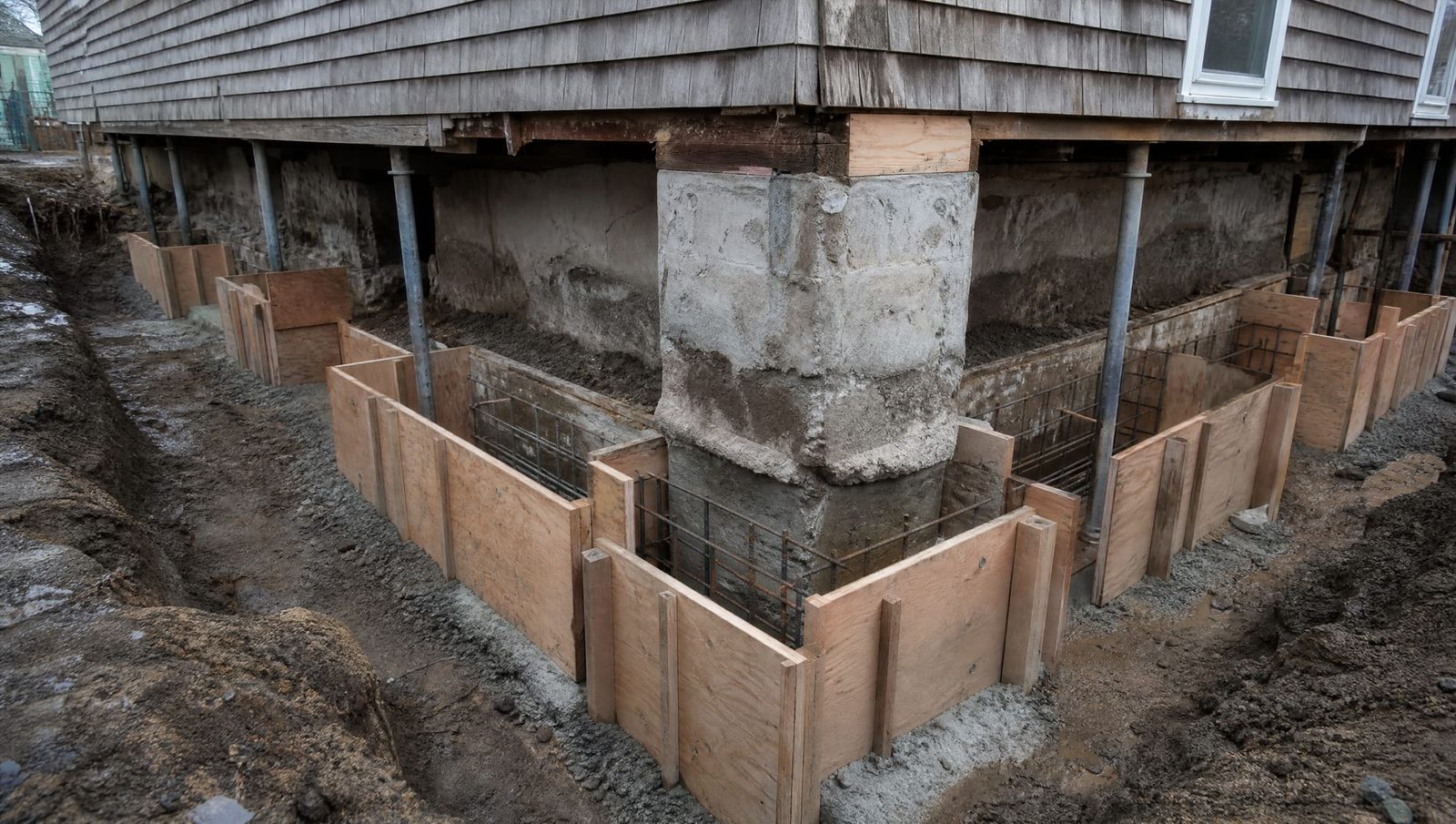
Structural foundation repair in Vancouver and the North Shore is for a foundation that has moved: settling, a bowing wall, heave or failing concrete. We plan structural repairs with a structural or geotechnical engineer. The engineer sets the method, from monitoring alone to reinforcement or underpinning. Wet soil can be a cause, so drainage and grade are checked too.
An engineer designs a structural repair against the loads on the building and the soil under it. What can be said first is which of four kinds of movement a house is probably showing, and whether it has stopped. Only measurement over time answers that.
Any one of these is worth having looked at. Several together are a stronger reason.
If a wall has moved suddenly, or you can see daylight through a crack, call or text (604) 210-3892. A crack with no sign of movement is a different question, covered under foundation crack repair.
What decides the repair is whether the movement has stopped. That takes time to answer, so it helps to write things down now. When you have them, send Drainage Pro the photographs and your notes.
Covered by our Built Better Warranty.
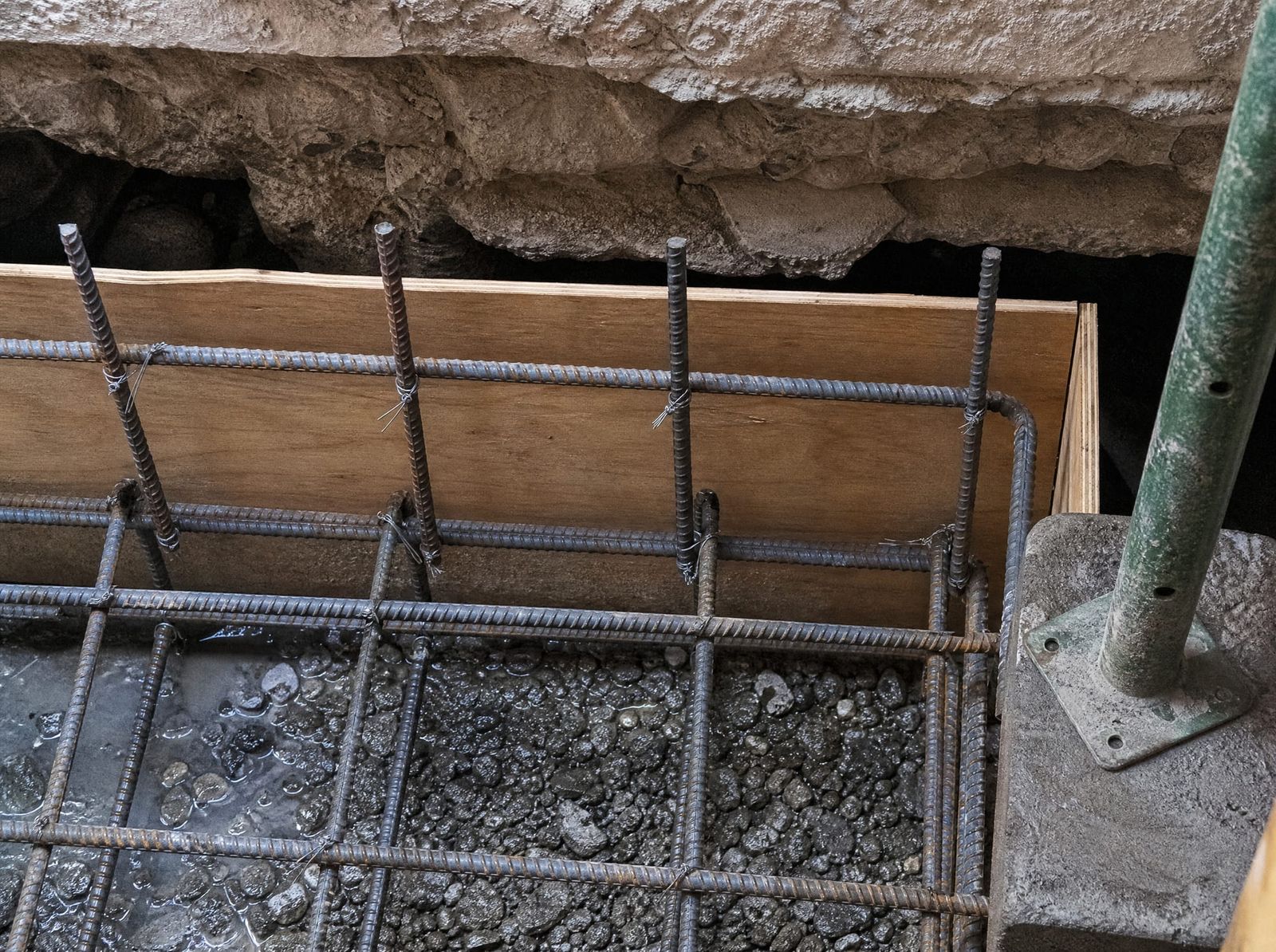
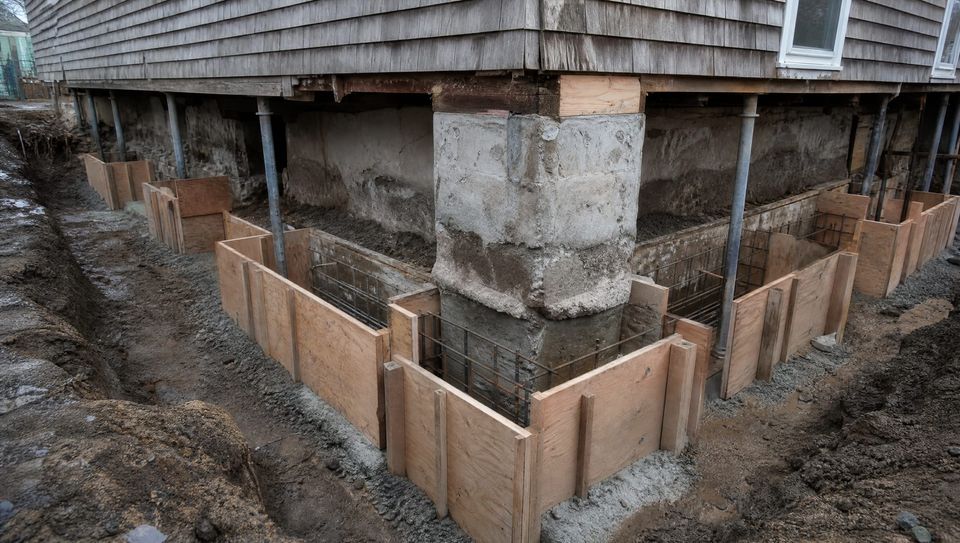
See details of the Built Better WarrantyWe plan structural repairs with a structural or geotechnical engineer. Piers, anchors and reinforcement are sized to the loads on the building and the soil under it, and both change from lot to lot. The engineer designs the remedy, and the repair is built to that design.
The assessment keeps the method matched to the soil and load conditions your house actually has. It also produces documentation you may need if you are refinancing, insuring or selling.
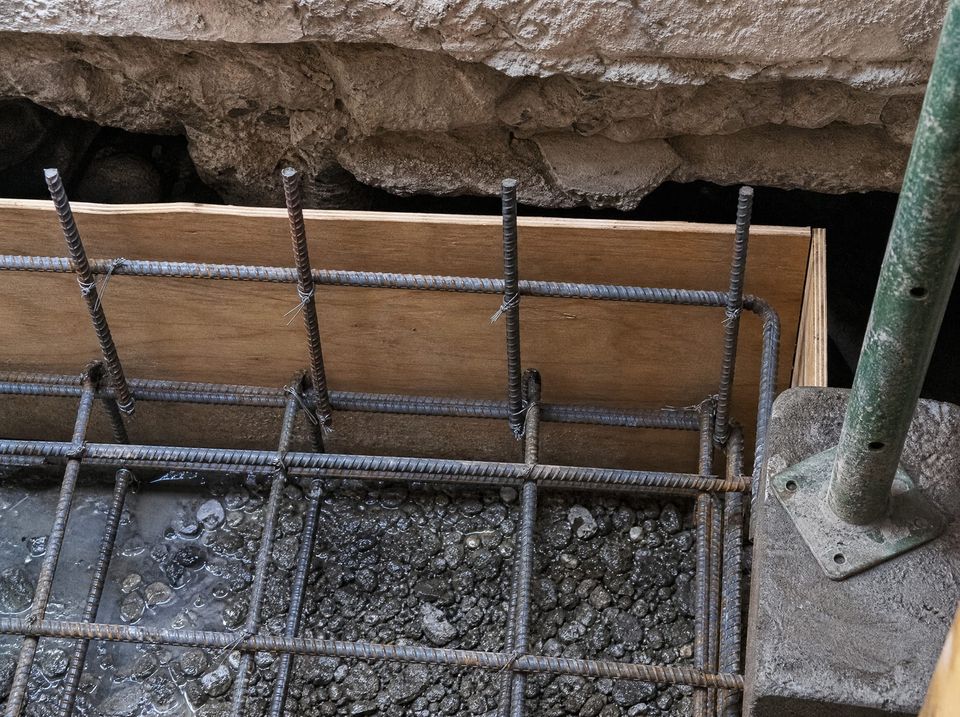
Each of these answers a different amount of movement, and the assessment decides which one fits.
Assessment and monitoring.
Reinforcement.
Wall anchors or tiebacks.
Underpinning or piers.
Where a section of wall has moved beyond what reinforcement can hold, the engineer may specify replacing it.
Two foundations with the same crack pattern can call for very different work. These factors decide it.
Scope and price in writing before work starts. The timeline is set in the written scope.
Soil is what a foundation rests on, and moisture changes how soil behaves. Article 9.4.4.4 of the BC Building Code 2024 says that where soil movement from changes in moisture content, freezing or chemical-microbiological oxidation is known to occur to the extent that it will damage a building, measures must be taken to prevent it or reduce its effects. Its explanatory note says clay soils are the most prone to swelling and shrinking with moisture. Particularly wet seasons can heave foundations and floors or crack foundation walls. Particularly dry seasons, or water drawn down by fast-growing trees, can cause settling. Frost heave happens when water in frost-susceptible soil, such as clay and silt, freezes under the footings.
The same Article says the potential for slope instability is evaluated from site-specific material properties and taken into account in the design of the structure and its foundations. On a sloping lot, that matters.
In this region the wet months matter too. Environment and Climate Change Canada's 1981 to 2010 normals list November, January, December and October as the wettest months at both Vancouver International Airport and North Vancouver Sonora Drive.
Much of the North Shore sits on glacial till and rock, while parts of Vancouver and Burnaby have softer clay and silt. When a perimeter drain has failed, water can build up in the soil beside the footing instead of draining away, and ground that slopes toward the house can do the same. We assess the drainage and grade beside the foundation as part of a structural assessment. A drain camera inspection shows whether the perimeter drain has failed, and perimeter drainage repair deals with it if so.
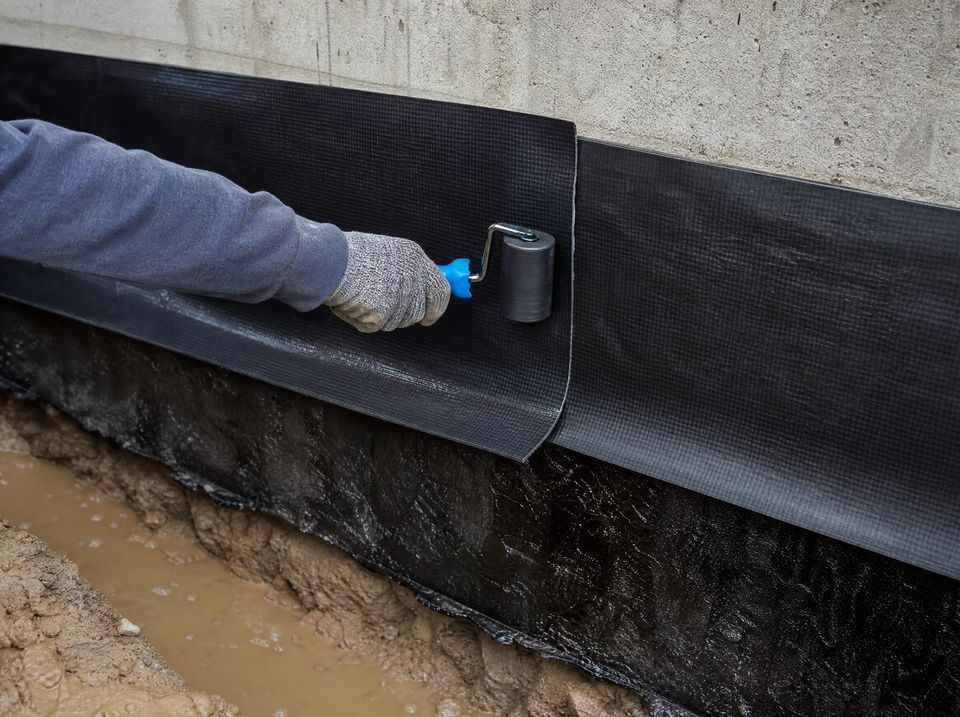
A house that has moved may have water problems as well, so more than one kind of work can be on the table. The structure is stabilized before drainage and waterproofing work goes on. A membrane or sealant laid over a wall that is still moving can split again, and a leak that is really a symptom of movement is easy to misread. Once the structure is stable, foundation waterproofing and drainage work can be done where the ground is already open, which saves opening it twice.
Post-repair monitoring is there to confirm the fix is holding. The records are the engineer's documents, and a lender, insurer or buyer may ask for them if you refinance, insure or sell the house. We arrange permits and inspections where required. The requirements differ by municipality.
Our workmanship warranty runs up to 10 years and is provided in writing. The term depends on the scope of the repair, and the exact terms are in your contract.
Protect
Leaking cracks sealed by injection through the wall, once we know why they opened and whether they are still moving.
Protect
A membrane on the outside face of the foundation wall, protected by drainage board and put on while the trench is open.
Repair
Spot repair, one side or full renewal, scoped from camera footage of your drain tile and the age of the pipe around it.
Related reading
Guide ·
A perimeter drain collects groundwater at the footing and carries it away from the foundation. How it works, how deep it sits, and where the water goes.
Exceptional service. Top notch work, reliable service, trustworthy people.
For settling, a bowing wall or any other sign of structural movement, you need an engineer. We plan structural repairs with a structural or geotechnical engineer. That keeps the method matched to the soil and the loads on your house.
A written view of the cause, measurements to compare against later and a recommended remedy. Where the remedy is structural, it also gives a design to build to. A lender, insurer or buyer may ask for the same documents.
Often, yes. Carbon fibre straps or steel reinforcement can hold a wall that has bowed up to the point the engineer confirms for that wall, and anchors can resist soil that is still pushing. Beyond that, partial or full replacement is the safer option.
Underpinning moves the weight of the house from soil that is not carrying it onto soil that will, usually with piers and brackets beneath the footing or by extending the footing down to stable soil. It answers settlement that is still active, not a crack that stopped moving long ago.
You measure it, then measure it again. Crack gauges, a straightedge against the wall and dated photographs, repeated over time, show whether anything has changed. Which repair fits depends on that answer.
It can remove one major cause. Water that saturates the soil beside or under a footing changes how that soil carries the house, and clay swells and shrinks with moisture. Drainage work does not undo movement that has already happened.
Foundation movement is usually gradual, which is why it is measured over time before a repair method is chosen. If a wall has moved suddenly, or you can see daylight through a crack, call or text (604) 210-3892.
We don't advise on coverage. Ask your insurer how your policy treats movement in a foundation. Our footage, photos and written findings document what failed. You can share them with your insurer.
Reviewed
Tell us the address and what you're seeing — a backup, a wet wall, a smell, a sinking lawn. We'll tell you what the next step is and what it costs, before anyone digs. Not sure yet? Ask us a question first.
Talk to the crew
Mon–Fri 7:30am–5pm · Sat–Sun 8am–5pm
Water where it should not be? A person answers, not a call centre. Photos by text tell us the most.
Call (604) 210-3892 Fastest way to reach us Text us Send photos of the wet spot ★★★★★