

Inspect
Drain camera inspection
HD video of what is inside your drain and sewer lines, with faults located from the surface, so repairs start from evidence.
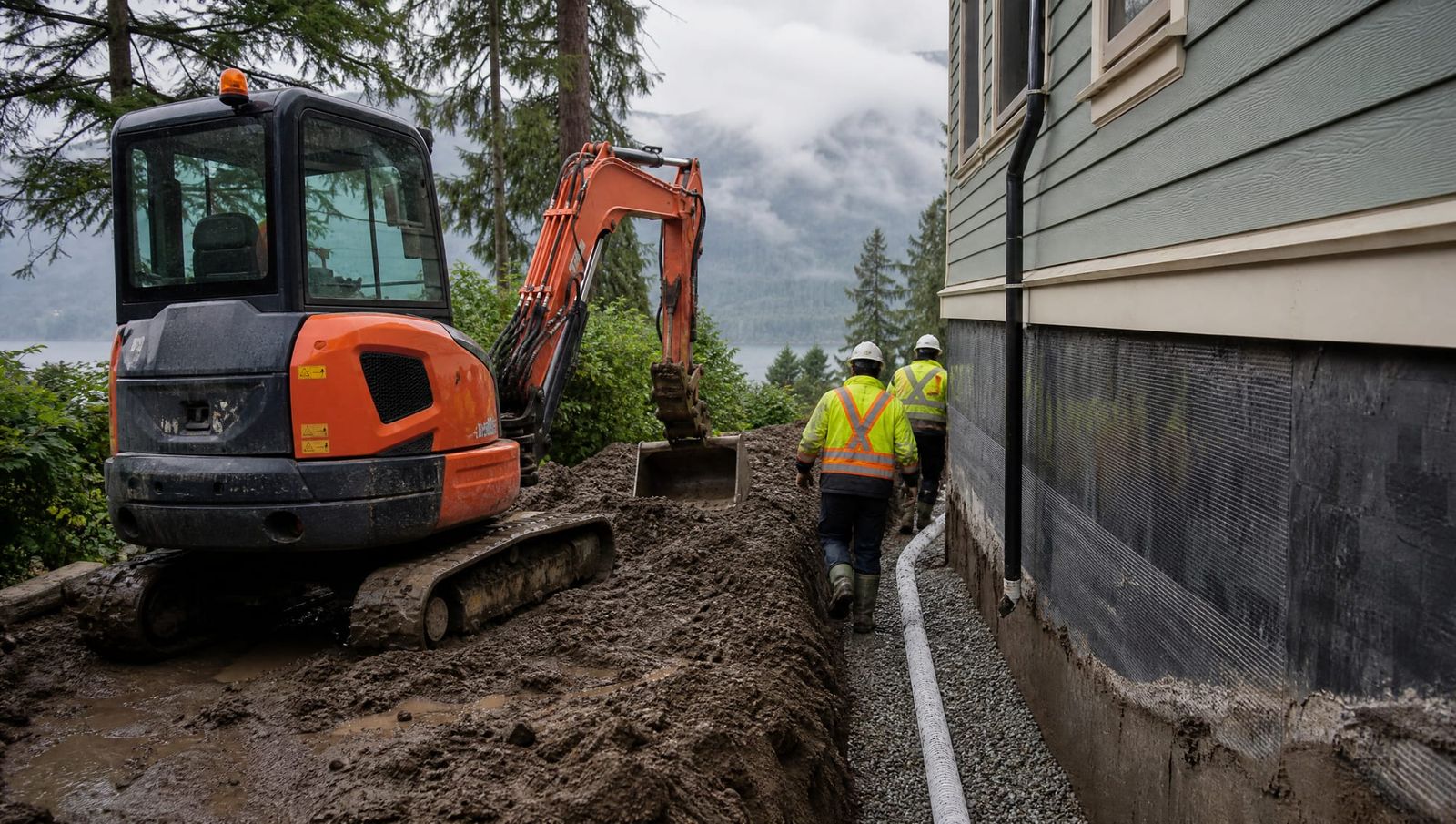
Most perimeter drainage systems fail because of complications with age. By the sixty-year mark a system has taken decades of ground movement, soil shift, sediment and root intrusion, and is no longer moving water the way it was built to. Water finds its way in — sometimes slowly, sometimes all at once. We camera the system first, show you the footage, and replace what's failed to a standard we back for up to ten years.
These are the symptoms that something is wrong underground. One on its own may have another explanation; several together, on an older house, usually mean the perimeter drain is failing.
If water is getting in and the cause is unknown, start with basement leak detection. The guide to signs of failing perimeter drains covers each one in depth.
Different failures can produce the same symptoms. The camera tells them apart, which is why we diagnose before we excavate.
Every situation is different, and a drain camera inspection as part of routine maintenance can catch any of these before they cause damage or become an insurance claim.
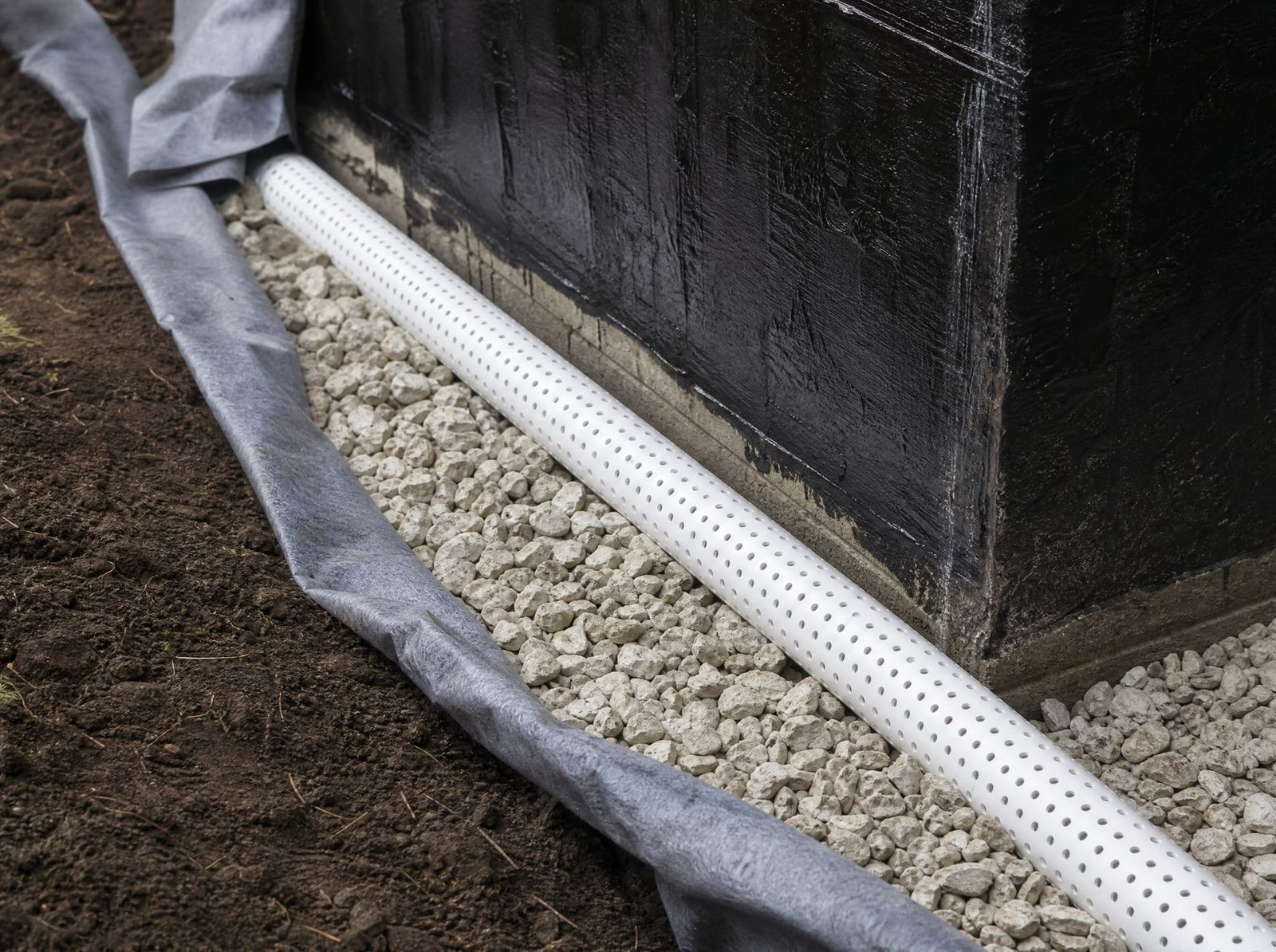
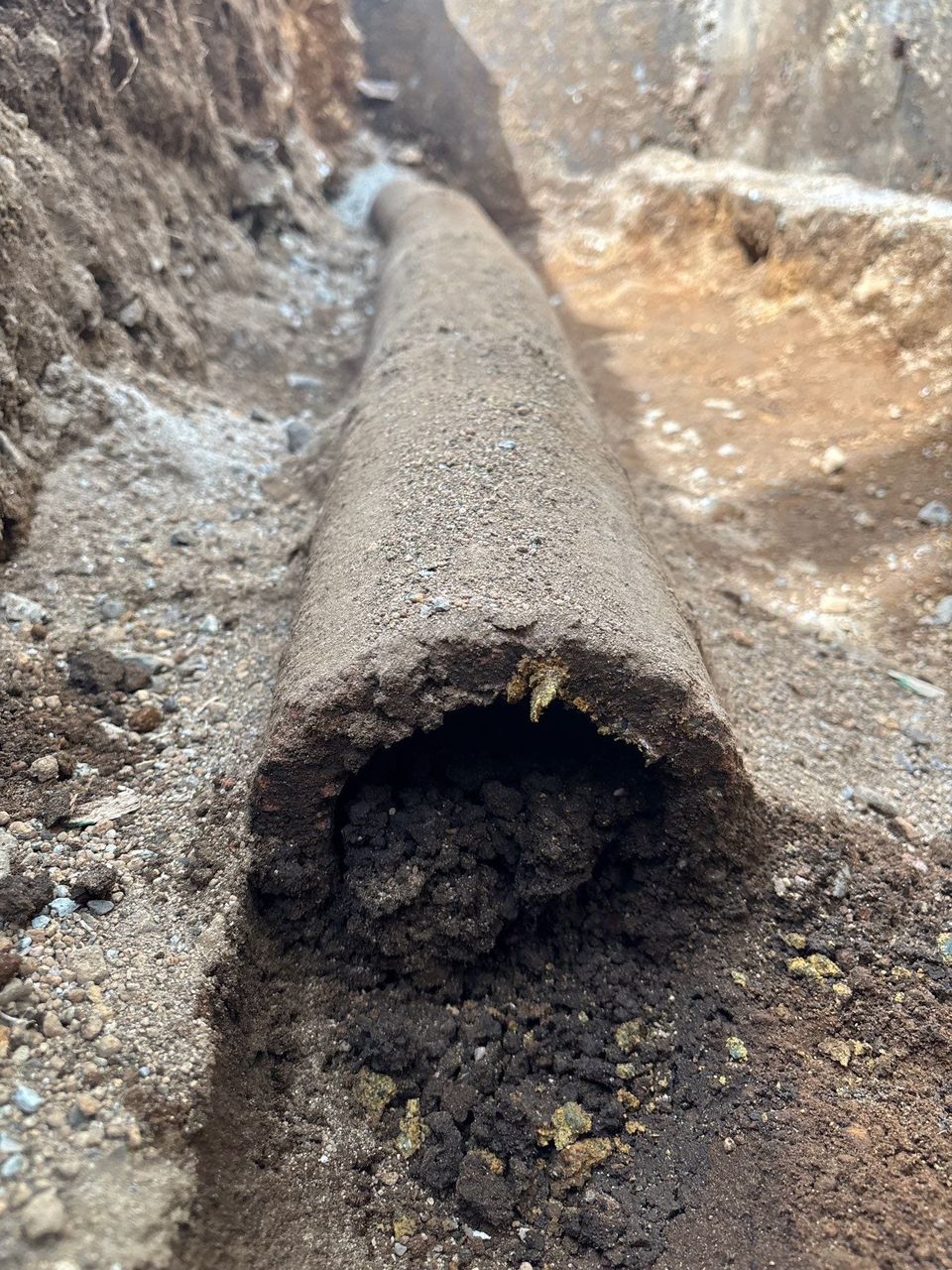
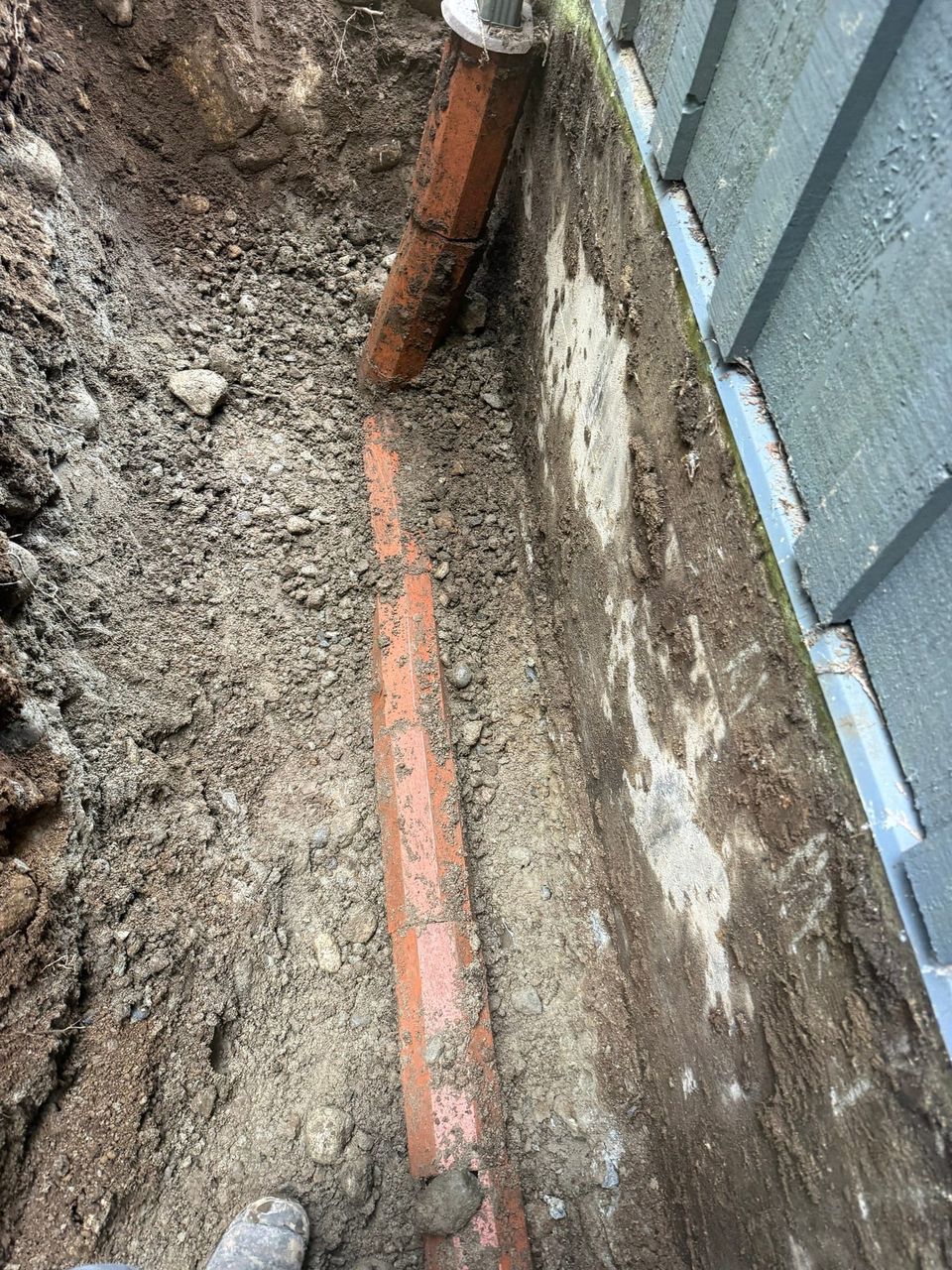
What's beside your footing depends on when the house was built. From 1907 until the late 1970s it was clay or concrete tile, manufactured locally in Haney, BC. Corrugated Big-O plastic pipe took over through the 1980s and into the 1990s, when rigid perforated PVC was introduced. PVC remains the piping of choice for proper perimeter drainage.
| Pipe | How it was built | How it fails |
|---|---|---|
| Clay or concrete tile | Short rigid sections with open joints | Brittle. Cracks and offsets as the soil moves; roots and silt get in at the joints |
| Corrugated Big-O | Black polyethylene with a ribbed wall | Soft. Deforms or crushes under soil load; silt settles in the ribs and is hard to clean out |
| Rigid perforated PVC | Smooth-walled pipe joined with fittings | Holds its shape and can be camera-inspected and flushed. How it was laid matters as much as the pipe |
We install two-pipe perimeter drainage systems in rigid perforated and solid pipe, never corrugated.
Every run of original drain tile went in at the same time, in the same material, so the runs that still work are as old as the one that failed, and original clay or concrete tile may be at or past the end of its service life. A spot repair there fixes today's failure and may only defer the next one. Where some runs are newer pipe, replacing one side can be the right answer, and the camera footage of those runs shows whether it is. Our clay, Big-O and PVC drain tile comparison shows how to tell them apart.
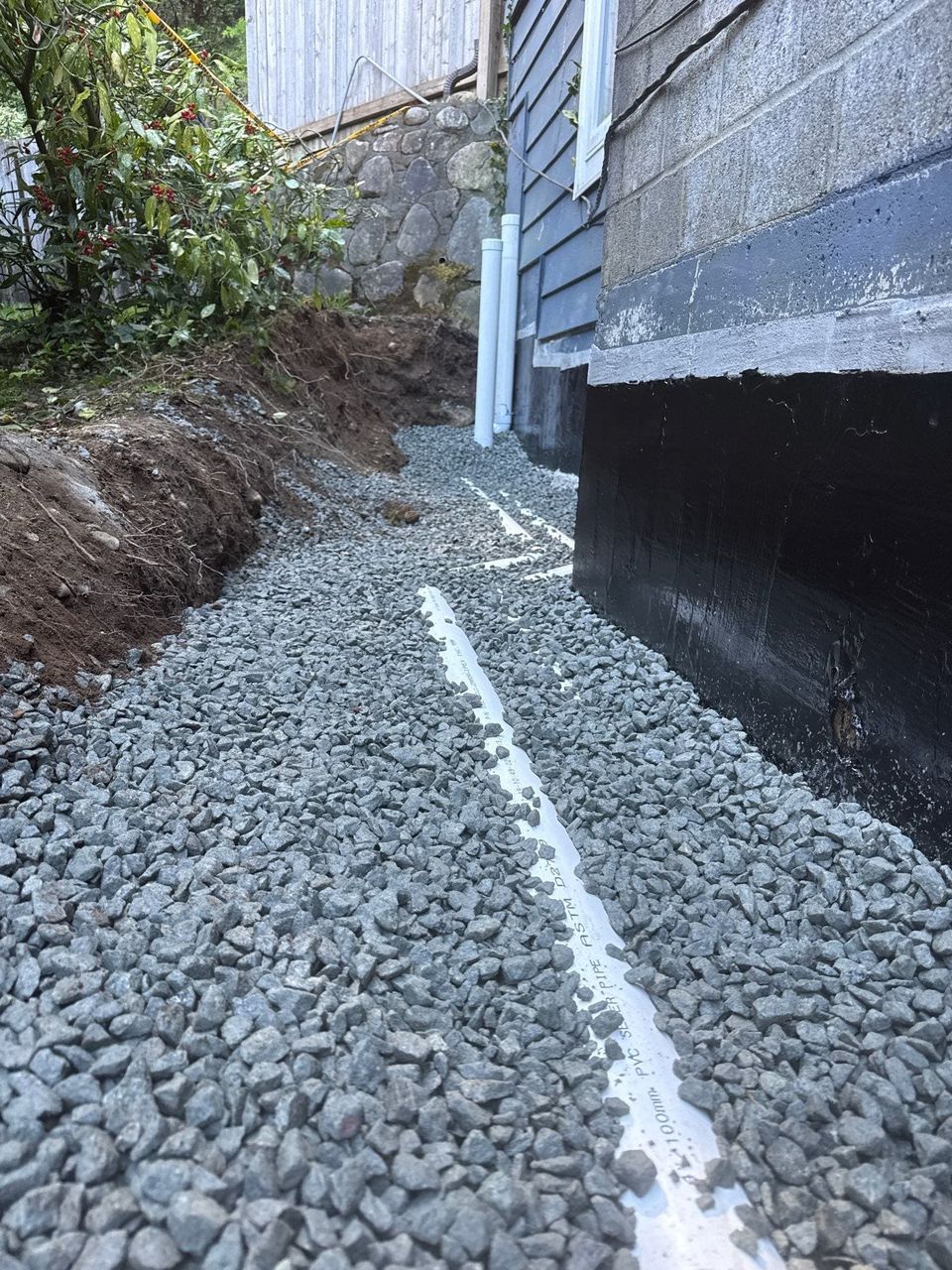
Most older homes run roof water and groundwater through the same pipe, so in a storm the downspouts load the line meant to keep the footing dry. A full perimeter drain replacement separates them: solid pipe carries the roof leaders, perforated pipe collects at the footing, and each takes its own water to the catch basin. That is the two-pipe system, and it is the standard we install.
The trench also exposes the foundation wall, and we treat the wall as part of the drainage job. It is power washed, cracked or spalled mortar is parged and restored, and the wall is damp-proofed, with a foundation waterproofing membrane where the footage, the soil or the grade calls for it. The wall is open once; doing it then costs far less than opening it again.
Covered by our Built Better Warranty.
See details of the Built Better WarrantyPerimeter drain, drain tile and weeping tile are names for the same thing: the perforated pipe at the footing that keeps groundwater off the foundation.
Most calls for drain tile repair come from one symptom in one place: a damp corner, a single downspout that backs up, a dip in the lawn along one wall. That pattern usually means one failed point, not a failed system, and it is the case the drain camera was built for. The camera goes in through existing access — a downspout connection, a cleanout or the catch basin — and records the distance to each defect from a known point. A locator marks that point on the surface, so the excavation is limited to the failed length rather than the whole wall. We do not open new access points to inspect; that is excavation, and it is quoted as such. The repair is photographed from open trench to backfill.
What the camera finds in the rest of the run decides whether a spot repair is the right call. Four repairs, below, explains how.
The camera shows what has failed today. The material and age of the other runs show how much life they have left. The scope is written against both.
Spot repair.
One side.
Full renewal.
Hydro flush.
Workmanship warranty, in writing: 10 years on full renewals, 5 years on one-side replacements and 2 years on spot repairs. The exact terms are in your contract.
The scope is in writing before work starts. Access and reinstatement — lawn, driveway, deck, retaining wall, mature planting — are usually the biggest variable, and excavation and site restoration can be scoped as a separate phase. If not every run can be done at once, we tell you which one is closest to failing.
After the work, keep gutters and downspouts clear, keep the cleanouts accessible, and book a drain camera inspection when a symptom comes back.
Foundation drains go to the storm sewer or a sump, not the sanitary line, and the municipality owns the connection from the property line out. We arrange permits and inspections where required and confirm what applies at your address before work starts; requirements differ by municipality, and so do the rules for where the water may go.
Under Article 9.14.5.1 of the BC Building Code 2024, foundation drains discharge to a sewer, a drainage ditch or a dry well, and every municipality we work in keeps foundation and roof water out of its sanitary system. Burnaby's Sewer Connection Bylaw, the District of North Vancouver's Sewer Bylaw 6656, West Vancouver's Sewerage and Drainage Regulation Bylaw 5263 and the City of Vancouver's Sewer and Watercourse By-law 8093 all say so; in Vancouver, where many streets still have a combined main, the storm and sanitary lines are still kept separate on the property side. The District also limits what groundwater may enter its storm sewer and reserves the municipal side of a connection for its own crews. Whether a like-for-like repair engages those rules is for the municipality to say, so we confirm before we quote.
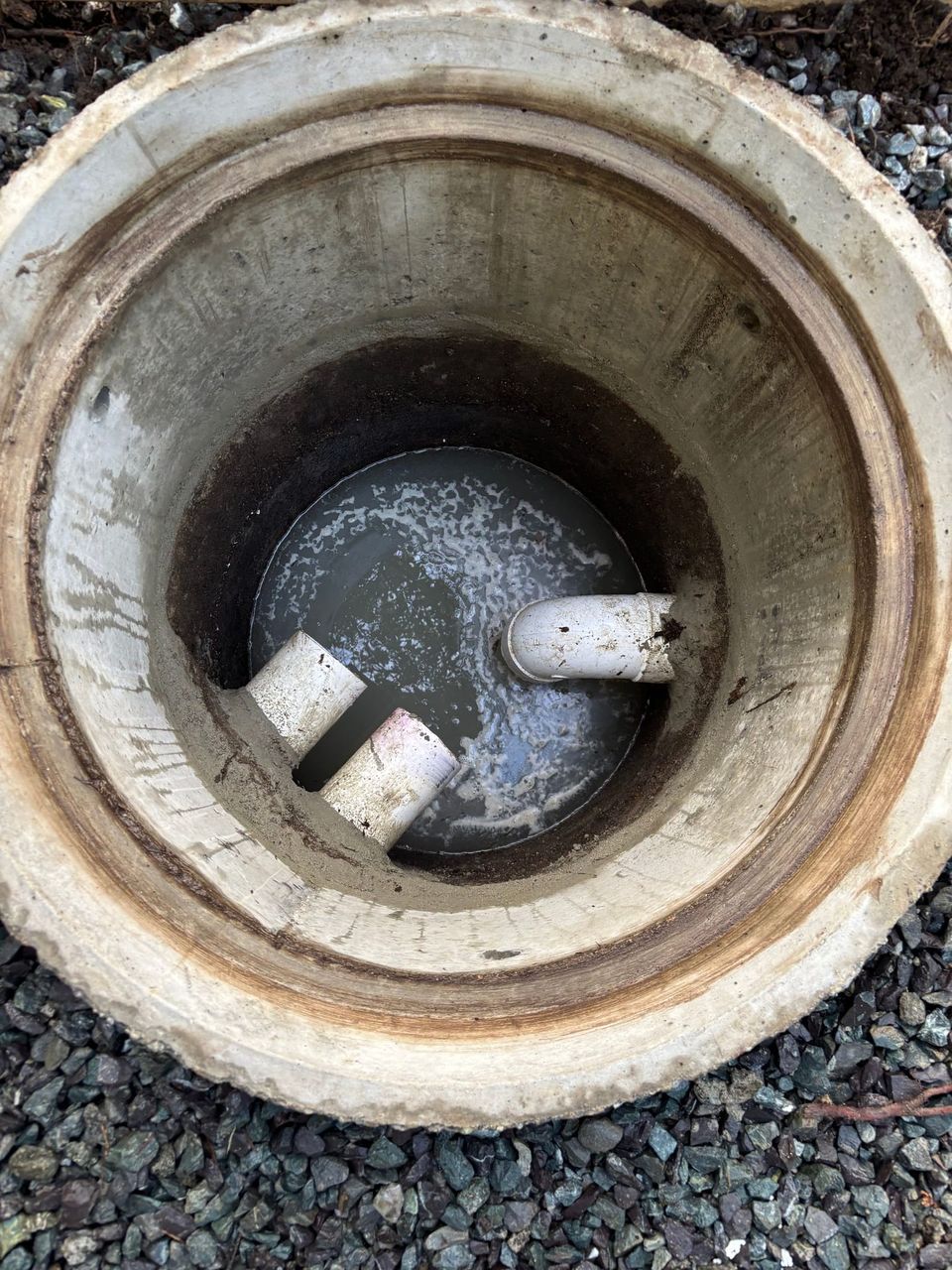
At the outlet, Burnaby's foundation and surface drainage installation guide shows roof water and foundation drainage as two separate pipe systems — the two-pipe layout we install. Where the footing sits too low to reach the storm connection by gravity, the drain runs to a sump instead, and our sump pumps page picks up from there.
October to January are the four wettest months on the North Shore, and July to September the three driest. Environment and Climate Change Canada's 1981–2010 normals for the Sonora Drive station in the District of North Vancouver and Vancouver International Airport both show it, and Sonora, higher on the slope, records far more than the airport.
A run that is partly silted, sagging or overloaded, or draining to a buried or silted catch basin, can cope through a dry summer when little water reaches it. Then the fall rain settles in, groundwater rises around the footing, the system is back under pressure, and the weak run shows itself: damp patches come back, the sump starts cycling, a downspout overflows.
Before you count on a claim, it helps to know how insurers see an old drain. Most policies treat a worn-out drain as maintenance rather than a sudden event, and home insurance is written for sudden and accidental loss. The drainage repair itself is usually not covered. With some insurers, though, the access to reach the failure and the backfill afterward are, and knowing which parts of the job to document separately makes the difference.
What a claim turns on is causation: what failed, where, and whether the damage inside came from it. That is the question we get called in to answer. The camera footage, photos and written findings document the cause, and we help you navigate the claim — what to send, who to send it to, and what the adjuster will ask for. If the repair goes ahead, the same record follows the job from open trench to backfill.
Inspect
HD video of what is inside your drain and sewer lines, with faults located from the surface, so repairs start from evidence.
Protect
A membrane on the outside face of the foundation wall, protected by drainage board and put on while the trench is open.
Repair
Storm sumps and sewage ejectors load-tested, then serviced or replaced before they fail, with battery backup and alarms where they count.
Related reading
Guide ·
A perimeter drain collects groundwater at the footing and carries it away from the foundation. How it works, how deep it sits, and where the water goes.
Drainage Pro has been great to work with throughout our perimeter drainage project. Dean has been professional, responsive, and easy to communicate with throughout the process. I’d definitely recommend them to anyone needing perimeter drainage or waterproofing work done.
It depends on what the other three sides are. On original clay tile, every run went in at the same time in the same material, so the sides that still work are as old as the one that failed, and a one-side repair may only defer the next failure. Where the other sides are newer pipe that looks sound on camera, replacing only the failed side can be the right call.
The camera records the distance to the defect from a known point, usually a cleanout or a corner of the house. A locator then marks that point on the ground, so one hole goes in over the failure instead of a trench around the house. The new length uses the same materials as a full replacement: perforated pipe, drain rock and filter fabric.
Along the foundation, on the sides in scope, down to the footing. It follows the wall rather than crossing the lot. Patios, driveways, decks, retaining walls and planting against the wall change how the trench is opened and what has to come out and go back, so they belong in the written scope.
Excavating beside a foundation is disruptive. We protect what can be lifted and replanted. Hardscape, lawn and planting are put back on the same contract once the new drain is in and the trench is backfilled.
A clear bore along each run, joints still in line, no roots at the joints, no standing water or silt along the bottom, and an outlet that takes water from a hose without backing up. A collapse, roots, silt or an overloaded outlet each breaks that picture somewhere.
It can be. A downspout tied into the footing drain pours a storm's roof water into a pipe built to collect groundwater. Once the drain is overloaded, water can build up against the foundation instead of draining away. On camera the pipe can look clean yet back up under a hose test. The fix is a separate solid line for the roof water.
Reviewed
Tell us the address and what you're seeing — a backup, a wet wall, a smell, a sinking lawn. We'll tell you what the next step is and what it costs, before anyone digs. Not sure yet? Ask us a question first.
Talk to the crew
Mon–Fri 7:30am–5pm · Sat–Sun 8am–5pm
Water where it should not be? A person answers, not a call centre. Photos by text tell us the most.
Call (604) 210-3892 Fastest way to reach us Text us Send photos of the wet spot ★★★★★