

Inspect
Basement leak detection
A stain on the wall is rarely where the water got in. We trace the route first, so the repair is aimed at the cause.
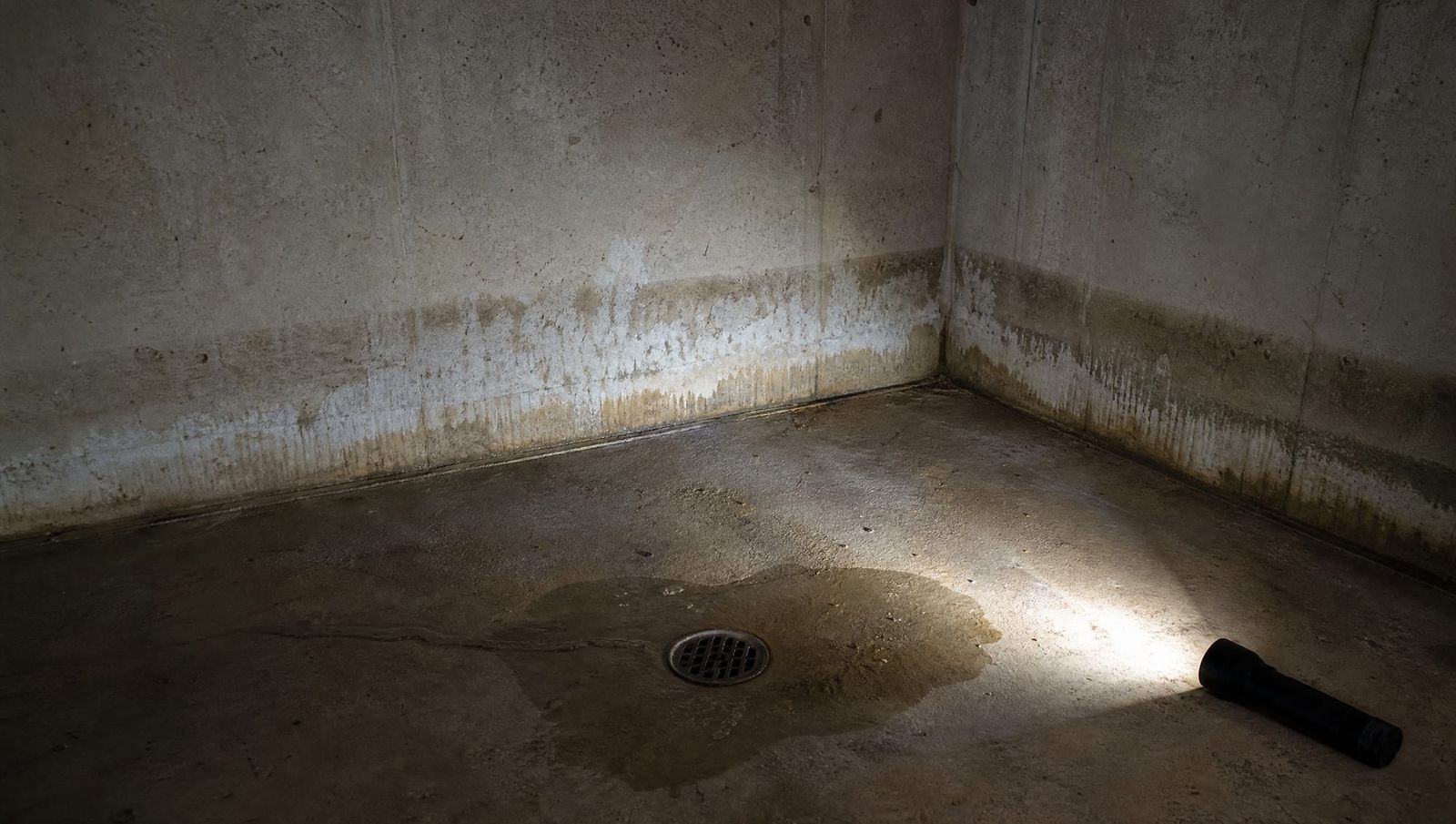
Perimeter drains rarely announce their own failure. The first evidence almost always shows up somewhere else, as a smell, a stain, a slow drain, or water where it shouldn't be. Here are eight signs to watch for, what each one usually means, and how to confirm the actual cause before you pay for a repair.
By the Drainage Pro team Published Updated
Perimeter drains fail quietly. There's no alarm, no obvious leak at first, just water finding a new path once the old one stops working. The signs almost always show up somewhere else in the house before anyone thinks to look underground, which is why the symptom often gets treated before the drain itself gets checked. If you want the basics on what that drain actually is first, our guide to what a perimeter drain is and how it works covers it.
A persistent musty smell, the kind that lingers even after airing the room out, usually means moisture is getting into the space somewhere and has nowhere to evaporate to quickly. It can come from a slow perimeter drain failure, a crack, or simply poor ventilation, so smell alone doesn't tell you the cause. What it does tell you is that the humidity down there has been elevated for a while, long enough for that smell to set into drywall, carpet and framing. A basement leak detection visit finds the actual moisture source instead of guessing from the smell.
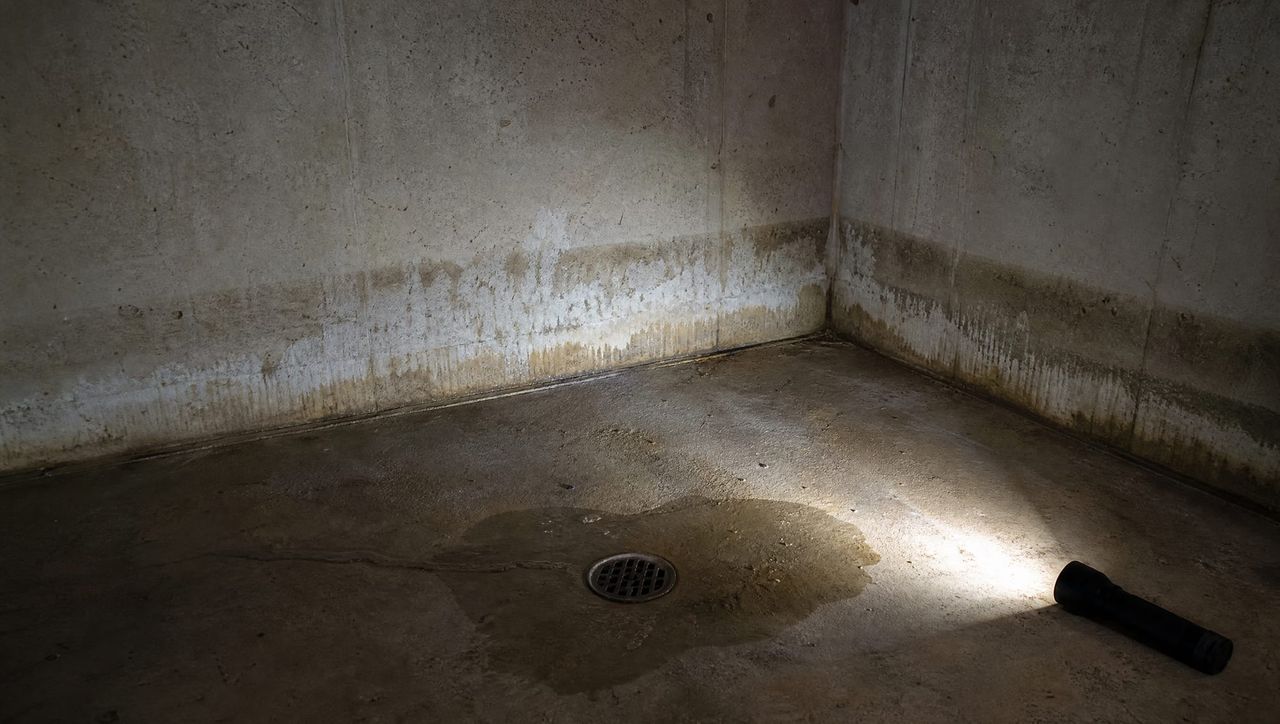
Efflorescence is the white, chalky mineral residue left behind once water that has moved through concrete evaporates on the inside surface. It brushes off easily and isn't mould, but its presence means water is actively finding its way through the wall, not that it once did. A little efflorescence on an older foundation isn't an emergency, but fresh or spreading deposits mean the pressure and moisture behind that wall are ongoing. It's worth confirming whether the drain outside is still doing its job before the same moisture starts affecting finishes or framing.
A wall that feels cool and damp to the touch, or shows dark staining low down near the floor, is further along the same path as efflorescence. At this stage water isn't just passing through and evaporating, it's arriving faster than the wall can dry between rain events. This usually points to a perimeter drain that's partially blocked or has failed along a section, letting hydrostatic pressure build against that part of the wall. Left alone, damp walls are how finished basements lose drywall, flooring and trim to gradual water damage.
Mould needs sustained moisture to establish itself, so its presence on a foundation wall means the dampness has been there long enough to matter, not just after one heavy storm. It tends to show up in corners, behind furniture, or wherever airflow is poorest, which can hide it for months. Because mould is a health concern as well as a structural one, this is a sign worth acting on rather than simply cleaning off the surface. Addressing the moisture source, usually with drainage repair alongside foundation waterproofing, is what stops it from coming back.
The earliest signs are usually a musty smell, efflorescence (white mineral deposits) on foundation walls, or a basement floor drain that gurgles or backs up slightly during heavy rain.
A floor drain that gurgles, backs up, or overflows slightly during heavy rain is often blamed on the sewer, but a struggling perimeter drain can cause the same symptom if it ties into the same line. Sediment, root intrusion, or a crushed section can all restrict flow enough that water backs up to the lowest point in the system, which is usually that floor drain. Drain cleaning and hydro jetting can clear a blockage, but a camera inspection first confirms whether cleaning will actually fix it or whether the pipe itself has failed.
Water that sits against the foundation instead of soaking in, or collects in a window well instead of draining out the bottom, means the drainage right at that spot isn't keeping up. Sometimes that's surface grading or a disconnected downspout, and sometimes it's the perimeter drain underneath that low spot no longer accepting water the way it should. Either way, standing water beside a foundation is exactly the condition a perimeter drain exists to prevent, and prolonged pooling increases the hydrostatic pressure pushing on the wall behind it.
Foundation cracks are common and not automatically serious, but a crack that lets water through during rain is a different problem than one that's simply cosmetic. A leaking crack usually means the soil outside that wall stays saturated longer than it should, which points back to drainage rather than the crack being the root cause. Sealing the crack without addressing why the soil beside it won't drain tends to just move the water to the next weak point in the wall.
If flooding or serious water intrusion only ever happens during the heaviest storms of the year, rather than with routine rain, that's often a system that's still working but undersized or partially compromised for peak flow. A partially blocked or crushed section might handle normal groundwater fine and still fall behind once a sustained heavy rain saturates the soil faster than the pipe can move it. This pattern is worth taking seriously precisely because it's intermittent. It tends to get worse, not better, as whatever is restricting the pipe continues to build up.
Most failures trace back to a small set of causes. Age is the most common: clay and concrete tile, laid from 1907 until the late 1970s, is often at or past its 50 to 60 year service life, with brittle pipe, offset joints and collapsed sections. Root intrusion works its way into joints looking for moisture and gradually blocks the pipe from the inside. Sediment builds up in corrugated Big-O pipe more than in smooth PVC, because its ribbed interior gives grit somewhere to settle. Ground movement on sloped North Shore lots can shift or crush sections over time, and clogged gutters or downspouts that discharge close to the foundation overload even a healthy drain with far more water than it was designed to handle.
Guessing from symptoms alone leads to fixing the wrong thing. A camera pipe inspection runs a video camera through the accessible line and shows exactly what's happening: material, condition, blockages and any collapsed sections, on video you can see for yourself. That footage is what turns a list of symptoms into an actual diagnosis, and it's the only reliable way to tell whether the fix is a partial repair or a full replacement.
An isolated failure on an otherwise sound system is often a candidate for a targeted drain tile repair rather than a full dig. A system that's failed in multiple places, or that's still original clay, or crushed or deformed Big-O, nearing the end of its life, is usually more economical to replace once through perimeter drainage work than to keep repairing piecemeal. Our guide to perimeter drain replacement cost walks through what drives that decision financially. If you're in West Vancouver or anywhere else on the North Shore and recognize two or more of these signs, booking an inspection with Drainage Pro is the fastest way to find out which situation you're actually in.
Tell us the address and what you're seeing — a backup, a wet wall, a smell, a sinking lawn. We'll tell you what the next step is and what it costs, before anyone digs. Not sure yet? Ask us a question first.
Filed under: perimeter drains, troubleshooting
The earliest signs are usually a musty smell, efflorescence (white mineral deposits) on foundation walls, or a basement floor drain that gurgles or backs up slightly during heavy rain. None of these look dramatic at first, which is why they get ignored until the problem is bigger and more expensive.
Yes. A partly blocked or crushed section can keep up with normal groundwater and only fall behind in heavy, sustained rain, when pressure builds against the wall. The first evidence is often damp or staining low on the wall rather than standing water. A camera inspection shows the drain's condition whether or not water has shown up yet.
No. A musty smell means there's moisture somewhere it shouldn't be, which can come from a failed perimeter drain, a foundation crack, condensation, or poor ventilation. It's a reliable sign that something needs investigating, not a diagnosis on its own.
On its own, efflorescence is just mineral residue left behind by evaporating water, not structural damage. What it tells you is that water is actively moving through the wall, which means the pressure and moisture behind it are ongoing and worth investigating before they lead to mould or cracking.
Stop running water into it if you can, note when it happens (usually during or right after rain), and book a camera inspection. A backing-up floor drain can mean a blocked perimeter drain, a sewer line issue, or a system that's simply undersized for how much water is reaching it, and each has a different fix.
Inspect
A stain on the wall is rarely where the water got in. We trace the route first, so the repair is aimed at the cause.
Inspect
HD video of what is inside your drain and sewer lines, with faults located from the surface, so repairs start from evidence.
Repair
Spot repair, one side or full renewal, scoped from camera footage of your drain tile and the age of the pipe around it.
More guides from the crew that does the digging
Browse all drainage guidesTalk to the crew
Mon–Fri 7:30am–5pm · Sat–Sun 8am–5pm
Water where it should not be? A person answers, not a call centre. Photos by text tell us the most.
Call (604) 210-3892 Fastest way to reach us Text us Send photos of the wet spot