

Repair
Perimeter drainage repair
Spot repair, one side or full renewal, scoped from camera footage of your drain tile and the age of the pipe around it.
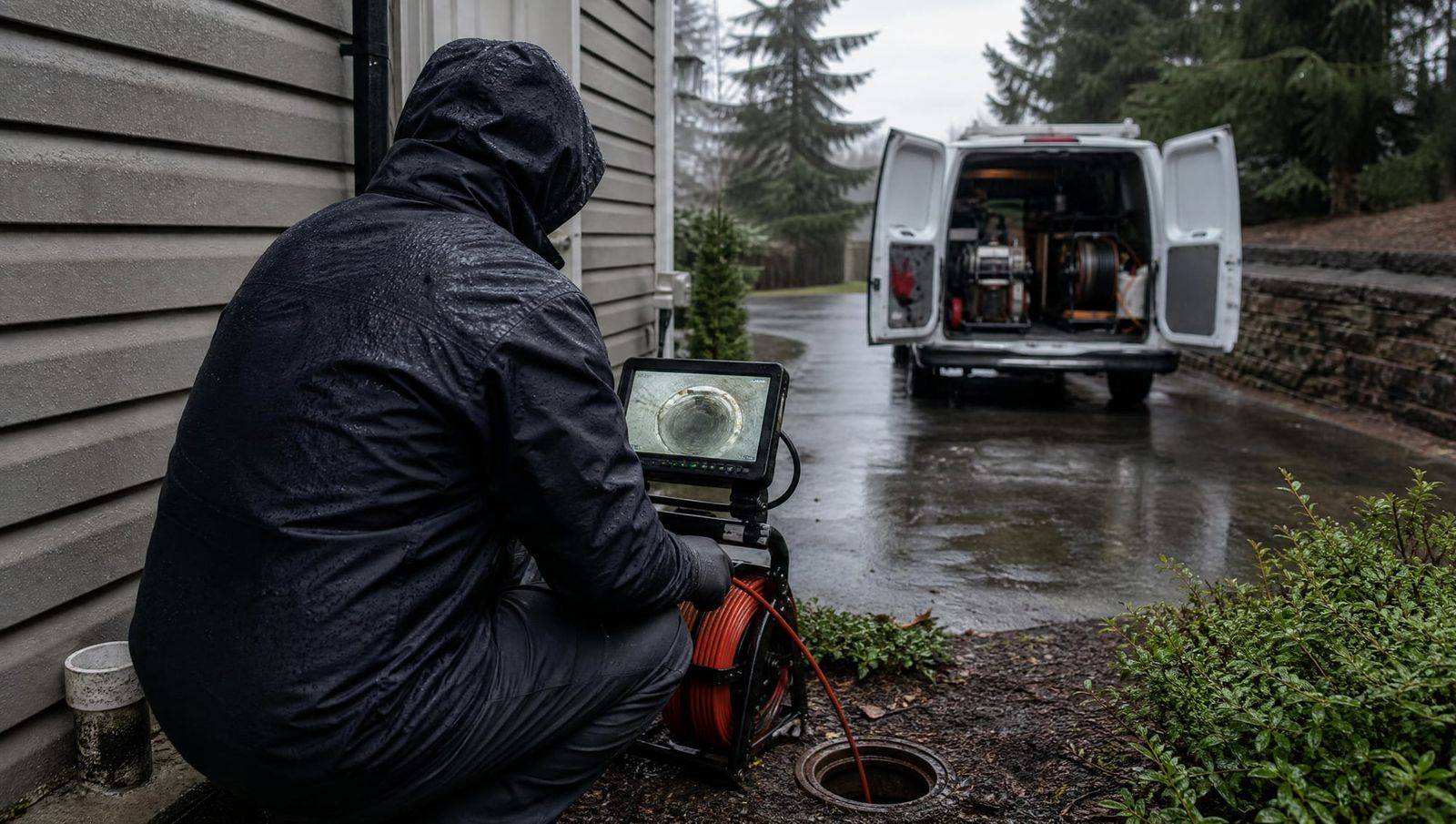
Before anyone on the North Shore or in Vancouver quotes you a dig, see the pipe. We run a camera through your perimeter drain, sewer or storm line, mark every fault at the surface, and hand you the footage and a written summary with what it needs — whether or not we do the work. Any digging goes only where the camera says.
Guessing at a drain is expensive. A camera inspection shows what the pipe is made of, what condition it's in, and whether it needs cleaning, repair or replacement. Here's when it's worth putting one in.
Slow or gurgling drains.
Water in the basement.
Buying a home.
An insurance claim.
Renovating a basement.
Know before it costs you.
Before you decide anything about a drain, you need to know what the pipe is made of and what condition it is in. A drain camera inspection shows both on video. In older homes, perimeter drains are often clay or cement tile, and both wear out in predictable ways. Some problems can be cleared. Others need a repair. And when an old system has several problems along its length, it needs replacing.
At Drainage Pro, the camera comes first: we diagnose before we excavate. A visit goes like this.
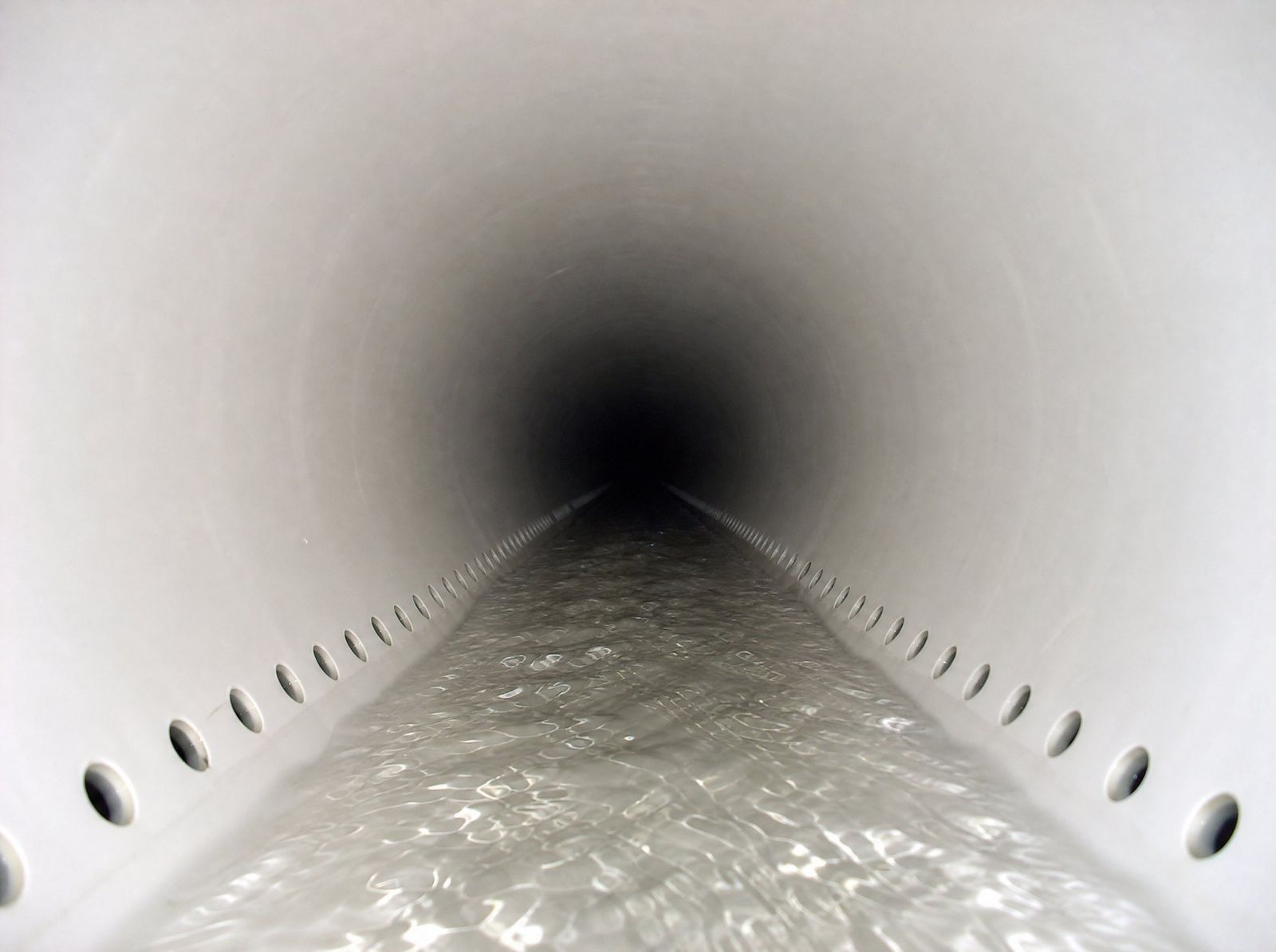
Covered by our Built Better Warranty.
See details of the Built Better WarrantyThe footage and findings are yours to keep, whether or not we do the repair.
Recorded footage.
Fault locations.
Flagged defects, joints and material transitions.
Repair recommendations.
Stills, distances and a site plan.
If the findings point to a repair, the same footage feeds the scope: perimeter drainage repair for the foundation drain, sewer line repair for the sewer lateral, and drain cleaning and hydro jetting for silt or roots in sound pipe.
Precipitation climbs through the autumn and peaks in November, and July and August are the driest months. That is the pattern in Environment and Climate Change Canada's 1981–2010 normals at both Vancouver International Airport and the Sonora Dr station on the District of North Vancouver's slope, 183 m above sea level. The slope station averages about 2,356 mm a year, snow included as water, against about 1,189 mm at the airport.
A working perimeter drain relieves hydrostatic pressure at the foundation.
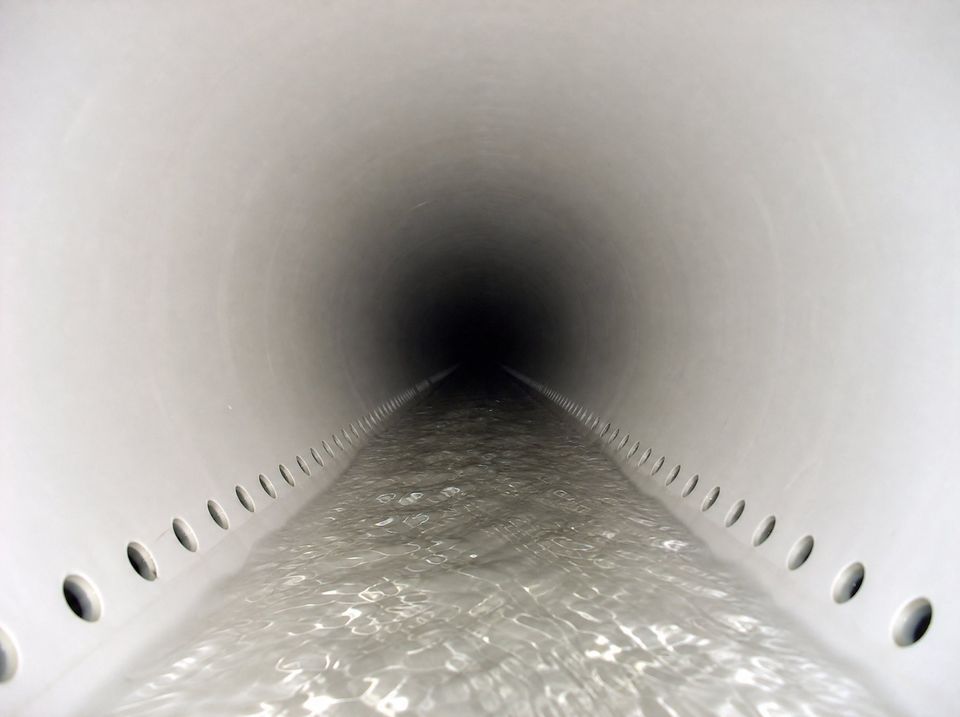
Article 9.14.2.1 of the BC Building Code calls for the bottom of an exterior foundation wall to be drained, by tile or pipe around the outside or by a layer of gravel or crushed rock, unless that can be shown to be unnecessary. Article 9.14.5.1 says foundation drains must discharge to a sewer, drainage ditch or dry well. The camera shows whether yours is still doing that job.
The City of North Vancouver reviews new perimeter drains on site. Its inspection guide lists bedding, pipe slope, depth and cleanouts, including high point cleanouts, among the items typically reviewed, and says the system is to be visible for inspection. After backfill, a camera is how anyone sees inside it again. Older houses can still have original clay tile, which is brittle (our guide to clay, Big-O and PVC drain tile shows how each looks on camera), and some have no cleanout at all.
Repair
Spot repair, one side or full renewal, scoped from camera footage of your drain tile and the age of the pipe around it.
Repair
Drain cleaning for sewer lines and hydro jetting for perimeter drains, with the camera showing what is blocking the line and whether cleaning will hold.
Repair
Camera-located sewer lateral repair and replacement, from the house to the property line.
Related reading
Guide ·
Perimeter drains usually fail quietly. Here are eight signs that show up inside the house first, what each one usually means, and what to do about it.
Yes. You keep the footage and the written findings whether or not we do the repair. That lets you show them to another contractor and compare quotes against the same evidence, or hold them for your own records.
No. It is a diagnostic tool, not a cleaning or cutting one. The camera travels through the existing line on a flexible rod and records what it finds, without cutting, drilling or putting pressure on the pipe wall.
Where the camera stops is part of the finding. A collapsed section, a heavy blockage or a pipe that has pulled apart can all halt it. We mark the spot at the surface. If another cleanout reaches the far side, a pass from that end may show what lies beyond.
Often, yes. The transmitter in the camera head is tracked from the surface, so the route of an accessible line can be traced and marked on the ground, with its depth. That is what a landscaper, a paving crew or a fence installer needs to know.
Yes. Checking repair work before backfilling is a common reason to book a camera inspection. A pass through the new run while the trench is still open shows whether the line is clear and the joints are sound, when a correction is still easy to make.
Not always. It is worth a look before you buy a house, and before landscaping or paving goes in over a line you would rather not dig up later. Keeping a record of the same drain over the years is a separate service, annual drain camera inspections.
Reviewed
Tell us the address and what you're seeing — a backup, a wet wall, a smell, a sinking lawn. We'll tell you what the next step is and what it costs, before anyone digs. Not sure yet? Ask us a question first.
Talk to the crew
Mon–Fri 7:30am–5pm · Sat–Sun 8am–5pm
Water where it should not be? A person answers, not a call centre. Photos by text tell us the most.
Call (604) 210-3892 Fastest way to reach us Text us Send photos of the wet spot