

Inspect
Strata drainage assessment
Condition-rated drainage reports for strata councils and property managers, with footage or a site observation behind every rating.
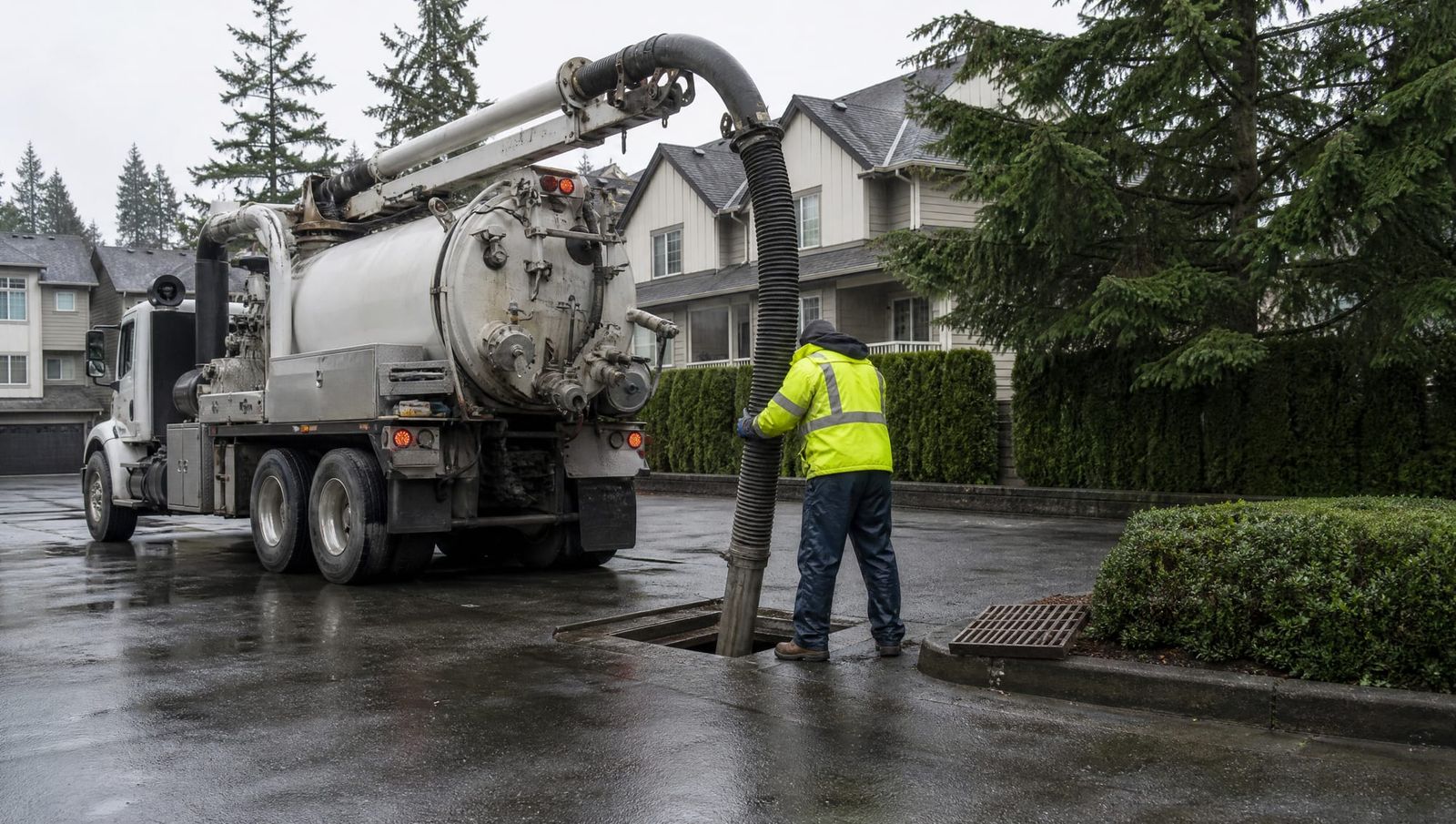
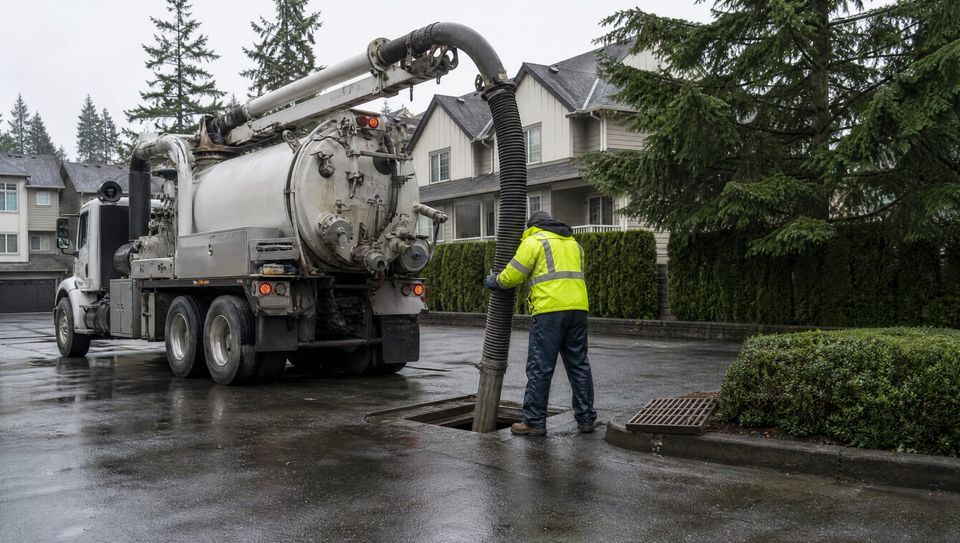
Catch basin cleaning empties the sump below the outlet pipe, the space that traps leaves, grit and silt before they reach your drain line, and checks the outlet pipe. A full sump usually gives no warning at the surface. We clean basins on houses and on strata parking areas and parkades in Vancouver and on the North Shore.
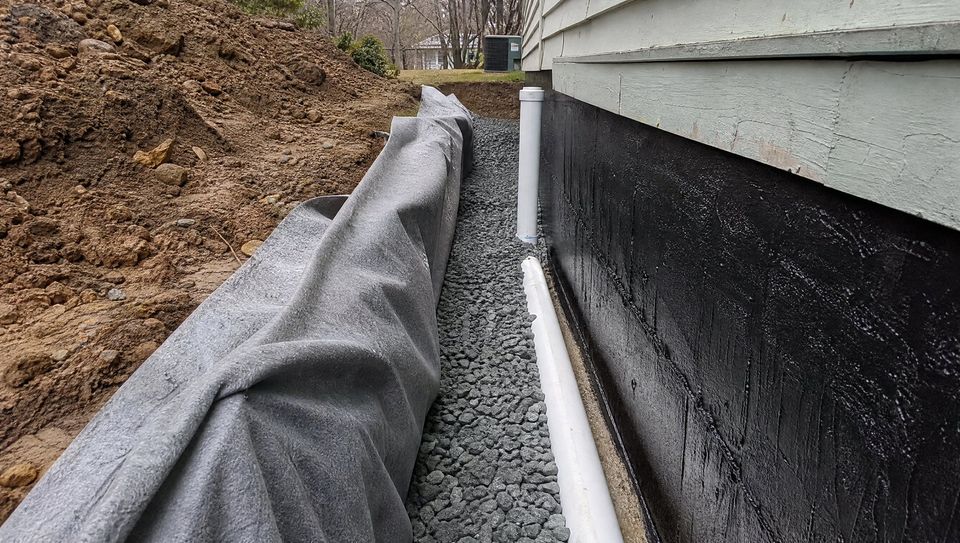
A catch basin takes surface water from a driveway, a yard or a parking area and passes it to the storm line. A perimeter drain is a different system. It sits outside the foundation wall beside the footing and carries groundwater away so it cannot build up against the foundation.
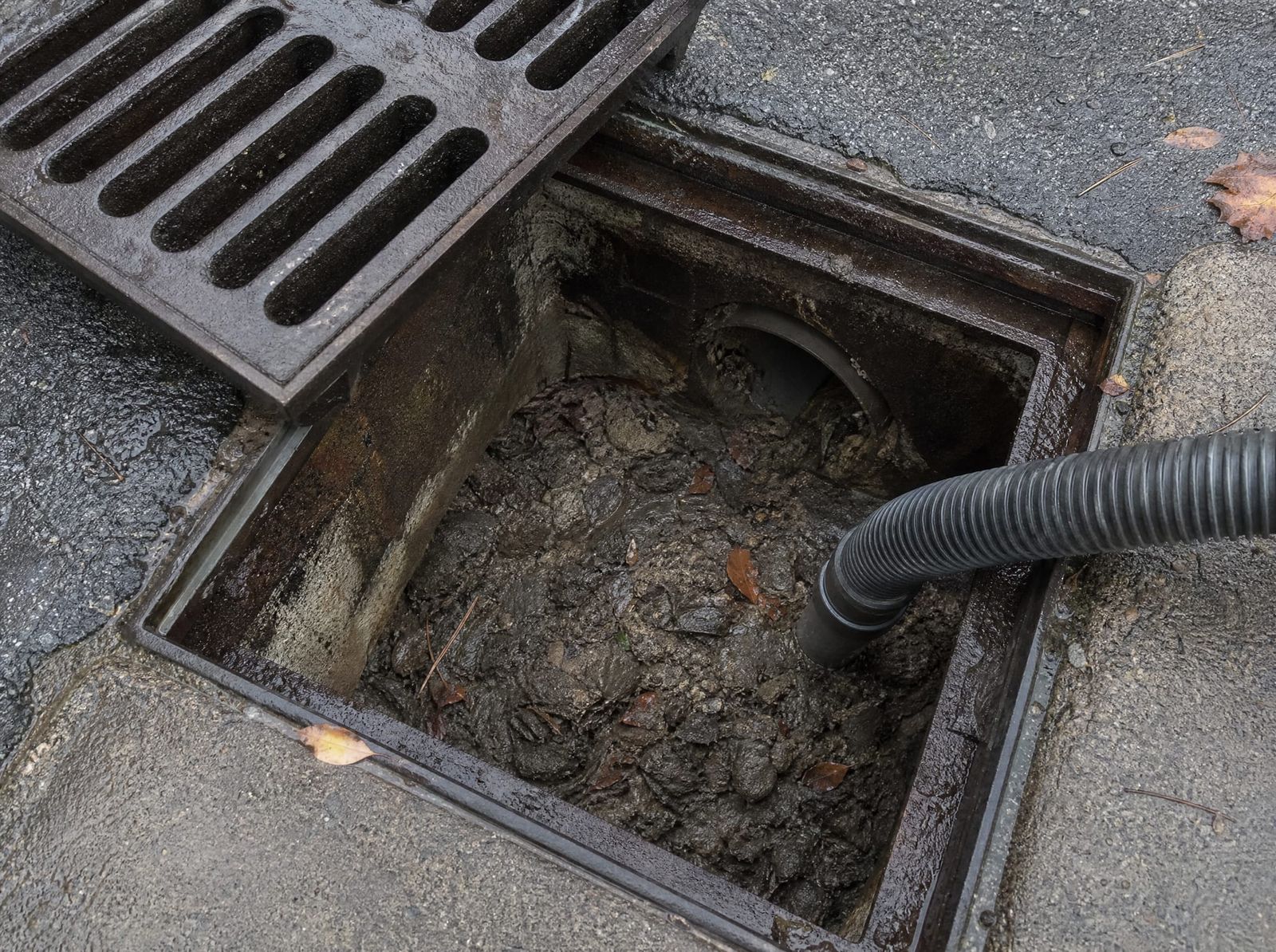
Below the outlet pipe, a basin has a sump: a space built to catch leaves, grit and silt before they reach the line. It works only while the sump has room. Once the sediment reaches the outlet, the basin stops trapping and the debris goes on into the drain line. Usually nothing changes at the surface, which is why this failure gets missed. We lift the grate and, where there is access, run a camera check of the outlet. Then we look for four conditions.
A full sump usually gives no warning of its own. These can, and each is worth a look.
Standing water after a normal rain.
Overflow at the grate.
A sour or stagnant smell.
Sediment or leaf litter near the rim.
A parkade drain that backs up.
Ponding over a leaf-matted grate.
No record of the last clean.
If water is coming in now, call or text (604) 210-3892.
The scope comes from the site, not from a flat rate. Six things move it.
How many basins there are.
How full each one is.
How easily each basin can be reached.
Whether the outlet needs a camera check or only a flush.
Parkade or trench drains in the scope.
What the clean turns up.
Tell us how many basins there are and we will price it. Send a basin count and photos, or book an inspection if you want us on site first. The scope and price are in writing before work starts.
Covered by our Built Better Warranty.
See details of the Built Better WarrantyA sump fills with whatever washes into it. Leaf cover, grit from vehicles on a ramp, bare ground beside the paving and construction nearby can all fill it faster. A newer paved site with no trees overhead fills it slowly. On a treed North Shore lot, a sump can fill in a single season, and once it is full the debris goes straight through into the drain line.
Rain sets the timing. Environment and Climate Change Canada's 1981 to 2010 normals for the N Vancouver 2nd Narrows station show precipitation rising through the autumn to a peak in November. On most properties that makes late summer or early fall the time to clean, before the leaves come down and the heavy rain starts. Some owners book a clean every year ahead of the fall and winter rain. On a heavily treed site, a second visit once the leaves are down can be worthwhile.
Two rules are worth knowing. Where runoff from a driveway is likely to accumulate or enter a garage, the BC Building Code requires a catch basin (Article 9.14.6.4). And in the City of North Vancouver, the City maintains storm sewers on public property up to the property line, owners are responsible for the infrastructure from the property line into the property, and the City does not make repairs on private property. Other municipalities set their own rules.
We work in North Vancouver, West Vancouver, Vancouver and Burnaby.
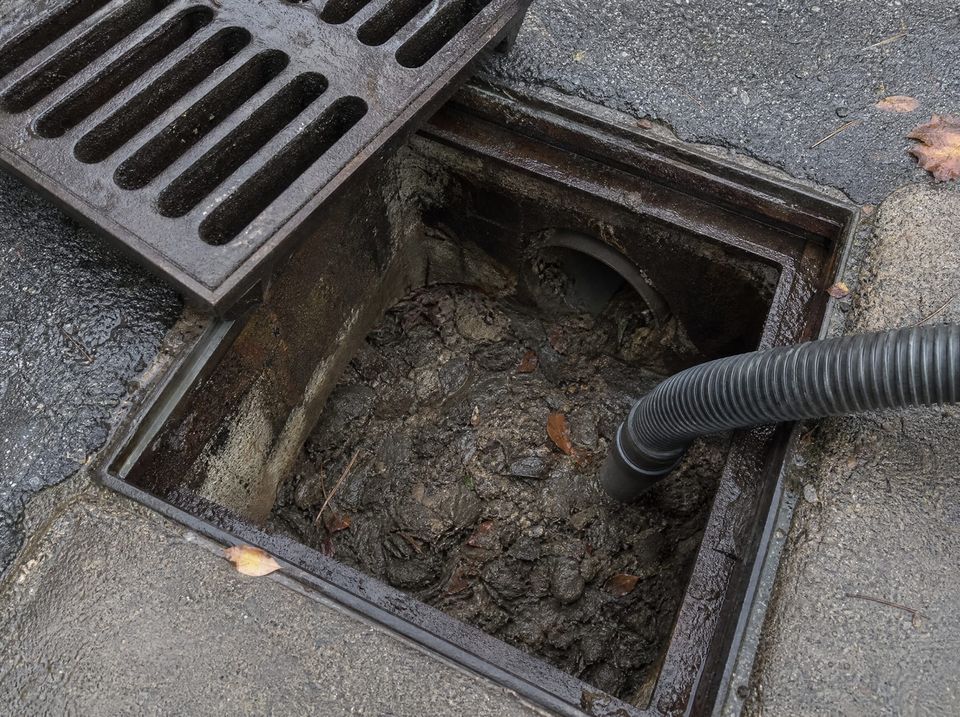
We vacuum the sump clear, flush the basin and check the outlet pipe with a camera where there is access. You then know whether debris has already reached the line, instead of guessing. If the basin is cracked or settled, or the grate has failed, we tell you what it needs.
Three jobs sit outside it. Clearing the outlet run with a jetter is drain cleaning and hydro jetting work, aimed at the pipe rather than the chamber. A broken frame or grate is repair work, so we report it and quote it on its own. A silted storm line is a separate job.
We haul the debris away rather than leaving it on site, because material from a driveway or parking area can carry oil. Where it goes, and why it is lifted out rather than flushed down the line, is covered under vacuum truck services.
When you compare quotes, three questions are worth asking any contractor. Does the quote say how many basins it covers? Is the outlet checked on camera or only flushed? Where does the material go?

We keep a dated record per basin: what was found, photos where there is structural damage, and confirmation that the outlet was flushed and checked. A council can hand that record to a depreciation report preparer.
Drainage Pro cleans basins as a standalone visit or folded into a scheduled program. If the site has never had a baseline check, a strata drainage assessment is the place to start, before any schedule is set.
Inspect
Condition-rated drainage reports for strata councils and property managers, with footage or a site observation behind every rating.
Repair
Drain cleaning for sewer lines and hydro jetting for perimeter drains, with the camera showing what is blocking the line and whether cleaning will hold.
Maintain
Suction from the surface for full sumps, flooded pits and silted lines, with the material taken away rather than flushed downstream.
Related reading
Guide ·
A perimeter drain collects groundwater at the footing and carries it away from the foundation. How it works, how deep it sits, and where the water goes.
On your own private basin, look at the outlet pipe in the chamber wall from the surface, with the grate lifted only if you can do that safely. Clear water below the bottom of the outlet means the basin still has room. Sediment at or above it means the basin has stopped trapping material. Never lean in or climb down, and never lift a grate in the street.
Usually not at first. Water keeps draining at the grate while the debris goes on into the drain line, which is why a full sump is easy to miss. The trouble shows up later as a slow or silted line, and sometimes as ponding after a normal rain.
A catch basin takes surface water from paved areas and yards at grade. A perimeter drain sits outside the foundation wall beside the footing and carries groundwater away so it cannot build up against the foundation. They do different jobs and need different maintenance.
It depends on which side of the property line the basin sits. In the City of North Vancouver, the City maintains storm sewers on public property up to the property line and does not make repairs on private property. A basin on your own lot is yours to look after. Other municipalities set their own rules, so check with yours.
Clearing leaves and litter off the grate is a homeowner job. Emptying the sump is different work. Never lean in or climb down: under WorkSafeBC's rules a basin that looks shallow can still be a confined space. If the sump is full, call a contractor.
Not if the basin takes runoff from a driveway, a parking area or a road. That material can carry oil, and spreading it puts the same sediment back into the catchment. The City of North Vancouver's drainage bylaw prohibits pollutants such as oil and sediment from entering the drainage system, and other municipalities set their own rules.
On most properties, late summer or early fall, before the leaves come down and the heavy rain starts. Environment and Climate Change Canada's climate normals show precipitation rising through the autumn to a peak in November on the North Shore. On a heavily treed site, a second visit once the leaves are down can be worthwhile.
Reviewed
Tell us the address and what you're seeing — a backup, a wet wall, a smell, a sinking lawn. We'll tell you what the next step is and what it costs, before anyone digs. Not sure yet? Ask us a question first.
Talk to the crew
Mon–Fri 7:30am–5pm · Sat–Sun 8am–5pm
Water where it should not be? A person answers, not a call centre. Photos by text tell us the most.
Call (604) 210-3892 Fastest way to reach us Text us Send photos of the wet spot