

Pre-purchase drainage inspection
Camera footage of the buried drains around a house you want to buy, a grading review and a written report to help you decide on subjects.
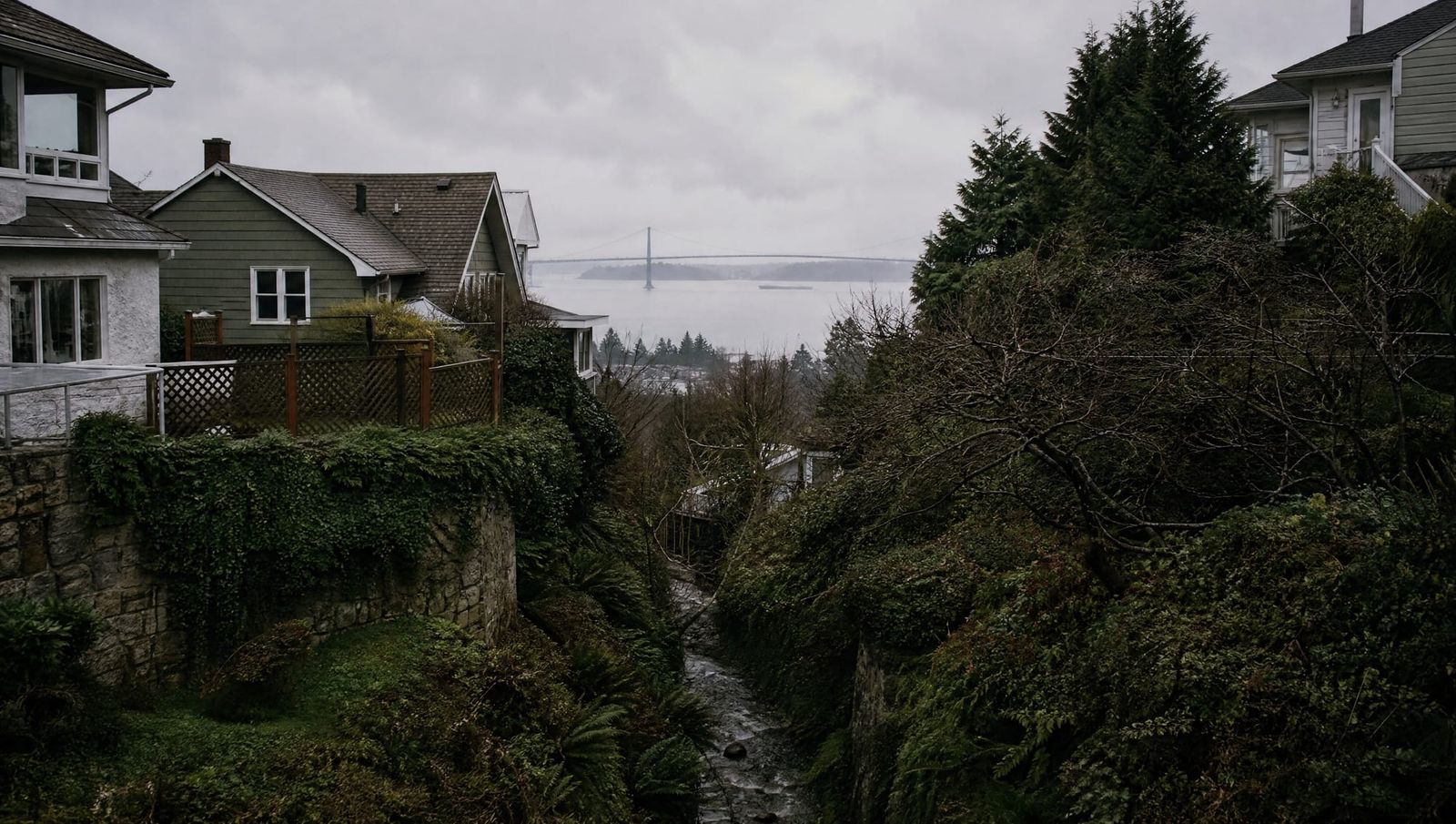
Drainage Pro is a drainage contractor serving West Vancouver, based in North Vancouver. We diagnose before we excavate, then repair or replace perimeter drains, trace basement leaks and waterproof foundations. Rock lots and steep grades shape the trench, and creek setbacks decide what can be dug and where the water may go.
Many West Vancouver homes date from the 1950s through the 1980s. The older ones were built in the era of clay and cement drain tile. On West Vancouver properties upgraded in the 1970s and 1980s, early plastic drain systems were often installed with poor bedding and minimal slope. The terrain then adds its own ways for a drain to fail, and each one looks different on camera. Our perimeter drain repair and replacement starts by finding out which one you have.
Any one of these can have a simple explanation. Two or three together, on a lot that steps down a hillside, usually mean the pipe is the problem. Our guide to the signs your perimeter drains are failing covers the general picture.
On rock lots, surface water runs across the ground and concentrates where the rock directs it, often at a foundation wall. Rock also changes three things: how the trench is dug, how much fall the pipe can have toward its outlet, and what the written scope says. The District's own drain-tile rules allow pipe laid on bedrock, so rock is expected here.
What moves the scope on a hillside lot is plain. How deep the rock sits and how far it runs along the wall. Whether the machine can reach the trench. How much fall is available to the outlet. Which mature trees and retaining walls stand in the way, and whether a creek setback applies. We check depth to rock and machine access before we scope a job. Where the ground is uncertain, the written scope says so before work starts. Yard reinstatement included.
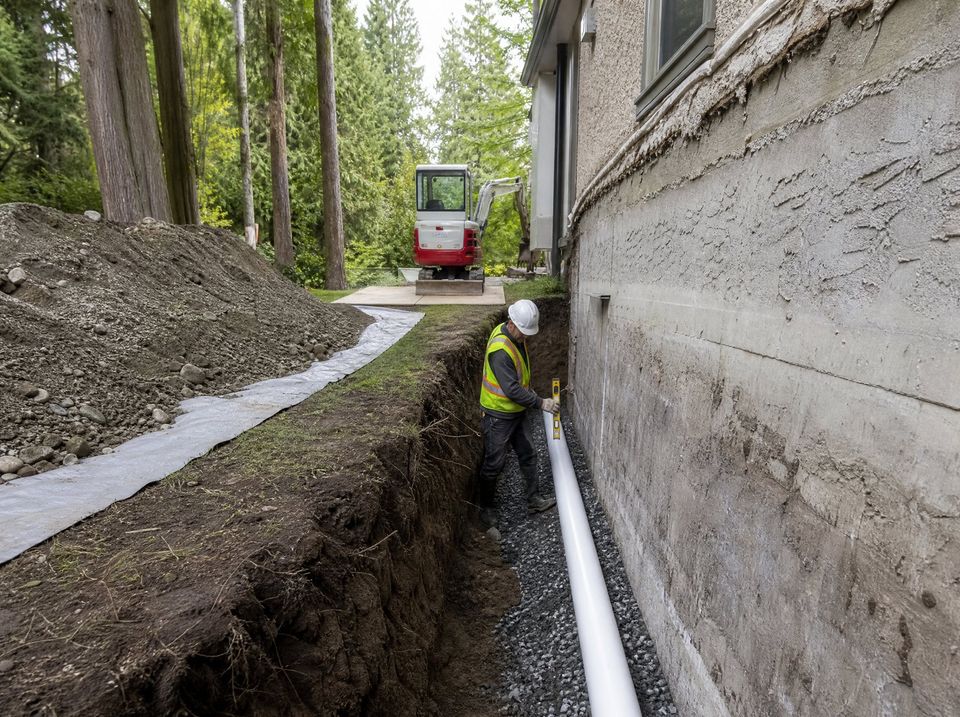
Covered by our Built Better Warranty.
See details of the Built Better WarrantyWest Vancouver is one municipality, so there is a single District to deal with. It still adds steps that a lot without a creek never sees. Not every creek is on the District's map, so we look at the lot as well. In the Existing Neighbourhoods, any development within 15 metres of the top of bank of a watercourse needs an Environmental Development Permit. The District counts disturbing soil and developing a drainage system as development, and the permit has to be approved before you apply for a building permit.
In the Upper Lands, generally north of Highway 1, the strip along a creek bank or wetland edge has to stay undeveloped. Trees within a stream corridor are protected, and pruning or removing one takes a District tree permit. If equipment or spoil occupies the boulevard, sidewalk, road or lane, the District also requires a Street Occupancy Permit. We check the District's watercourse mapping before we scope a job. Permits and inspections arranged where required.
The District's drain-tile rules are specific about the far end of the pipe. Each drain tile system drains to a concrete storm sump, with the tile ends entering it separately. Roof and deck drains are kept out of the tile and sent to the storm system.
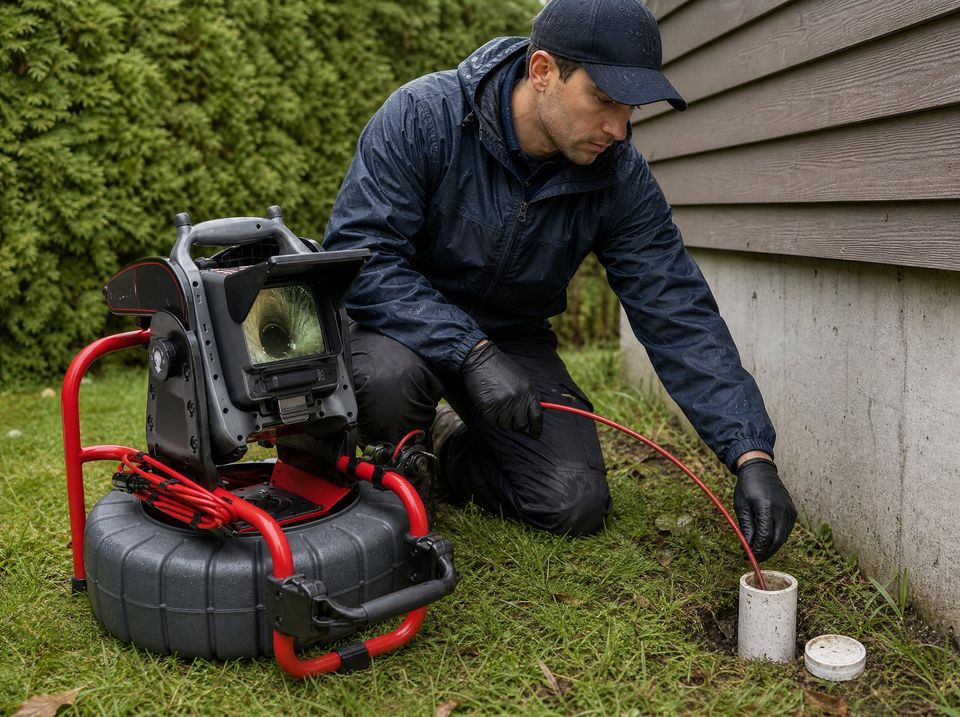
Those rules matter when you buy or renovate a hillside house. A roof drain tied into the tile, or a line that ends at a ditch nobody has looked at, does not show itself until a storm tests it. A drain camera inspection is the way to check before a storm does. We follow the drain on camera to its outlet and check that the outlet is clear.
On a hillside lot, a wrong guess means opening the wrong stretch of trench beside rock, trees or a creek setback. The camera goes in first, and the written scope flags rock and creek constraints before anyone digs. A wet lower-level room is not always a drain problem, and basement leak detection is how we find out which it is before anyone opens a wall.
Buying on the North Shore? A pre-purchase drainage inspection puts the condition of the drain in writing before you remove subjects. Drainage Pro is based in North Vancouver, serving the North Shore and Greater Vancouver, and West Vancouver is one of the four cities we work in.
The precipitation chart on this page shows the 1981–2010 normals from the N Vancouver Wharves station, 3.7 km from West Vancouver Municipal Hall. It is the nearest Environment and Climate Change Canada station with a published 1981–2010 precipitation normal, and it sits across the boundary in the District of North Vancouver, so read it as a regional guide, not a West Vancouver gauge. At that station the six wettest months run from October to March, with November the wettest and July the driest.
A marginal system on a rock lot or beside a creek tends to show its limits in that stretch. The dry months are the time to find out. Book an inspection before a storm forces the question.
On the ground
These are the parts of West Vancouver our crew is in most often. If yours is not listed, it does not mean we do not go there — call with the address.
Drainage work in the District of West Vancouver may need a permit before we dig and an inspection before the trench is closed. The municipal pages below set out what applies.
westvancouver.ca
westvancouver.ca
westvancouver.ca
The conditions that decide how a West Vancouver drainage job is scoped, with the source for each one.
What we do here
One crew and one contract, from the first camera inspection to the reinstated ground.
Diagnose the problem
Camera footage of the buried drains around a house you want to buy, a grading review and a written report to help you decide on subjects.
HD video of what is inside your drain and sewer lines, with faults located from the surface, so repairs start from evidence.
A stain on the wall is rarely where the water got in. We trace the route first, so the repair is aimed at the cause.
Condition-rated drainage reports for strata councils and property managers, with footage or a site observation behind every rating.
Fix the cause
Spot repair, one side or full renewal, scoped from camera footage of your drain tile and the age of the pipe around it.
Camera-located sewer lateral repair and replacement, from the house to the property line.
Drain cleaning for sewer lines and hydro jetting for perimeter drains, with the camera showing what is blocking the line and whether cleaning will hold.
Storm sumps and sewage ejectors load-tested, then serviced or replaced before they fail, with battery backup and alarms where they count.
Waterproof and restore
A membrane on the outside face of the foundation wall, protected by drainage board and put on while the trench is open.
A written assessment of where the water gets in, then crystalline waterproofing from inside where the outside of the wall cannot be reached.
Leaking cracks sealed by injection through the wall, once we know why they opened and whether they are still moving.
Settling, bowing or heaving foundations, assessed with an engineer and repaired to the engineer's design.
Prevent future failures
Common property drainage on a schedule council can budget for, scoped from measured condition and recorded year after year.
Your drain runs filmed every year and set beside last year's footage, so slow change shows up while it is still a finding, not a failure.
We empty the sump, check the outlet and record each basin, for houses and strata parking areas, ahead of the wet months.
Suction from the surface for full sumps, flooded pits and silted lines, with the material taken away rather than flushed downstream.
Yes. The District requires a drainage permit, one of its mechanical permits, for drain tile and for storm and sanitary sewers. Its inspector checks the pipe bedded in gravel with the top of the pipe showing, before backfill, so the trench stays open until that inspection is done. Permits and inspections arranged where required.
It can. In the District of West Vancouver's Existing Neighbourhoods, drainage work within 15 metres of the top of a creek bank counts as development and needs an Environmental Development Permit before the building permit. In the Upper Lands, generally north of Highway 1, a no-development setback applies instead. We check the District's watercourse mapping before we scope the job.
Rock changes how the trench is dug and how much fall the pipe can have toward its outlet. The District of West Vancouver's drain-tile rules allow pipe laid on bedrock, so rock is a scope question, not a dead end. Our written scope flags where the ground is uncertain, such as rock, before work starts.
Under the District of West Vancouver's drain-tile rules, each drain tile system ends in a concrete storm sump, and roof and deck drains go to the storm system rather than into the tile. Past the sump, the water has to reach a storm sewer, a drainage ditch, a stream, the ocean (indirectly) or an approved dry well. On camera we follow the line to its outlet and check that the outlet is clear.
Some are. The District of West Vancouver protects trees within a stream corridor, near the foreshore and in other environmentally sensitive areas, and pruning or removing one takes a District tree permit. Tell us about creeks and large trees near the wall when you call, because they decide where the trench can go.
Published Updated
Tell us the address and what you're seeing — a backup, a wet wall, a smell, a sinking lawn. We'll tell you what the next step is and what it costs, before anyone digs. Not sure yet? Ask us a question first.
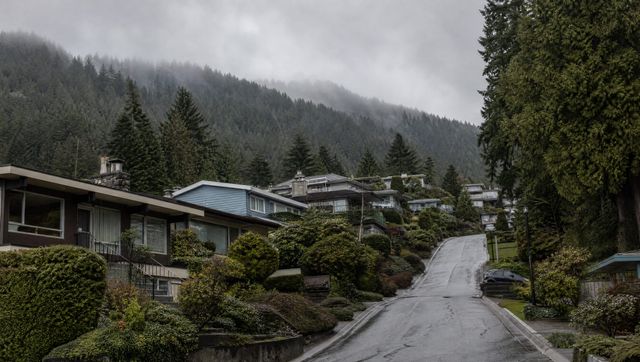
Camera-first drainage repair and leak diagnosis for the City and District of North Vancouver, where slope runoff meets older foundations.
Lynn Valley · Deep Cove · Upper Lonsdale · Lower Lonsdale · Edgemont
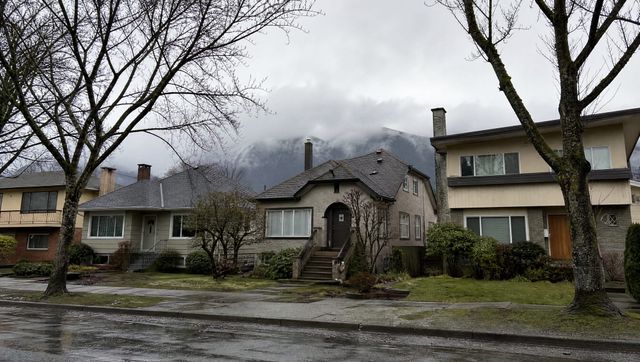
Camera-first drain diagnosis in Vancouver: find where your drains connect, then repair the perimeter drain or sewer line on your side.
Kitsilano · Dunbar · Point Grey · Kerrisdale · Mount Pleasant
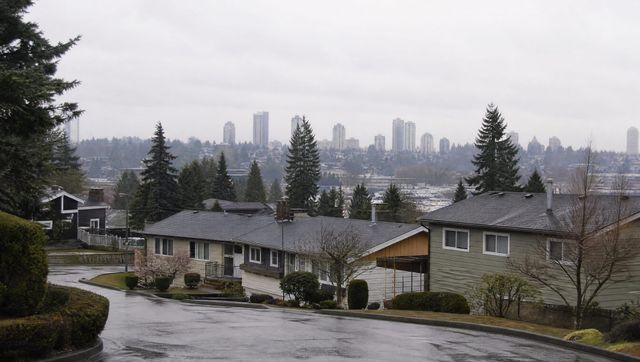
Perimeter drain repair, sump systems and drain cleaning for Burnaby homes, from the north ridges to the low ground along Still Creek and the Fraser.
Burnaby Heights · Capitol Hill · Brentwood · Burnaby Lake · Deer Lake
Talk to the crew
Mon–Fri 7:30am–5pm · Sat–Sun 8am–5pm
Water where it should not be? A person answers, not a call centre. Photos by text tell us the most.
Call (604) 210-3892 Fastest way to reach us Text us Send photos of the wet spot