

Maintain
Strata maintenance programs
Common property drainage on a schedule council can budget for, scoped from measured condition and recorded year after year.
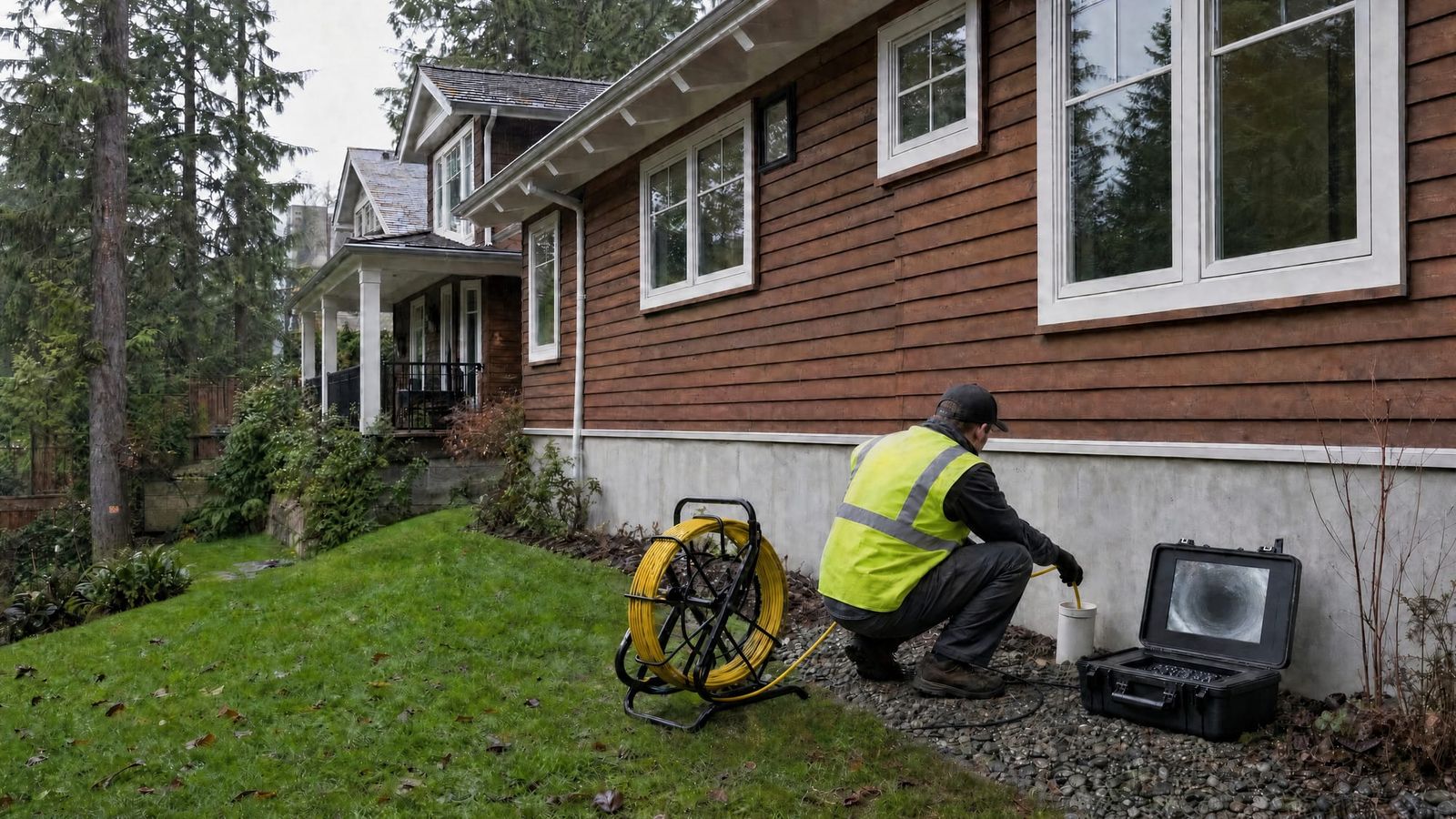
An annual drain camera inspection films your drain runs once a year and keeps the footage, so each pass is compared with the one before. The series shows what a single visit cannot: how fast silt builds, whether roots come back, whether a sag is deepening. It suits original tile, nearby trees, past repairs and finished basements.
One inspection tells you what a pipe looks like today. It cannot tell you how fast it is changing, and the rate is what you can plan around. Set this year's footage beside last year's and the same findings answer a better question: is it getting worse, and how quickly?
A series also answers two plain questions a single visit cannot: did last year's repair hold, and what is new since the last pass? A record turns "keep an eye on it" into a date.
These are reasons to start tracking a line, not symptoms of a failure. If water is already getting in, or you recognize the signs of failing perimeter drains, start with a one-off drain camera inspection instead.
The interval should come from what the pipe is made of and what grows near it, not from the calendar. We set it after the first pass shows what we are working with.
A yearly pass earns its place where original clay or concrete tile is being kept in service, where a run has a known sag or repair, where trees grow close to the walls, or where water would reach a finished space below grade. Newer pipe with good fall and working cleanouts can go longer between passes, and so can a line that keeps coming back clean.
What else moves the scope:
On a strata site, the same idea runs across the whole property as part of a strata maintenance program.
Covered by our Built Better Warranty.
See details of the Built Better WarrantyEnvironment and Climate Change Canada's 1981–2010 normals for Vancouver International Airport show precipitation climbing through the autumn to a peak in November, with July and August the driest months. Higher up the North Shore, the N Vanc Sonora Dr station follows the same pattern and records far more precipitation over the year. More water moving through a pipe can carry more silt into it.
A pass in late summer or early autumn shows each run before the wet months load it, and leaves time to flush or repair before the heaviest rain. Many older homes in North Vancouver, West Vancouver and Vancouver were built when clay and cement drain tile was the standard material, and those systems benefit most from a record.
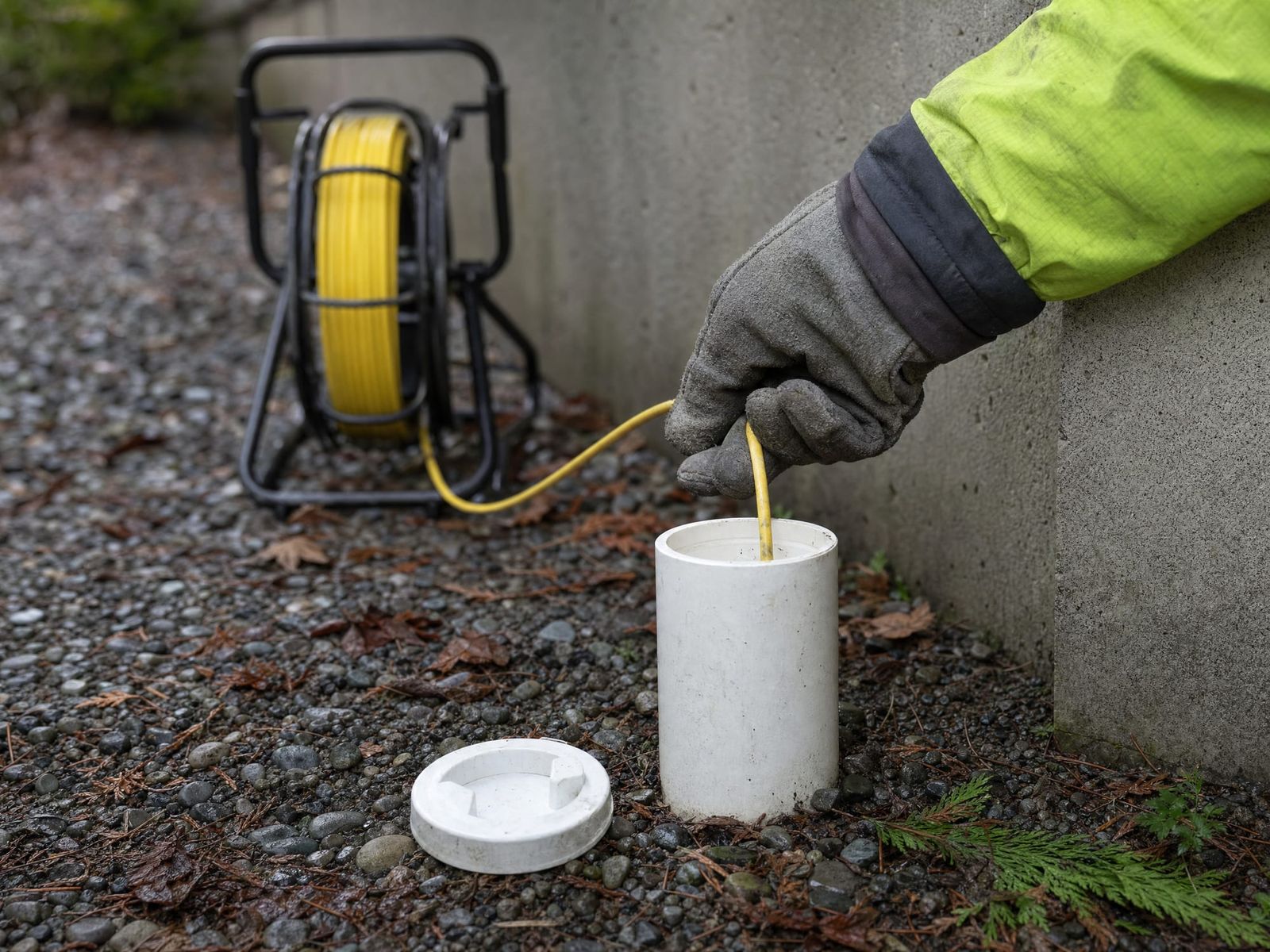
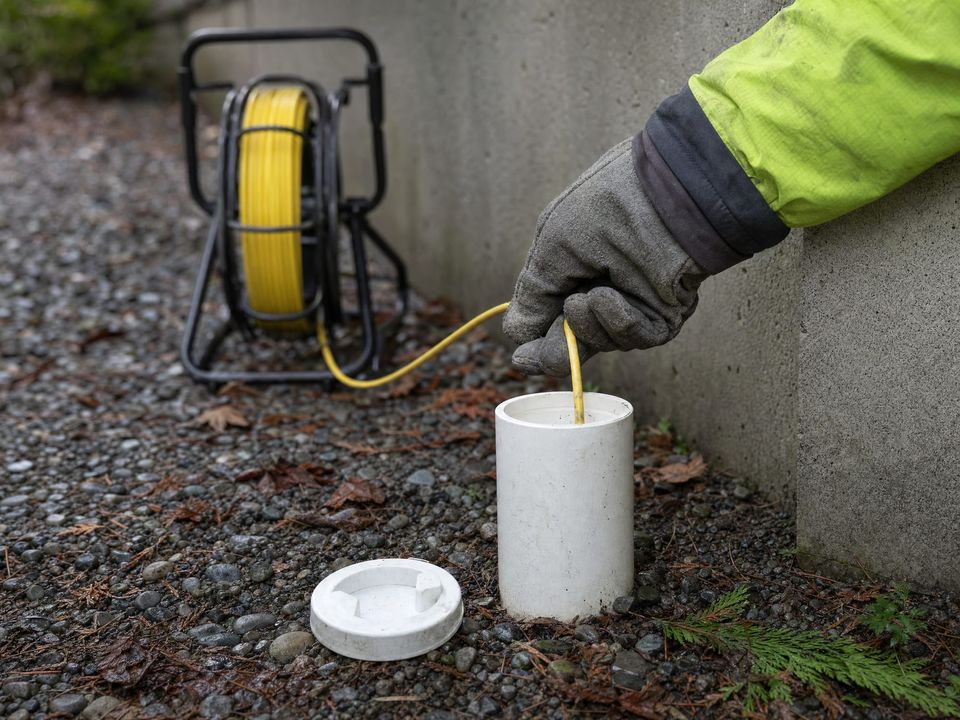
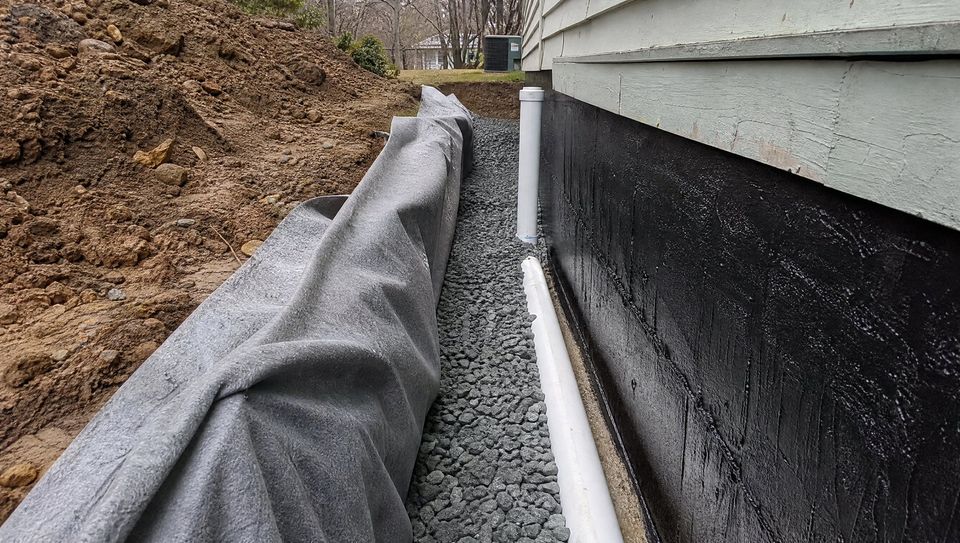
The camera goes in at a cleanout. On the two-pipe layout in the City of Burnaby's foundation and surface drainage guide, cleanouts sit at the upstream corner of the drain tile. Knowing where they are, and keeping them clear of new paving and planting, is what keeps a run in the record.
The record is meant to outlast any one visit. If you sell, change contractors or hand the house on, it should still make sense to someone reading it cold.
Each annual pass comes with the footage, measured silt depths compared with the previous pass, and a written note of what changed. Findings are located by distance from a named access point, so anyone can go back to the same spot. You keep the footage and the written findings whether or not we do the repair.
Over several passes the file shows a rate: how fast silt builds in each run, whether roots return after a cut, and whether a repaired joint is holding. The next decision then rests on a measurement instead of a guess.
It cannot predict a sudden failure.
It cannot cover runs it cannot enter.
It does not replace a look at the surface.
To start a record, book the baseline inspection. Drainage Pro films the accessible runs and sets the starting point that later passes are compared against.
Maintain
Common property drainage on a schedule council can budget for, scoped from measured condition and recorded year after year.
Inspect
HD video of what is inside your drain and sewer lines, with faults located from the surface, so repairs start from evidence.
Repair
Drain cleaning for sewer lines and hydro jetting for perimeter drains, with the camera showing what is blocking the line and whether cleaning will hold.
Related reading
Guide ·
Clay, Big-O and PVC drain tile look similar underground but fail differently. Learn how to identify your drain tile type and what each means for repairs.
A one-off inspection answers what is wrong today. A yearly record films your runs on a cycle and compares each pass with the last, so you can see how fast things are changing and plan around the rate rather than a single snapshot.
It can be. The right interval depends on the pipe material, the trees nearby, the history of the line and what is below grade. We set it after the first pass shows what we are working with, not before.
That is good news, and evidence that the interval can stretch. After clean results year after year, we recommend a longer interval in writing.
No. The pass films and records. Flushing is recommended only when the record shows a run needs it, and is quoted separately. Flushing sound pipe on a calendar adds cost without a reason.
Usable footage from a previous inspection by another company can serve as the baseline. It needs to show the runs clearly and where the camera went in, so the next pass has something to compare against.
Each annual pass comes with the footage, measured silt depths compared with the previous pass, and a written note of what changed. Findings are located by distance from a named access point, so anyone can go back to the same spot.
It can help. A dated file showing a stable line gives a buyer's inspector a history to look at instead of a single snapshot. It does not replace the buyer's own inspection, and it promises nothing about the sale.
Reviewed
Tell us the address and what you're seeing — a backup, a wet wall, a smell, a sinking lawn. We'll tell you what the next step is and what it costs, before anyone digs. Not sure yet? Ask us a question first.
Talk to the crew
Mon–Fri 7:30am–5pm · Sat–Sun 8am–5pm
Water where it should not be? A person answers, not a call centre. Photos by text tell us the most.
Call (604) 210-3892 Fastest way to reach us Text us Send photos of the wet spot