

Maintain
Strata maintenance programs
Common property drainage on a schedule council can budget for, scoped from measured condition and recorded year after year.
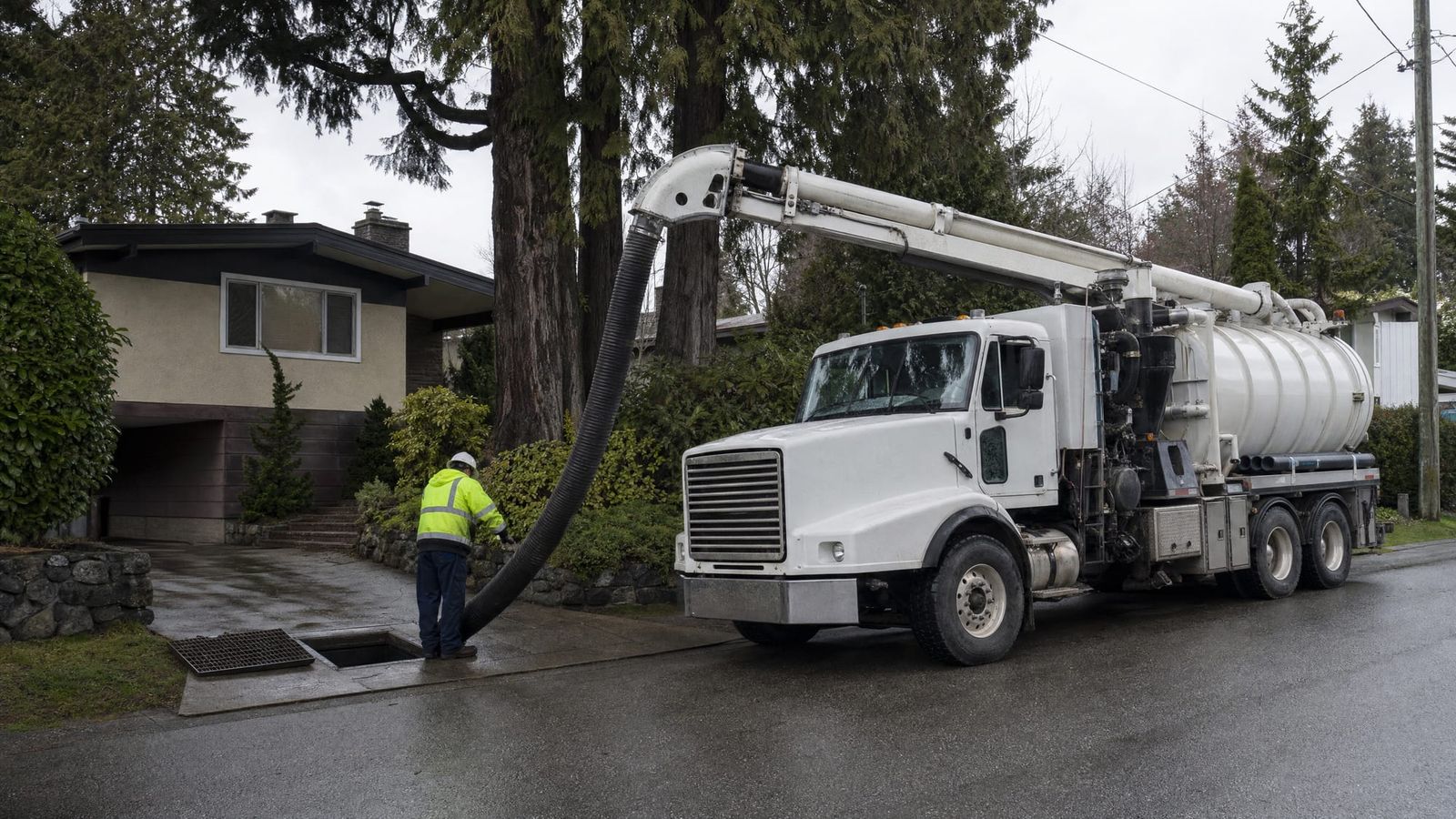
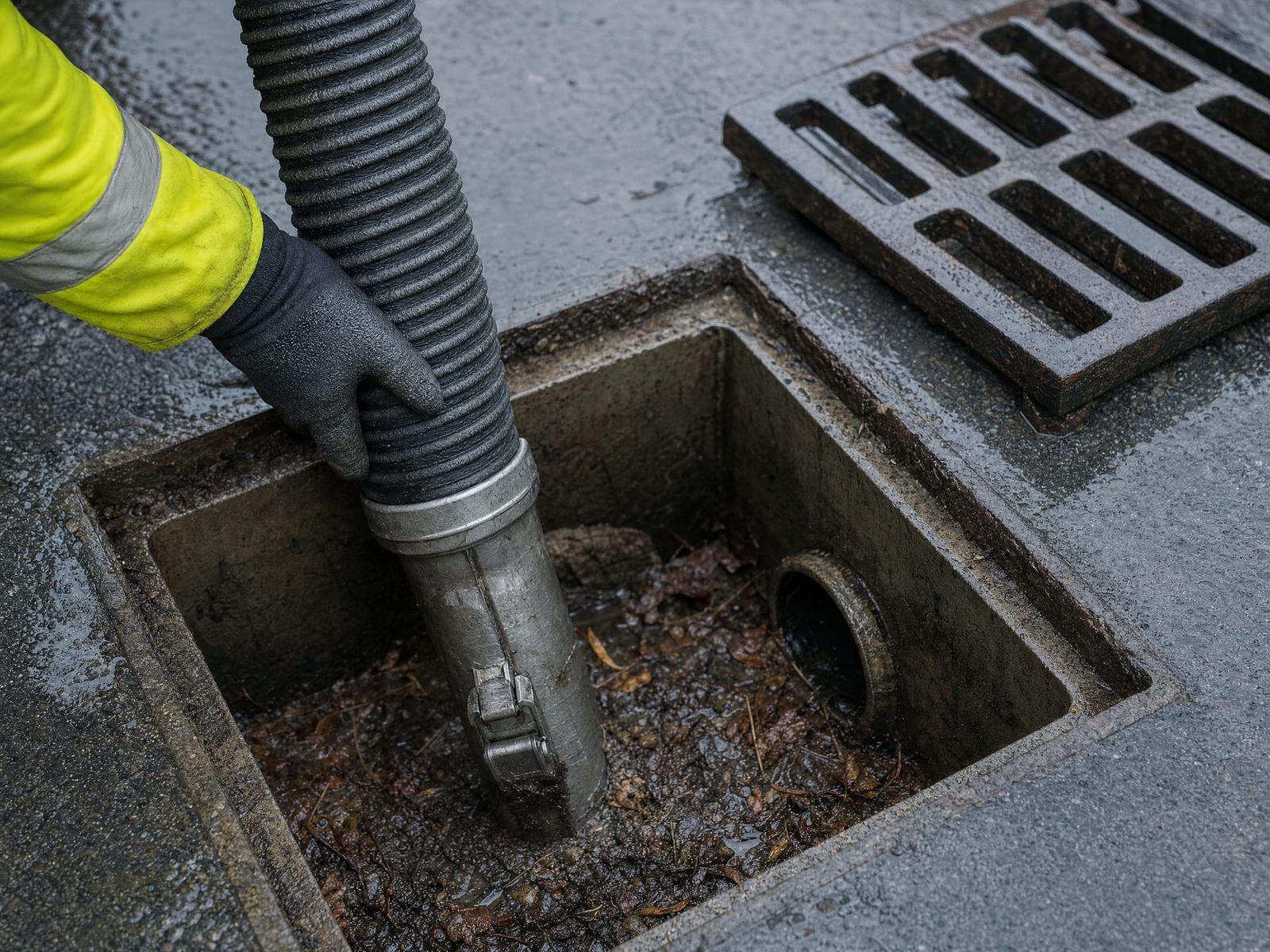
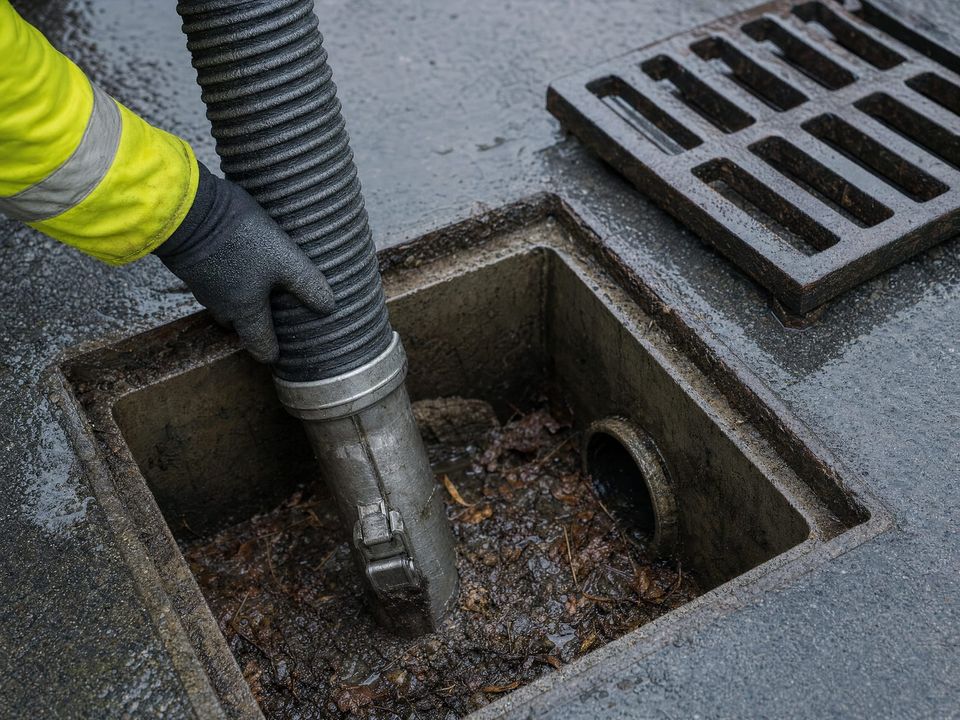
A vacuum truck lifts loose water and solids out of catch basin sumps, flooded pits and silted storm lines, and hauls the material away instead of pushing it further down the system. It is the right tool on strata sites and homes where a chamber has filled. It does not fix a collapsed pipe or cut roots.
Pumps move water. Grit, leaves and silt mixed with water need suction, and suction works from the surface. A vacuum truck draws the mix up a hose into its debris tank and takes it away, without anyone climbing into the chamber. These are the jobs it suits.
It is work for strata councils and property managers with parkade sumps, ramps and shared driveways, and for homeowners with a full sump or basin. Strata sites can book it on a schedule, alongside basin cleaning and sump checks, within a strata maintenance program.
If water is coming in now, call or text (604) 210-3892.
A vacuum truck job turns on access: how far the hose has to run, and how deep the chamber goes. Before a truck is booked, we want to know:
Tell us what is full and how far the hose has to go, and we can say whether a truck is the right tool.
Covered by our Built Better Warranty.
See details of the Built Better WarrantyThe material leaves in the truck's tank, and nothing is left on site. Pushing it further down the line only moves the problem to the next low point, or to the next property.
That matters here. In the City of North Vancouver, the Stream and Drainage System Protection Bylaw prohibits pollutants such as oil, paint, sediment and concrete from entering the drainage system. Lifting the material out, rather than flushing it along the pipe, is the point of the job.
Working from the surface also keeps people out of the chamber. WorkSafeBC's confined space rules define a confined space by its features, such as restricted entry and exit and not being designed for continuous occupancy, not by its depth. A hose lowered from the surface means nobody has to go in.
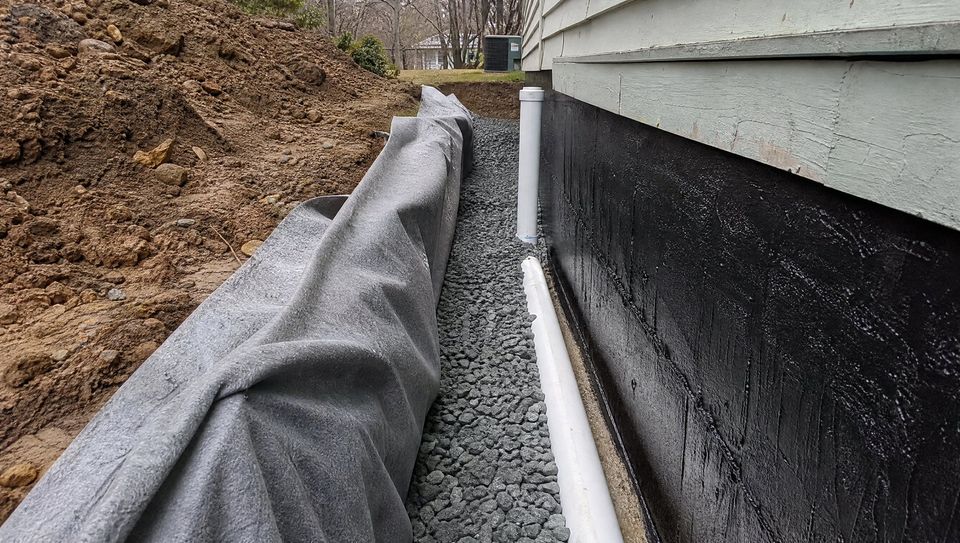
Timing follows the rain. Sumps and basins are best emptied before the wet months. The City of Burnaby's drainage installation guide shows the drain tile and roof leader lines of a two-pipe layout meeting at a storm sump with an outlet to the storm sewer. That sump is one of the chambers a truck empties.
A collapsed or bellied pipe.
Roots in a joint.
Clean water with nothing in it.
Jetting and suction do two halves of one job. A jetter cuts and moves material along the pipe; the vacuum takes it out of the system and away. On a silted storm line or a basin outlet, the jetter loosens what has settled and the hose catches it at the chamber, so it does not settle straight back in. For jetting on its own, see drain cleaning and hydro jetting.
At Drainage Pro, we scope the job and run the camera where the line needs a look first. The truck is the tool for the part that has to be lifted out.
Maintain
Common property drainage on a schedule council can budget for, scoped from measured condition and recorded year after year.
Maintain
Your drain runs filmed every year and set beside last year's footage, so slow change shows up while it is still a finding, not a failure.
Maintain
We empty the sump, check the outlet and record each basin, for houses and strata parking areas, ahead of the wet months.
Usually not. Ramps and overhead clearance tend to keep a loaded truck outside, so it stands at street level and the hose runs in to the chamber. The distance from a legal standing spot to the chamber is the first thing to work out.
Suction cannot fix a collapse; it only lifts what is loose. The line needs filming so you can see the fault, and the repair is then scoped from that footage rather than from a guess.
For clean water with no solids in it, a pump is usually the better tool. A vacuum truck earns its place when there is sediment, leaves or debris mixed in that a pump would choke on.
Jetting cuts and moves material along the pipe. A vacuum truck takes it out of the system and hauls it away, which matters for heavily silted lines, full sumps, and material that should not be washed into the storm system.
No. A small basin with light sediment can be cleaned by hand. A strata parking area or a parkade drain with built-up grit needs the volume and suction of a truck to clear it properly.
Reviewed
Tell us the address and what you're seeing — a backup, a wet wall, a smell, a sinking lawn. We'll tell you what the next step is and what it costs, before anyone digs. Not sure yet? Ask us a question first.
Talk to the crew
Mon–Fri 7:30am–5pm · Sat–Sun 8am–5pm
Water where it should not be? A person answers, not a call centre. Photos by text tell us the most.
Call (604) 210-3892 Fastest way to reach us Text us Send photos of the wet spot