

Repair
Perimeter drainage repair
Spot repair, one side or full renewal, scoped from camera footage of your drain tile and the age of the pipe around it.
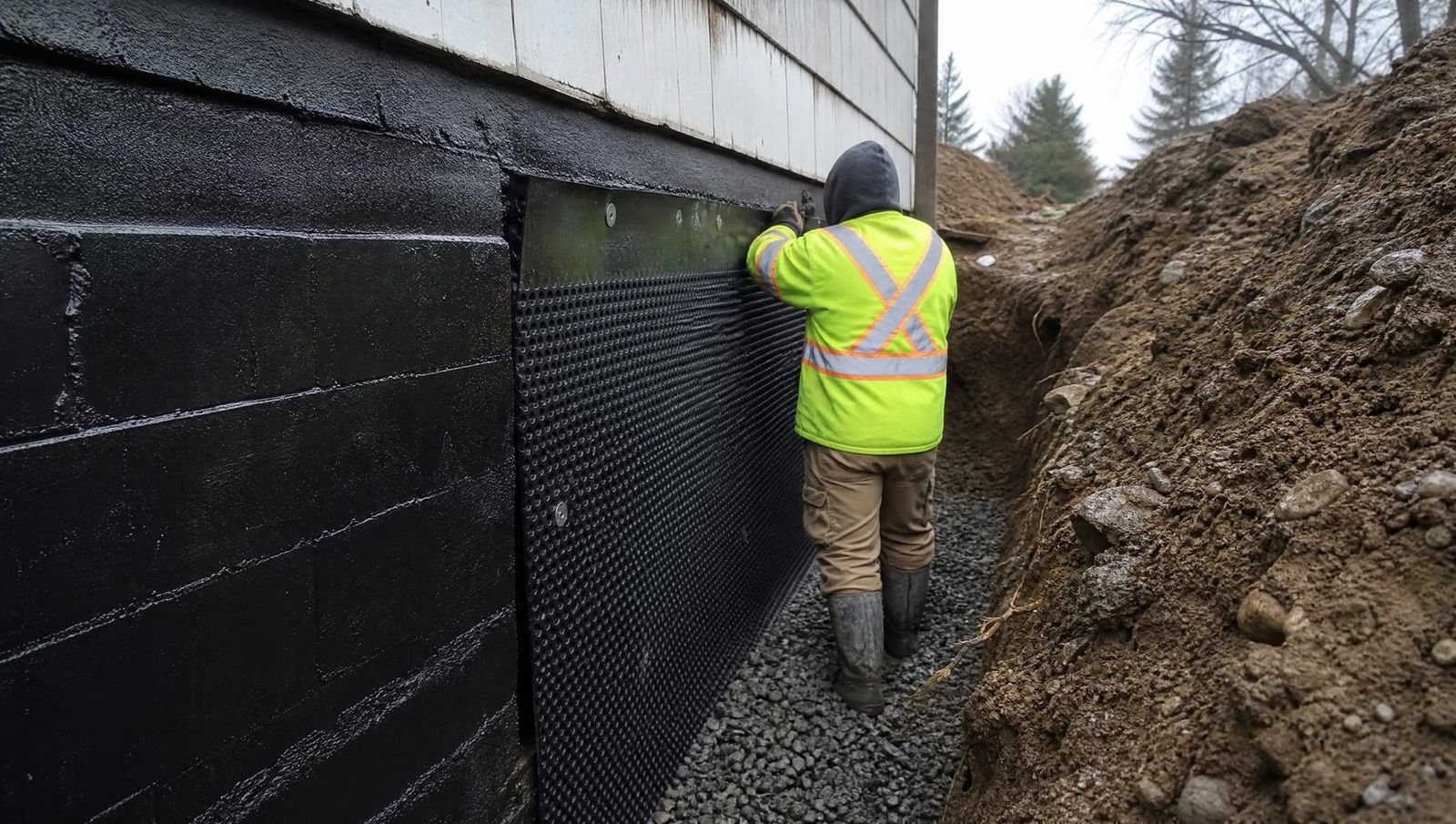
When we replace a perimeter drain, the foundation wall gets restored and waterproofed before the trench is closed. The excavation is the expensive part of the job, and it's already paid for. Waterproofing done now costs a fraction of waterproofing done later, because later means digging the same hole twice.
The hole is the expensive part of a drainage job. Once it's open, the wall is right there, bare, and cheaper to do properly than it will ever be again. Skip it and the next time that wall needs attention, you pay for the excavation twice.
The wall is done before the trench closes.
No second dig.
Covered up to 10 years.
Photos of what's now underground.
Permits and inspections handled.
Clear to finish the basement.
Most North Shore and Greater Vancouver foundations from the 1970s and 80s got a sprayed dampproofing coat. It was the cheaper application then, and it resists soil moisture, but it was never built to hold back water pushing against the wall, which is what a hillside lot or a failed drain delivers every fall.
Over the decades that coat breaks down. Once it has, water finds its way through stress cracks that were once covered with dampproofing and through the forming rod imperfections left in the concrete, both now less protected and prone to water ingress. Today's code requires a waterproofing membrane where water pressure builds against the wall. When the trench is open, the first question is which of the two your wall has. The answer is almost always the old coat.
Dampproofing coat.
Waterproofing membrane.
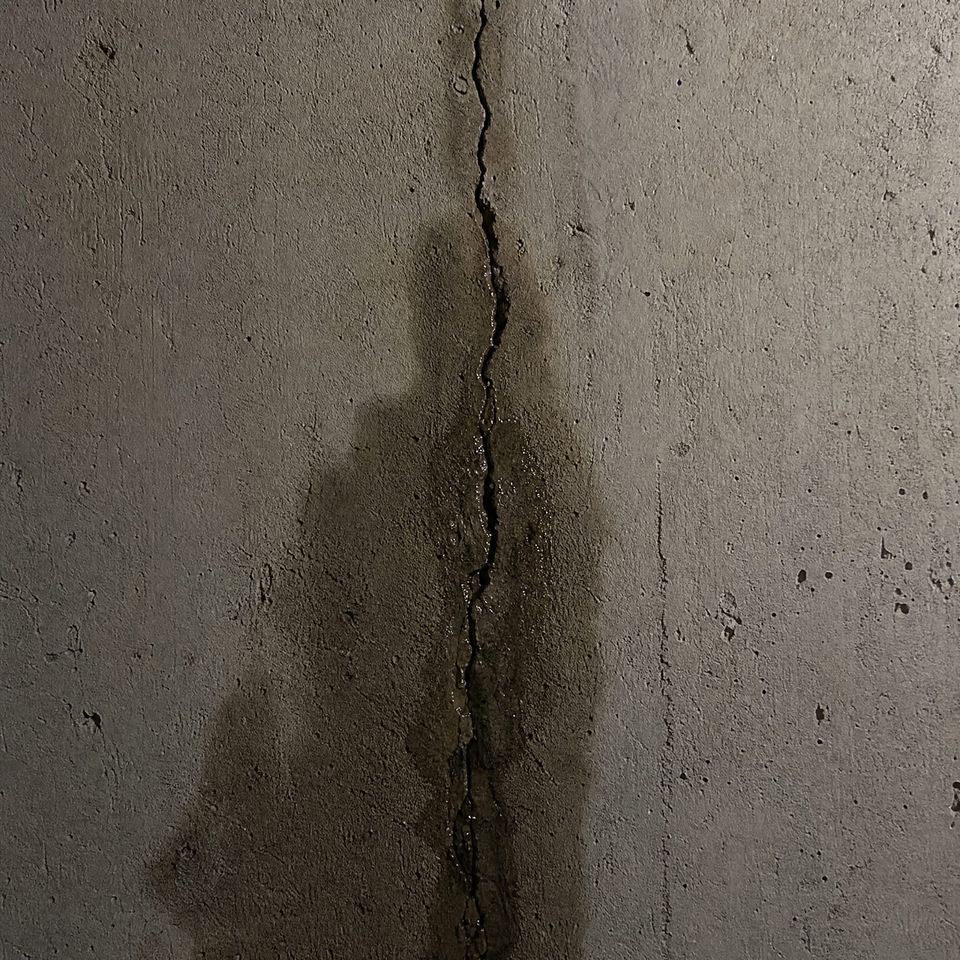
A membrane rarely fails as a material. It fails at the preparation, the edges, the protection over it and the backfill against it. None of that can be seen once the trench is closed, which is why every step gets photographed.
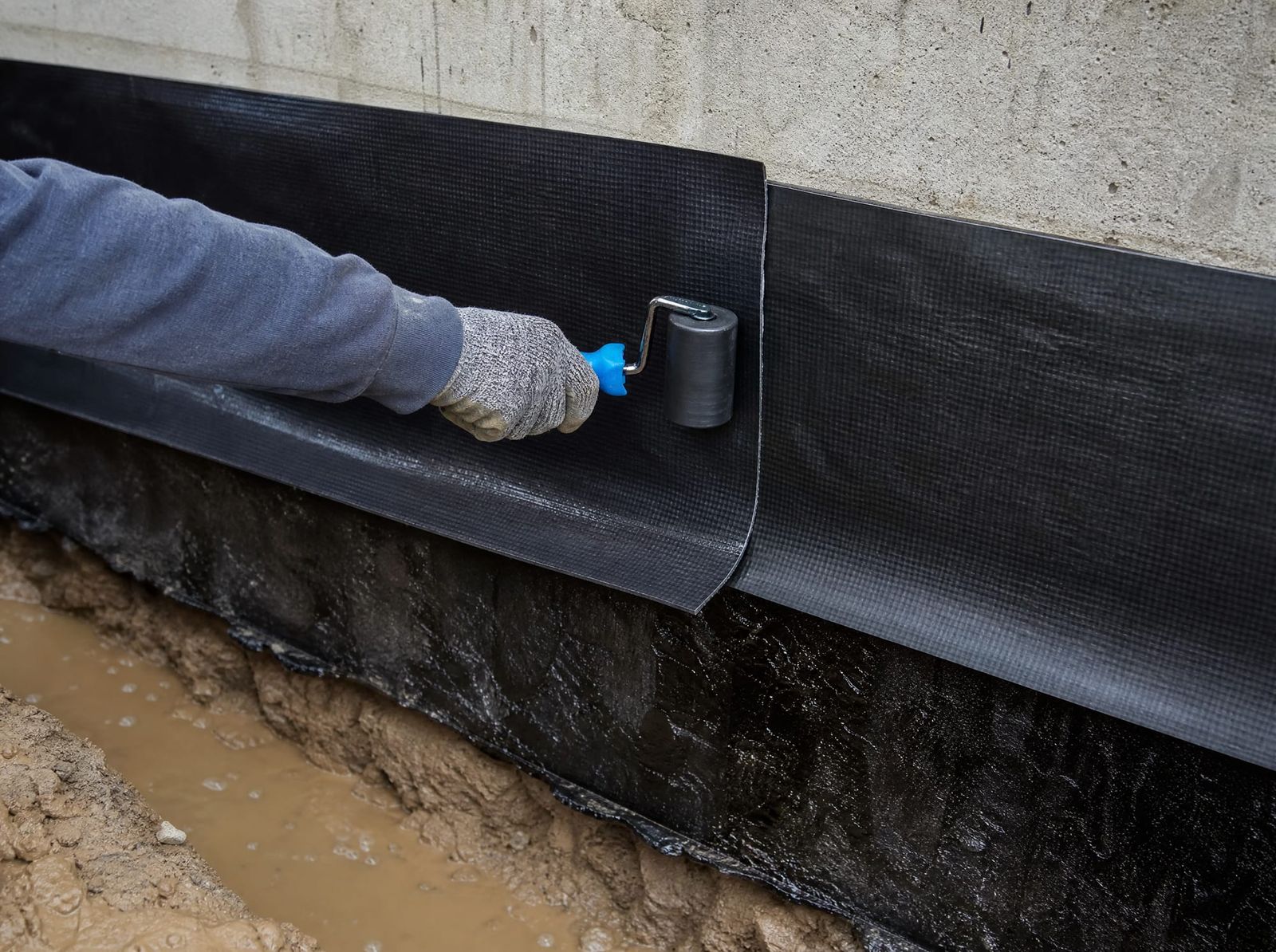
Covered by our Built Better Warranty.
See details of the Built Better WarrantyMost of our waterproofing goes on while a drain is being replaced. These are the three cases where the excavation is worth it for the wall alone.
Water is coming through the wall face.
You're finishing the room behind it.
An inspection flagged it.
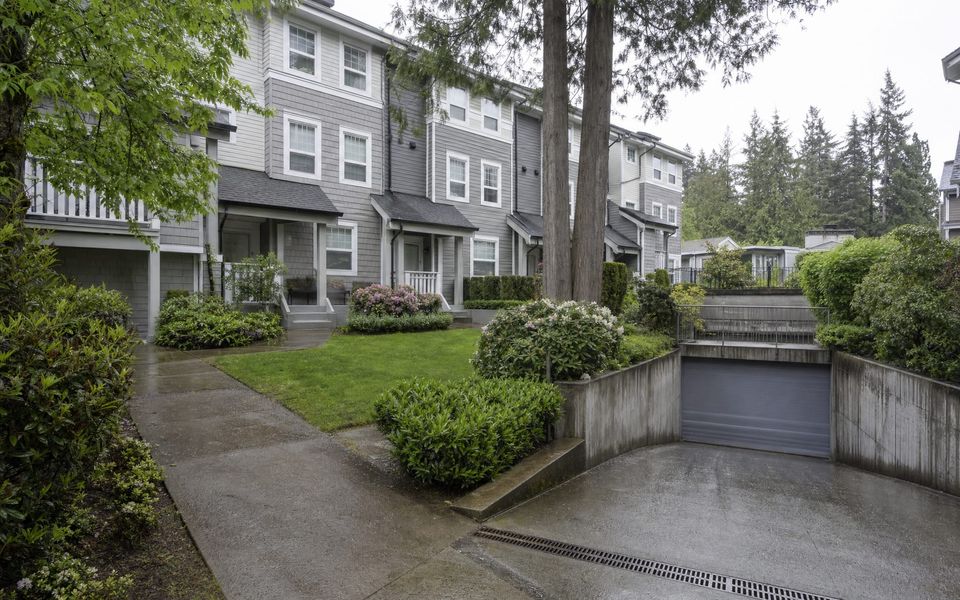
A shared property line, a deck or patio against the wall, or a row house with no side yard can rule out digging down to the footing. There is no direct replacement for exterior waterproofing, but circumstances sometimes call for a different approach. When that's the case and water is still getting in, interior basement waterproofing is a potential option. It seals the pores of the concrete from the inside, forming a barrier on the inside face of the wall instead of the outside.
Repair
Spot repair, one side or full renewal, scoped from camera footage of your drain tile and the age of the pipe around it.
Protect
A written assessment of where the water gets in, then crystalline waterproofing from inside where the outside of the wall cannot be reached.
Protect
Leaking cracks sealed by injection through the wall, once we know why they opened and whether they are still moving.
Related reading
Guide ·
A perimeter drain collects groundwater at the footing and carries it away from the foundation. How it works, how deep it sits, and where the water goes.
Dampproofing is a coating that resists moisture in the soil, and the BC Building Code applies its dampproofing rules where drainage is provided along the entire below-ground portion of the wall. Waterproofing is a continuous membrane for a wall that water presses against, and the code requires it where hydrostatic pressure occurs. The two are not interchangeable.
Usually, if the wall shows it needs a membrane. The outside face can be reached only while the ground is open, so the decision is made then. A coating that has failed, or water that has been reaching the wall, points to a membrane before backfill. A sound, dry wall may not need one.
No. Foundation waterproofing is work on the outside face of the wall, done while the ground is open, so water is kept off the concrete. Basement waterproofing covers the options from inside the basement, for walls where the outside cannot be reached. They answer the same problem from opposite sides of the wall.
Either can work when it is installed to the manufacturer's instructions, which is what the BC Building Code asks for. Liquid-applied membrane suits walls with penetrations, ledges or irregular faces. Sheet suits straight walls with good access. The wall decides, and a quote should say which one and why.
The code asks for a waterproofed wall to be protected from mechanical damage during backfilling, and board is one way to do that. It also gives water a path down to the drain instead of holding it against the wall. Where the wall carries a real water load, board belongs on the scope.
Yes, they come first. The membrane has to bond to sound concrete, and the BC Building Code asks for a concrete wall to have its holes and recesses sealed and its surface free of cracks before it is waterproofed.
It can, if the drain is sound. The membrane keeps water off the concrete, and the board sends water down to the drain at the footing, so the drain has to take it. A camera run shows whether it can. If the drain has failed, water can build up against the foundation, so the drain is dealt with first or in the same excavation.
Yes. For block walls, the BC Building Code asks for the exterior to be parged with mortar below ground, coved over the footing, before the waterproofing goes on. Poured concrete walls have their holes and recesses sealed instead. Either way, the surface is prepared before anything is applied.
Reviewed
Tell us the address and what you're seeing — a backup, a wet wall, a smell, a sinking lawn. We'll tell you what the next step is and what it costs, before anyone digs. Not sure yet? Ask us a question first.
Talk to the crew
Mon–Fri 7:30am–5pm · Sat–Sun 8am–5pm
Water where it should not be? A person answers, not a call centre. Photos by text tell us the most.
Call (604) 210-3892 Fastest way to reach us Text us Send photos of the wet spot