

Pre-purchase drainage inspection
Camera footage of the buried drains around a house you want to buy, a grading review and a written report to help you decide on subjects.
Drainage Pro is a drainage contractor in Vancouver, based in North Vancouver. We start with a camera, then repair or replace perimeter drains, work on your side of the sewer connection and waterproof foundations. In older parts of the city a house may drain to a combined sewer, a sanitary line or a rock pit. We find out which first.
Four ways Vancouver drainage fails, and what the camera shows for each.
A combined sewer carries rainwater and sewage in one pipe, and a heavy storm can overwhelm it. A separated system splits them: catch basins, foundation drains and roof leaders go to the storm sewer, and sewage goes to the treatment plant. The City is replacing combined systems with separated ones, working toward the Province of BC's goal of ending sewage overflows by 2050.
As the City separates the street, properties need separated systems too. The City says private connections are typically separated as properties redevelop or carry out major renovations, and it lists a few other cases, so ask it about your address.
Your part is the line on your property, up to the City's connection. Whoever does the work gets the City permit first, and the City inspects when it is done. The City sets this out in renewing and upgrading your sewer connection. We put a camera in your line first, so sewer line repair on your side of the connection is scoped from what is actually there.
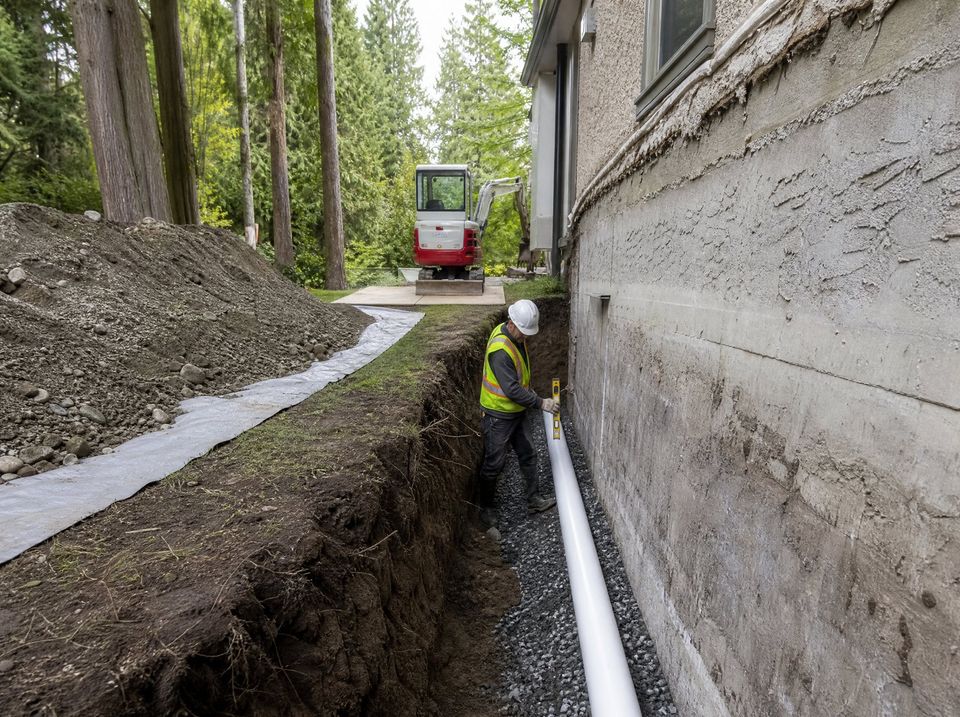
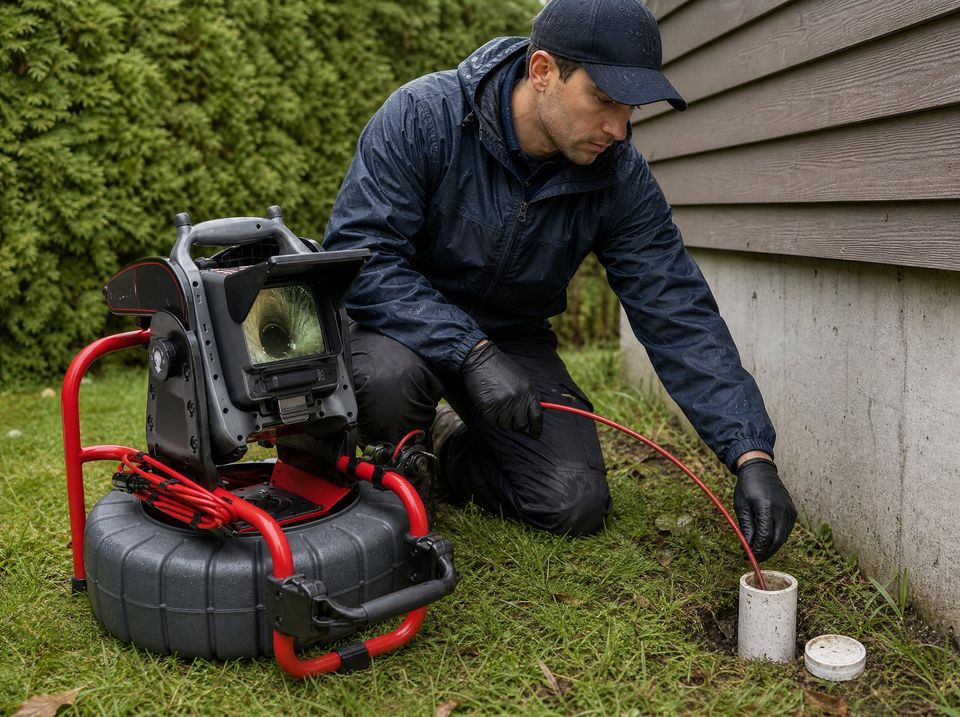
Where the water goes decides the job. A perimeter drain tied into the storm sewer needs a different repair from one draining to a rock pit or into the sanitary line, and nothing at the surface tells you which you have. A camera inspection follows the line from a cleanout and shows where it ends up.
Three other things move the scope: whether the pipe has collapsed or is only silted, whether the run can be reached or sits under a patio or an addition, and how much room the lot leaves to dig.
If you are buying an older Vancouver house, the same question is worth asking in a pre-purchase drainage inspection, before you commit.
Covered by our Built Better Warranty.
See details of the Built Better WarrantyAny one of these can have a simple explanation. Two or three together, in a house whose drains have never been replaced, usually mean the pipe is the problem.
A wet wall or a damp suite can also come from the wall itself, and basement leak detection traces it to its source. A single slow drain can be a blockage rather than a failed pipe, and drain cleaning deals with that.
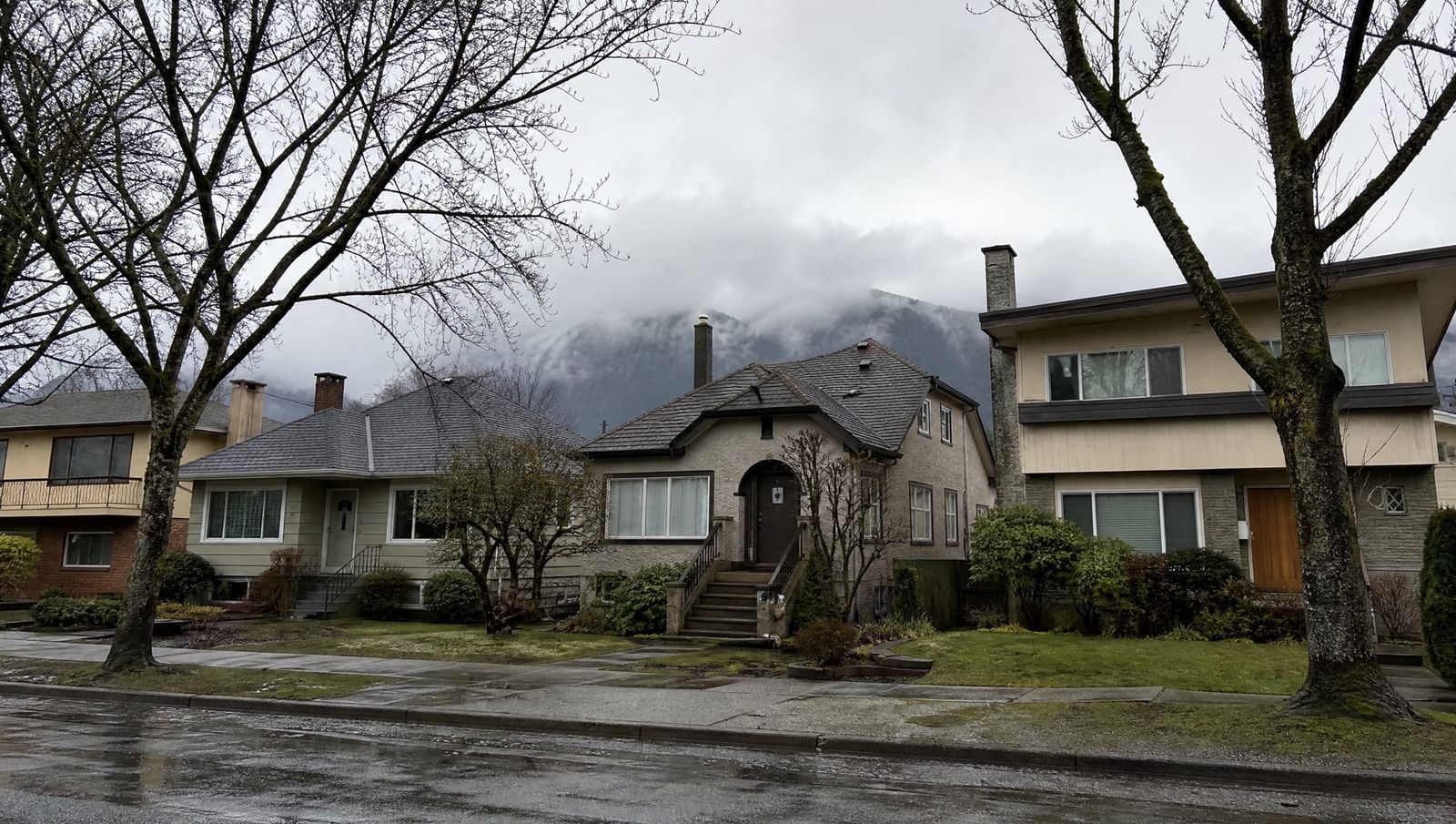
The Vancouver Special is a house type with its lower floor at or near ground level, so it has no conventional basement. If that floor has been finished as living space, water at the footing reaches a bedroom or a suite instead of a storage room, and a failing perimeter drain matters more.
On a narrow lot the house sits close to its neighbours, so a trench may have to route around a shared fence, a lane or a neighbouring foundation. Access can set the scope as much as the pipe does. Perimeter drain replacement follows the camera, because we diagnose before we excavate. New to the terms? Here is what a perimeter drain is.
Installing, changing or upgrading any part of a plumbing system in Vancouver needs a plumbing permit. Clearing a stoppage or repairing a leak does not. The City inspects permitted work before it finalizes the permit.
A new connection to City sewer and water needs a sewer and water connection permit. For a single detached house, with or without a laneway house and suite, or for a duplex, that is one combined application.
We arrange permits and inspections where required, and we confirm with the City which permit applies to your job. Trees have their own rule. Removing a private tree 20 cm or more across at 1.4 m above the ground needs a separate City permit.
We use the Environment and Climate Change Canada 1981–2010 normals from VANCOUVER INT'L A, the airport station in Richmond, 8.9 km from City Hall. It is a regional guide, not a reading for your street. Precipitation there totals 1,189 mm a year, counting snow as water. The wettest month is November (188.89 mm) and the driest is July (35.58 mm). October through March each top 100 mm, while June through September stay at 54 mm or under.
A failing drain shows itself when the ground is wet. If you have seen any of the signs above, book an inspection with Drainage Pro, or call or text (604) 210-3892.
On the ground
These are the parts of Vancouver our crew is in most often. If yours is not listed, it does not mean we do not go there — call with the address.
Drainage work in the City of Vancouver may need a permit before we dig and an inspection before the trench is closed. The municipal pages below set out what applies.
vancouver.ca
vancouver.ca
vancouver.ca
The conditions that decide how a Vancouver drainage job is scoped, with the source for each one.
What we do here
One crew and one contract, from the first camera inspection to the reinstated ground.
Diagnose the problem
Camera footage of the buried drains around a house you want to buy, a grading review and a written report to help you decide on subjects.
HD video of what is inside your drain and sewer lines, with faults located from the surface, so repairs start from evidence.
A stain on the wall is rarely where the water got in. We trace the route first, so the repair is aimed at the cause.
Condition-rated drainage reports for strata councils and property managers, with footage or a site observation behind every rating.
Fix the cause
Spot repair, one side or full renewal, scoped from camera footage of your drain tile and the age of the pipe around it.
Camera-located sewer lateral repair and replacement, from the house to the property line.
Drain cleaning for sewer lines and hydro jetting for perimeter drains, with the camera showing what is blocking the line and whether cleaning will hold.
Storm sumps and sewage ejectors load-tested, then serviced or replaced before they fail, with battery backup and alarms where they count.
Waterproof and restore
A membrane on the outside face of the foundation wall, protected by drainage board and put on while the trench is open.
A written assessment of where the water gets in, then crystalline waterproofing from inside where the outside of the wall cannot be reached.
Leaking cracks sealed by injection through the wall, once we know why they opened and whether they are still moving.
Settling, bowing or heaving foundations, assessed with an engineer and repaired to the engineer's design.
Prevent future failures
Common property drainage on a schedule council can budget for, scoped from measured condition and recorded year after year.
Your drain runs filmed every year and set beside last year's footage, so slow change shows up while it is still a finding, not a failure.
We empty the sump, check the outlet and record each basin, for houses and strata parking areas, ahead of the wet months.
Suction from the surface for full sumps, flooded pits and silted lines, with the material taken away rather than flushed downstream.
You maintain the sewer lines on your property, up to where they meet the City's connection. The City says private connections are typically separated when a property is redeveloped or majorly renovated. In a separated system, foundation drains and roof leaders connect to the storm sewer. We camera your line first so the scope on your side is based on what is there.
It may be. The City names roof and foundation drains that are improperly connected to a property's sanitary sewer line as a source of extra water in the sewer, and says it can lead to overflows into homes. A camera inspection shows where your drain line ends up. A sewer smell in the basement during heavy rain, or a floor drain that backs up when the street is running with water, are reasons to check.
Many Vancouver homes from the 1920s through the 1940s were built with a rock pit instead of a storm connection, and many were never tied into the storm lines that came later. A pit that has silted up stops taking water. Rather than guess, we put a camera in the line to see whether the pit still does anything.
The City requires a plumbing permit to install, change or upgrade any part of a plumbing system, and a sewer and water connection permit to connect to City sewers. A single detached house, with an optional laneway house and suite, or a duplex applies for one combined residential permit. The City inspects before the permit is finalized. We confirm with the City which permit applies to your job.
No. The City does not require a permit to clear stoppages in pipes or drains, or to repair leaks. Installing, changing or upgrading any part of a plumbing system does need one. If a slow drain keeps coming back, a camera inspection will show whether the cause is a blockage or a failing pipe.
Published Updated
Tell us the address and what you're seeing — a backup, a wet wall, a smell, a sinking lawn. We'll tell you what the next step is and what it costs, before anyone digs. Not sure yet? Ask us a question first.
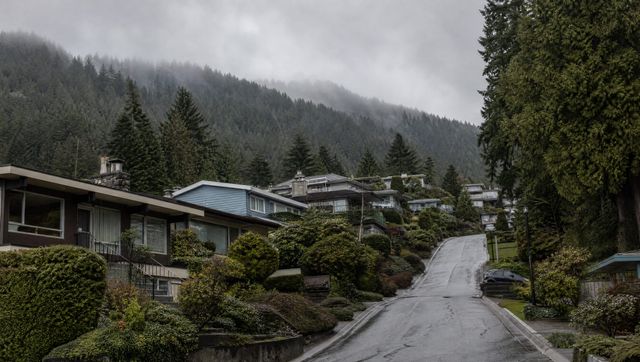
Camera-first drainage repair and leak diagnosis for the City and District of North Vancouver, where slope runoff meets older foundations.
Lynn Valley · Deep Cove · Upper Lonsdale · Lower Lonsdale · Edgemont
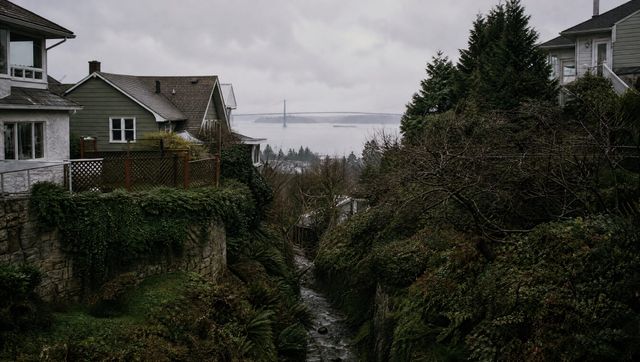
Camera-first perimeter drain repair on West Vancouver's rock lots, steep grades and creek setbacks. Based in North Vancouver.
Ambleside · Dundarave · British Properties · Caulfeild · Horseshoe Bay
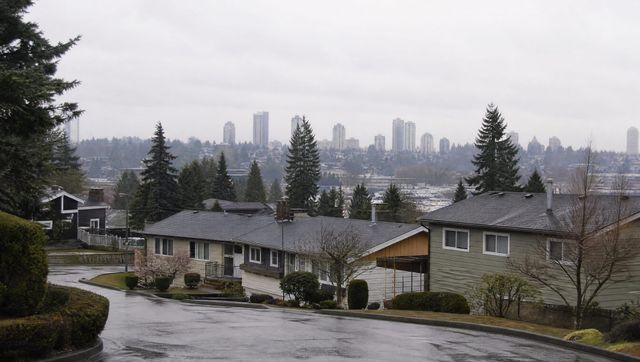
Perimeter drain repair, sump systems and drain cleaning for Burnaby homes, from the north ridges to the low ground along Still Creek and the Fraser.
Burnaby Heights · Capitol Hill · Brentwood · Burnaby Lake · Deer Lake
Talk to the crew
Mon–Fri 7:30am–5pm · Sat–Sun 8am–5pm
Water where it should not be? A person answers, not a call centre. Photos by text tell us the most.
Call (604) 210-3892 Fastest way to reach us Text us Send photos of the wet spot