

Inspect
Drain camera inspection
HD video of what is inside your drain and sewer lines, with faults located from the surface, so repairs start from evidence.
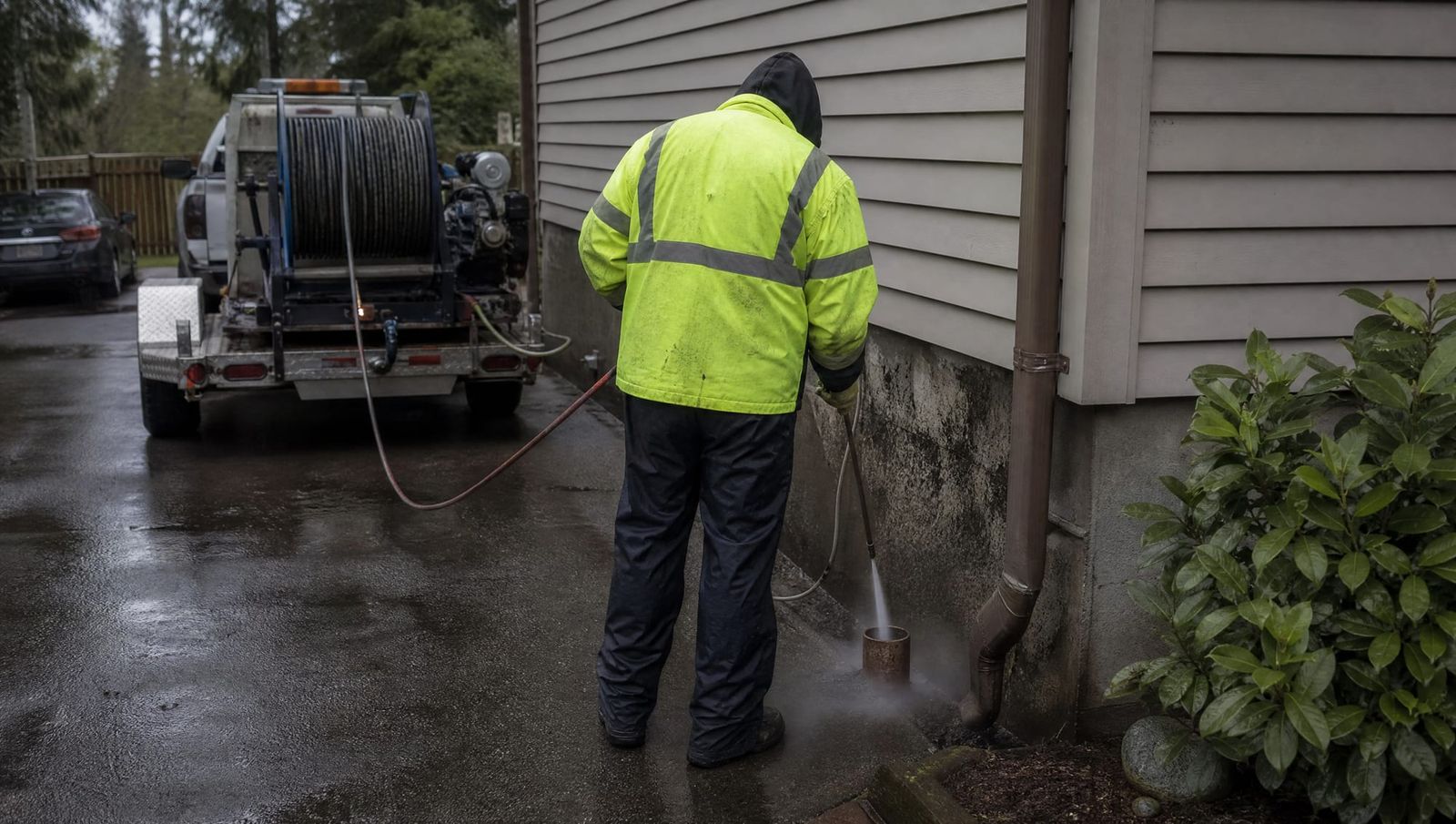
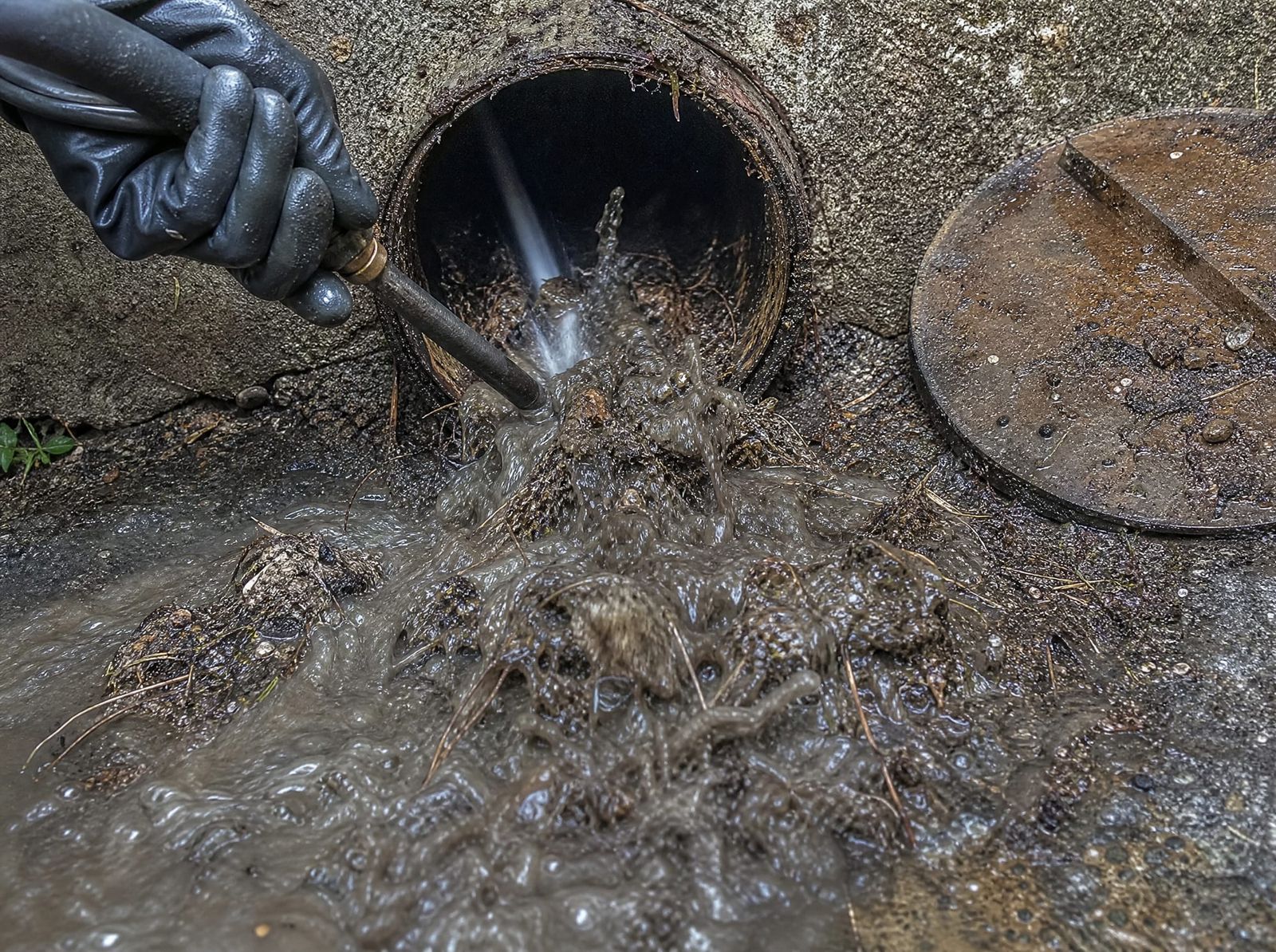
A sewer line gets drain cleaning: an auger for roots, paper or something that shouldn't be down there. A perimeter drain gets hydro jetting: high-pressure water that pushes out silt, leaves and sediment. The camera shows which your line needs, whether the pipe can take it, and when it's past cleaning and needs a repair. You get the footage and the answer, whether or not we do the work.
A single slow sink is the fixture. Two or more of these at once, or the same one coming back, is the line — and what's blocking it decides the fix.
Each clears differently, and one doesn't clear at all. The camera tells us which before anyone quotes.
Three honest outcomes. We tell you which one you're in and what it's warranted for.
| Outcome | When | Warranty |
|---|---|---|
| Clear it auger or jet |
Blockage in sound pipe | Service call. No term on cleaning — what's still in the pipe can block it again. |
| Sectional replacement | One failed joint, belly or break on a sound run | 5 years on perimeter drainage 2 years on sewer |
| Full replacement | Clay, cement tile or Big-O past cleaning, or multiple defects | Up to 10 years on perimeter drainage 2 years on sewer |
We don't line sewers or install trenchless systems. It isn't accurate and it doesn't hold on this pipe.
Scope and price in writing before work starts. You see the footage, you see the quote, you decide. If the honest answer is "clear it and check again in two years," that's the quote.
Covered by our Built Better Warranty.
See details of the Built Better WarrantyWe don't jet sewers — an auger is the right tool for what blocks them. Jetting is for perimeter drains: high-pressure water through a nozzle that scours the inside wall of the pipe and pushes silt, leaves and fine roots out of the run, where an auger only bores a hole through the middle. On sound pipe it's the best clean there is.
On old clay or brittle cement tile it's a risk — the pressure can do more harm than the silt. So the camera goes first, and if a flush won't fix what's wrong we tell you before we start, and show you on camera what will. See perimeter drain repair.
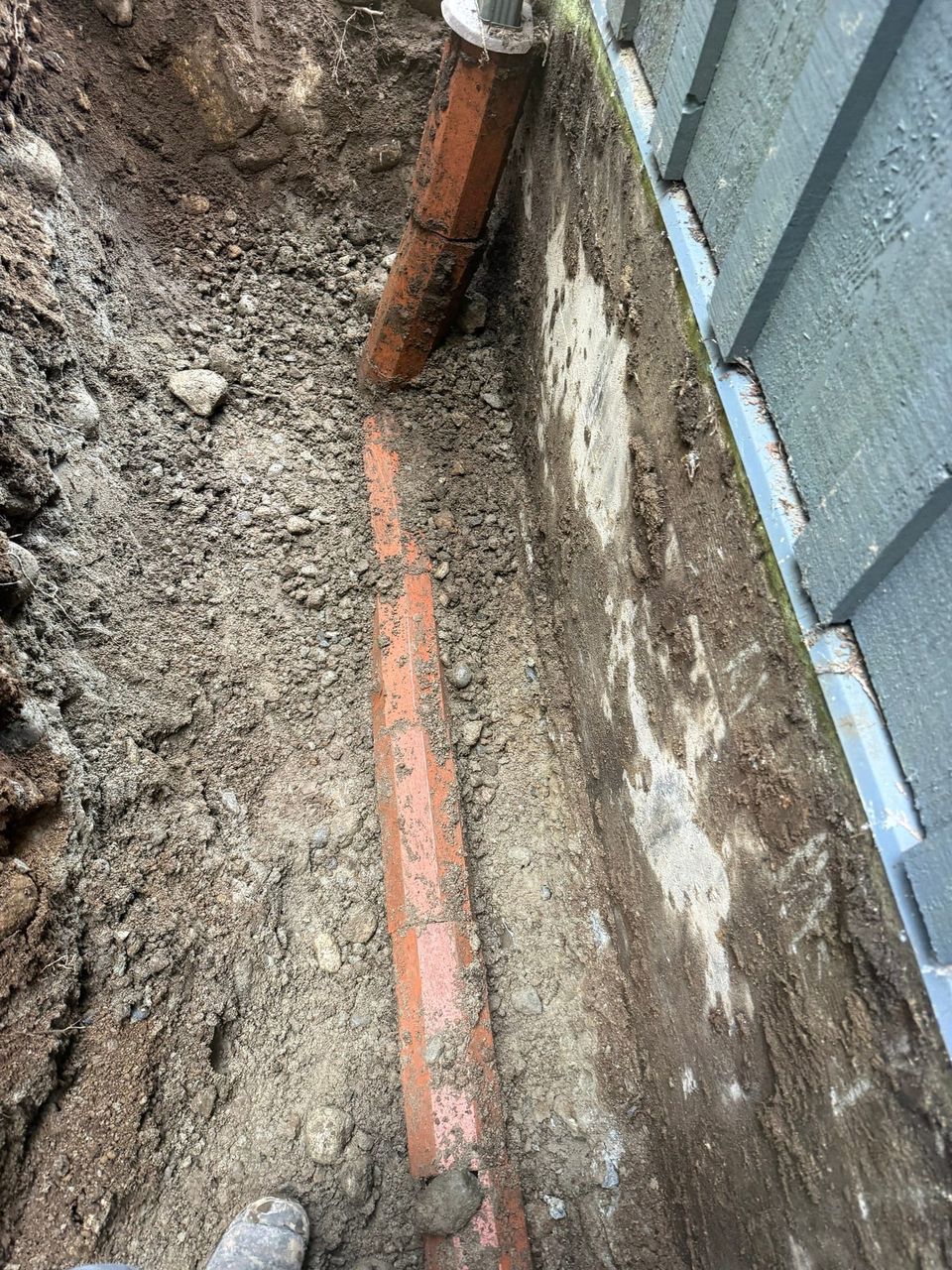
Most homes we serve were built with clay or cement tile, or soft corrugated Big-O. Clay and cement joints open and let roots in; Big-O deforms and holds silt in its ribs. Once shifted, both are past cleaning, and neither should be flushed at pressure. See our guide to clay, Big-O and PVC drain tile.
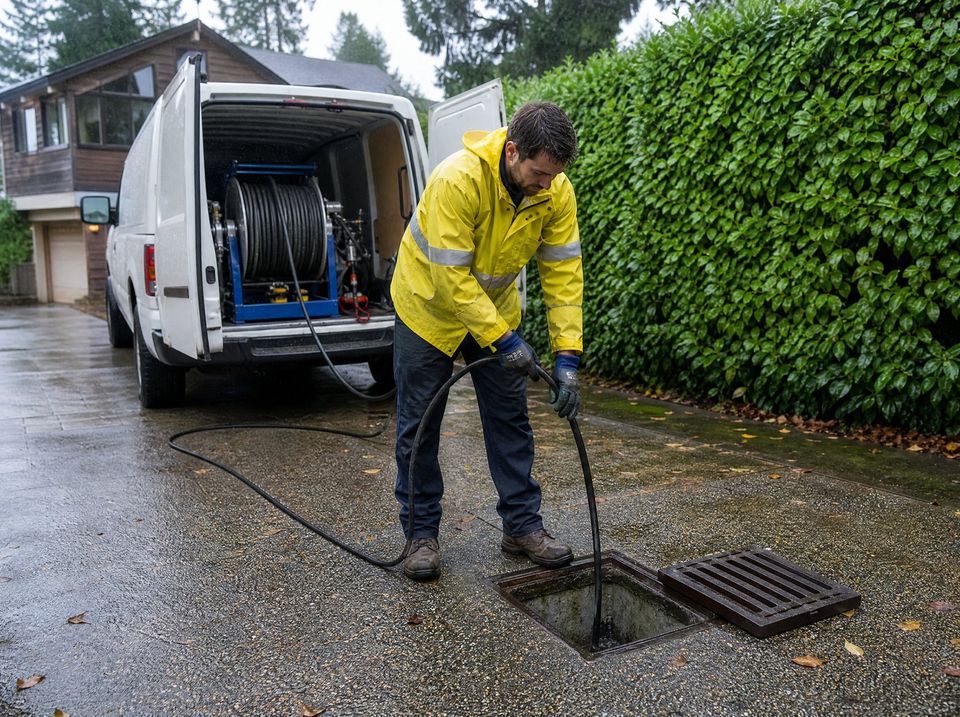
Sewer lines fail differently — roots at joints, a sag that holds water, or a partial collapse on aged pipe — and sewer line repair covers them.
October to April is when a partly blocked drain shows itself. Get it looked at before the rain, not during the claim.
Inspect
HD video of what is inside your drain and sewer lines, with faults located from the surface, so repairs start from evidence.
Repair
Camera-located sewer lateral repair and replacement, from the house to the property line.
Repair
Spot repair, one side or full renewal, scoped from camera footage of your drain tile and the age of the pipe around it.
Related reading
Guide ·
Perimeter drains usually fail quietly. Here are eight signs that show up inside the house first, what each one usually means, and what to do about it.
Came when he said and fixed the problem.
A snake, or auger, cuts a path through the blockage. Jetting scours the full inside wall of the pipe with high-pressure water. We use an auger on sewer lines, where roots, paper and things that shouldn't be there cause the blockage, and hydro jetting on perimeter drains, where silt, leaves and sediment build up along the run.
It can. On sound pipe, jetting is the best clean there is. On old clay or brittle cement tile the pressure can do more harm than the silt, so we don't jet it. That is why an older line gets a camera look before anyone decides how to clear it, not after.
Not always. A first blockage with no history can be cleared with an auger. We run the camera first on any recurring blockage, on older pipe, and before any jetting. It shows whether the pipe is blocked or broken, and what the pipe can take.
No. An auger cuts them and restores flow for a season or three, but roots come back through the same opening, because the gap that let them in is still there. Removing them for good means repairing that joint, and the camera shows when it's time to do that instead of another clean.
A blockage that returns to the same place is usually something the cleaning did not remove: roots coming through an open joint, a sagged length where solids settle, or build-up narrowing the pipe from every side. Each leaves a different mark on camera, and the camera run is how we find which one a line has.
On a perimeter drain, the silt, leaves and sediment that settle along the run, and the fine roots that grow in at joints and perforations. It does not repair a broken, offset or sagging pipe, and we don't jet old clay or brittle cement tile. The camera shows which of those a line has.
On the private side, it is usually the property owner's job. West Vancouver's Sewerage and Drainage Regulation Bylaw 5263 says the owner first arranges a plumber and notifies the municipality only where the blockage is in municipal works. Other municipalities set their own rules, so check the bylaw for your address.
A line with no history is cleaned when it shows a symptom, not on a calendar. Properties with mature trees or a history of root intrusion often benefit from planned cleaning, at an interval set from what the camera shows.
Reviewed
Tell us the address and what you're seeing — a backup, a wet wall, a smell, a sinking lawn. We'll tell you what the next step is and what it costs, before anyone digs. Not sure yet? Ask us a question first.
Talk to the crew
Mon–Fri 7:30am–5pm · Sat–Sun 8am–5pm
Water where it should not be? A person answers, not a call centre. Photos by text tell us the most.
Call (604) 210-3892 Fastest way to reach us Text us Send photos of the wet spot ★★★★★