

Repair
Perimeter drainage repair
Spot repair, one side or full renewal, scoped from camera footage of your drain tile and the age of the pipe around it.
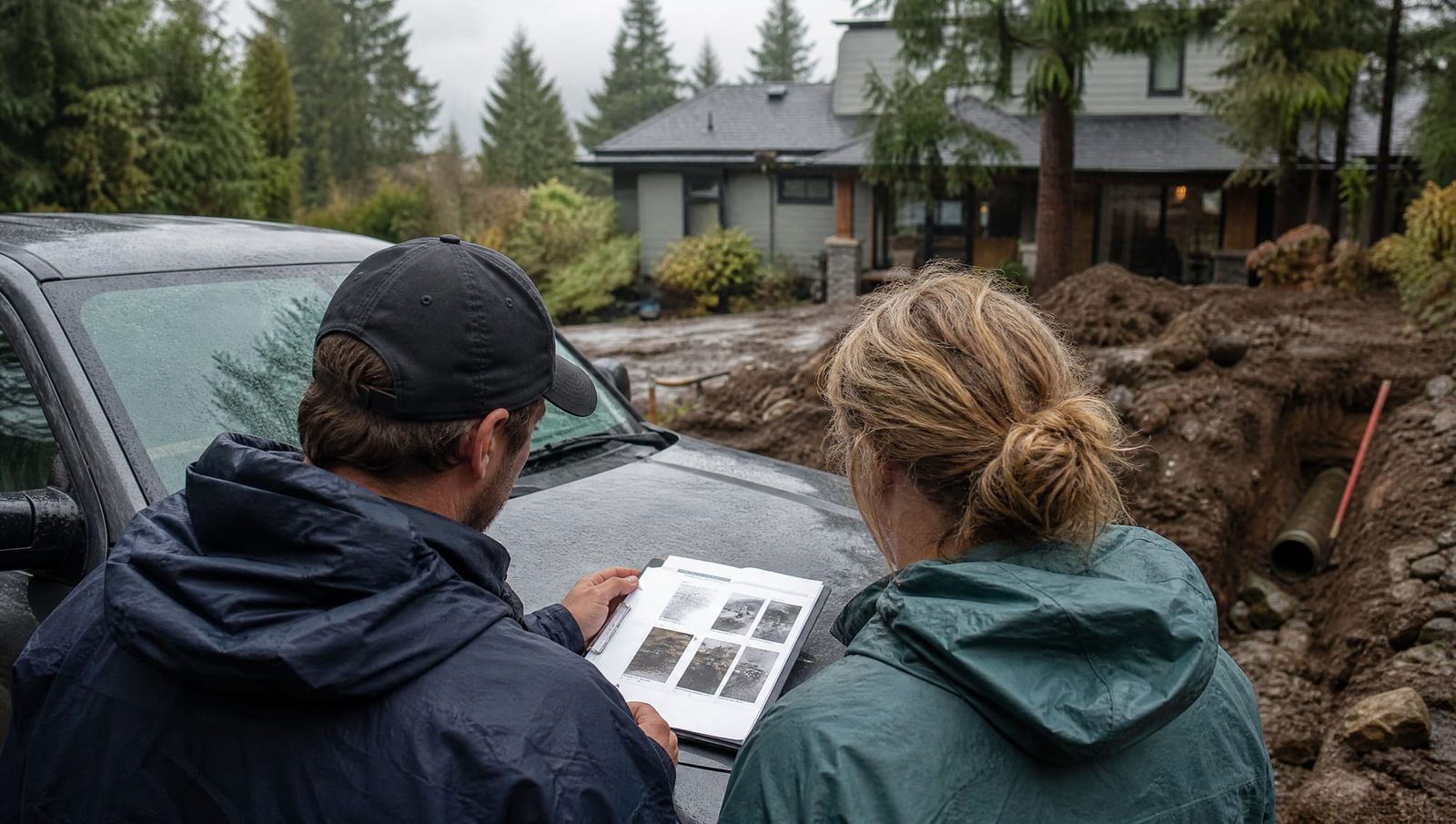
Perimeter drain replacement cost varies too widely between homes to quote a single number honestly. It depends on the home's footprint, excavation depth, soil conditions, access, existing landscaping, and how much of the system has failed. Here is what actually moves the price and how a contractor should build a quote.
By the Drainage Pro team Published Updated
If you are not sure your drains have failed, our guide to signs your perimeter drains are failing can help you confirm it, and what a perimeter drain is and how it works covers what the system actually is. This guide is about what moves the price once you're ready to get quotes.
Every quote is really an estimate of how much digging, hauling and rebuilding a specific lot requires, which is why two homes on the same street can land at very different numbers. These are the factors that move the price the most.
| Factor | Why it matters |
|---|---|
| Footprint and lineal feet | More perimeter means more excavation, more pipe, more drain rock and more backfill |
| Excavation depth | A full basement costs more to expose than a crawlspace, and extra depth adds shoring and safety requirements |
| Soil and rock | Clay, hardpan or bedrock take longer to dig than sandy soil and may need different equipment |
| Access and equipment size | A narrow side yard or laneway lot often means smaller equipment, more hand digging, and more hours |
| Landscaping and hardscape | Decks, patios, retaining walls, mature trees and irrigation add removal and reinstatement costs on top of the drain itself |
| Existing system condition | A partial failure costs less to address than a system that has collapsed along its full length |
| Waterproofing add-ons | A new membrane while the wall is already exposed adds cost now but usually avoids reopening the trench later |
| Sump pumps | A lot that can't drain by gravity needs a sump pump and often a battery backup |
| Permits | Requirements and fees vary by municipality and by the scope of work |
| Season | Work goes ahead year-round, but wet-season soil conditions and site protection can add time |
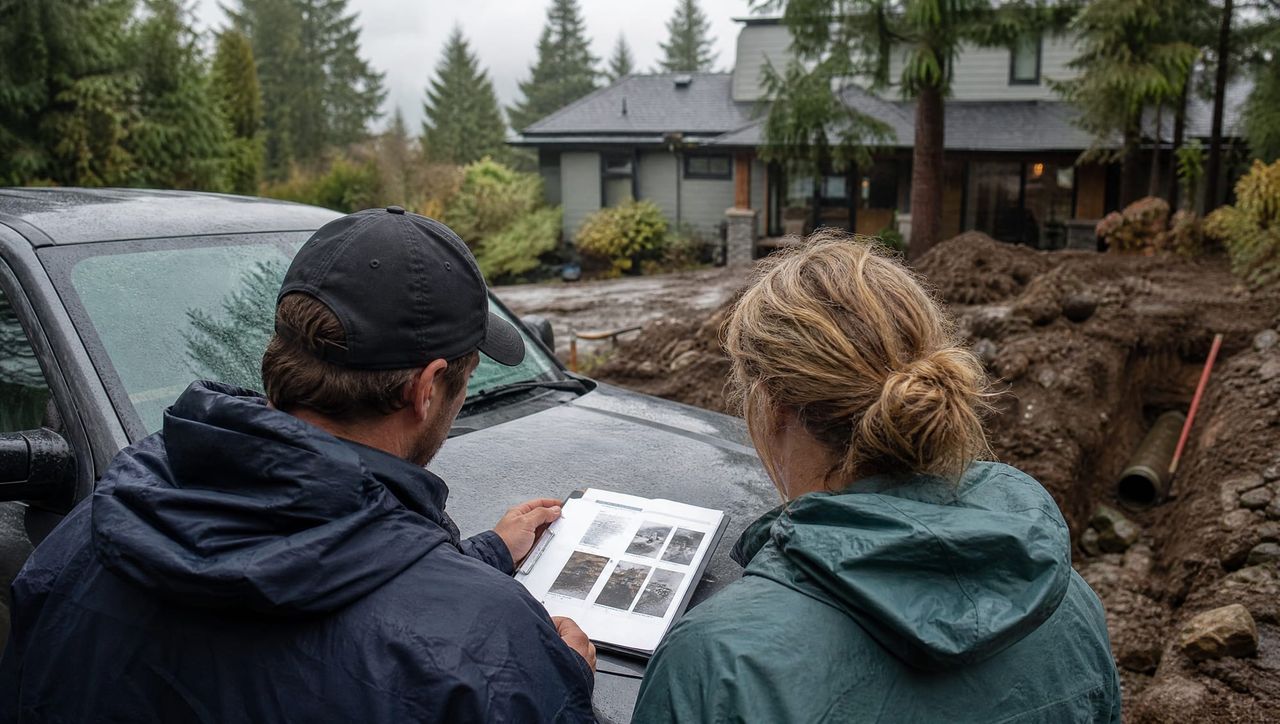
A number without a camera inspection first is a guess. Before we write a scope, we run a camera pipe inspection through the accessible line to see the pipe's actual material, condition and any collapsed sections, rather than pricing blind off the home's age. That inspection turns into a written scope covering what's being replaced, how deep, what gets restored, and exactly what the perimeter drainage work does and doesn't include. A written scope is also what lets you compare two quotes fairly, since "perimeter drain replacement" can describe very different amounts of work depending on what's inside it.
Not every failing system needs to come out entirely. If the camera shows an isolated collapse or a single bad section on an otherwise sound system, a localized repair can fix the actual problem for less than a full dig. The economics flip once a system has failed in multiple places, or the material itself, old clay or crushed or deformed Big-O, is simply at the end of its life. Paying to reopen the same trench two or three more times over a few years usually costs more in total than doing the full perimeter once. The camera inspection is what tells you which situation you're in, not the home's age alone.
Two items decide a lot of the difference between quotes for the same job, so check that both are included and priced. The first is a new waterproofing membrane on the exposed wall. The wall is open once, and a membrane left out of the scope means reopening the trench to add it later. The second is reinstatement: putting a deck, a paved path or a retaining wall back properly takes real labour and materials. If either one is missing from the scope, you will be paying for it separately, or living with a rougher finish, once the trench closes.
There's no single honest number, because cost depends on the home's footprint, excavation depth, soil conditions, access, existing landscaping, and how much of the system has actually failed.
A drainage quote can look expensive next to doing nothing, until it's compared with what a failed system actually costs once it fails outright. Water that keeps finding its way past the foundation doesn't stay contained. It saturates a finished basement's framing and drywall, it feeds the mould that follows, and sustained hydrostatic pressure against the wall contributes to the kind of cracking and movement that turns into a foundation repair project instead of a drainage one. The repair you can plan for is almost always cheaper than the one you can't.
Usually not, and that's worth knowing before assuming a claim will cover the gap. Standard home insurance in Canada is built around sudden, accidental events, and the Insurance Bureau of Canada notes that ongoing or repeated damage is considered a long-term maintenance issue and may not be covered. A perimeter drain that has let water in gradually for years falls on the maintenance side of that line, a different question from a sudden sewer backup. Sewer backup cover is usually an optional add-on. It's another reason to address a failing system early rather than wait for a claim that likely won't come.
A full perimeter drain replacement is a real expense for most households, and financing it isn't a bad option just because insurance usually won't help. A home equity line of credit is one way homeowners finance this kind of work, since a fixed-scope project with a known end date suits a HELOC's structure better than it suits a credit card. Some contractors also arrange financing through a third-party lender, which is worth asking about while you're comparing quotes, because interest rates and terms vary between lenders about as much as quotes vary between contractors. Financing the work doesn't change what should happen first: a camera inspection and a written scope, so the number you're financing reflects your actual property instead of a rough guess.
If you're buying rather than fixing, a pre-purchase drainage inspection turns an unknown into a written scope before you own the problem. If the camera finds a failing system, you can weigh the cost of the work against the price of the house before subjects come off. If it finds a sound one, you remove subjects knowing what is underground.
Every published price range for perimeter drain replacement is really describing a different mix of the factors above, which is why the numbers you'll find vary so widely from one source to the next and rarely transfer between homes. Publishing a figure that fits some homes and badly misleads others isn't useful to you. What is useful is a camera inspection that measures the actual scope of your specific property, which is what turns into a written quote you can hold a contractor to.
A written scope protects you regardless of who does the work. Before you sign anything, ask what the camera inspection actually showed and whether you can see the footage, whether the job is a full replacement or a partial repair and why, whether landscaping and hardscape reinstatement is included or billed separately, whether a waterproofing membrane is included and what it covers, and who pulls the permit and whether that fee is already in the quote. Also ask for the workmanship warranty in writing, including what it excludes. At Drainage Pro it is 10 years on full replacements, 5 years on sectional replacements and 2 years on spot repairs, provided in writing. The exact terms are in your contract. Whoever you hire, get their equivalent in writing before the trench opens. We work on homes across Vancouver and the North Shore. If you'd rather start with a camera than a guess, book an inspection and get a scope built around your actual property.
Tell us the address and what you're seeing — a backup, a wet wall, a smell, a sinking lawn. We'll tell you what the next step is and what it costs, before anyone digs. Not sure yet? Ask us a question first.
Filed under: costs, perimeter drains
There's no single honest number, because cost depends on the home's footprint, excavation depth, soil conditions, access, existing landscaping, and how much of the system has actually failed. A camera inspection and a written scope are what turn those variables into a real quote for a specific property.
Often it is access, and what has to come out and go back: a tight side yard, a deck, a patio or a mature garden adds work at both ends of the job. Footprint, excavation depth, soil and how much of the system has failed all move the price too, and the camera inspection and a site visit show which one drives it on a particular house.
A localized repair costs less upfront than a full replacement, but only makes sense if the failure is isolated. A system that has failed in multiple places, or that's original clay or aging Big-O throughout, usually costs less over time to replace once than to keep repairing the same aging system section by section.
It adds cost to that project, but usually less than doing it as a separate job later, since the wall is already exposed once the trench is open for drainage work. Leaving it out can mean reopening the trench for a second project later.
Usually not. Standard home insurance in Canada is built around sudden, accidental events, and gradual damage from a slowly failing drain is generally treated as a maintenance issue rather than an insurable one. It's a reason to address a failing system early rather than count on a claim to cover it later.
Repair
Spot repair, one side or full renewal, scoped from camera footage of your drain tile and the age of the pipe around it.
Inspect
Camera footage of the buried drains around a house you want to buy, a grading review and a written report to help you decide on subjects.
Protect
A membrane on the outside face of the foundation wall, protected by drainage board and put on while the trench is open.
More guides from the crew that does the digging
Browse all drainage guidesTalk to the crew
Mon–Fri 7:30am–5pm · Sat–Sun 8am–5pm
Water where it should not be? A person answers, not a call centre. Photos by text tell us the most.
Call (604) 210-3892 Fastest way to reach us Text us Send photos of the wet spot