

Repair
Perimeter drainage repair
Spot repair, one side or full renewal, scoped from camera footage of your drain tile and the age of the pipe around it.
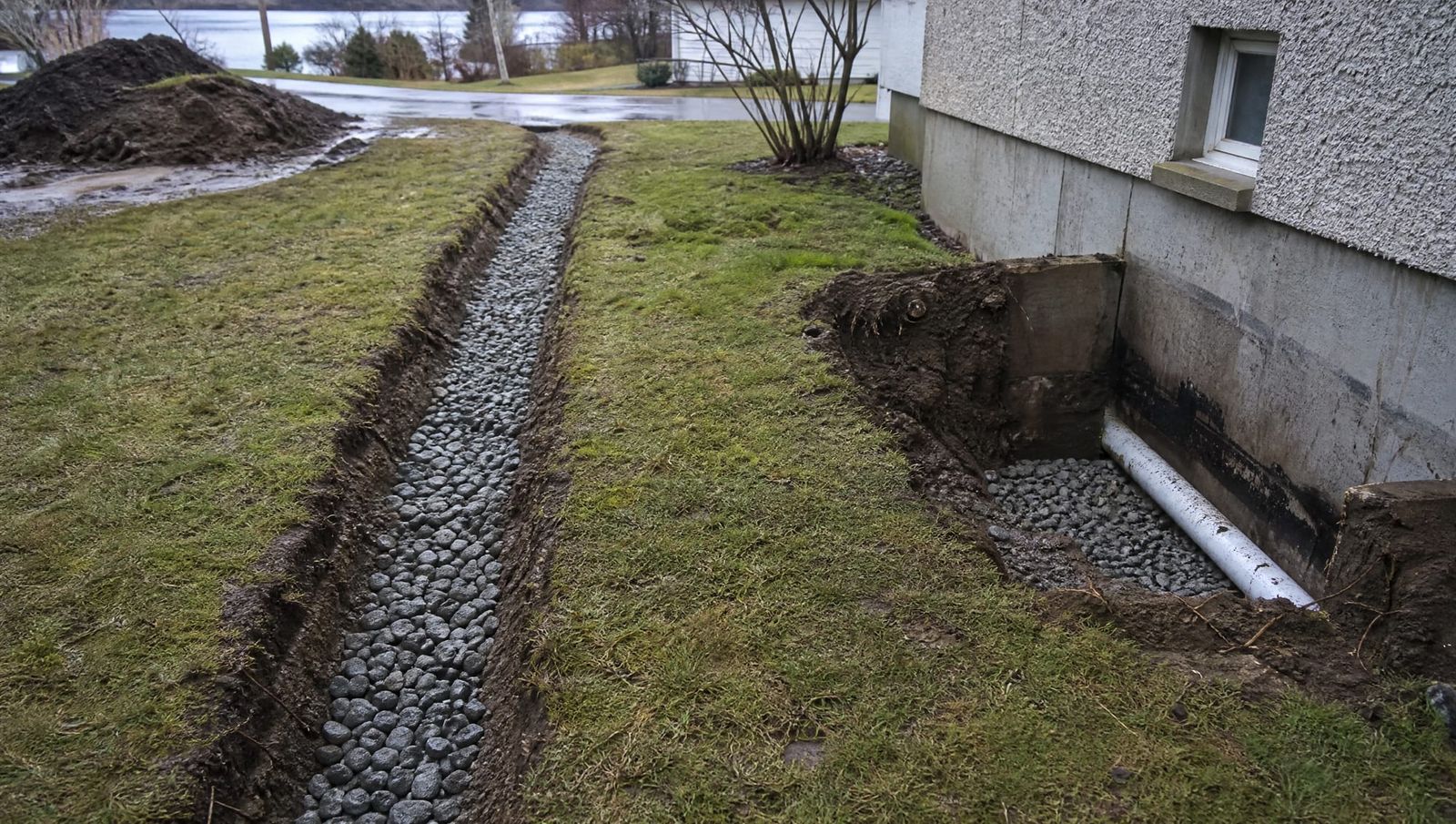
Weeping tile and perimeter drain are the same foundation drainage system under different names. A French drain is a different, shallower system that manages surface or subsurface water in a trench, usually away from the house rather than around the footing. Knowing which one you actually have changes how you fix it.
By the Drainage Pro team Published Updated
Perimeter drain, drain tile and weeping tile are names for the same pipe at the footing: a buried, perforated pipe around the foundation. The BC Building Code calls it drain tile or pipe. Either name points at the same pipe, doing the same job.
A French drain is a different system. It is a gravel-filled trench with a perforated pipe at the bottom, built to intercept surface water or shallow groundwater somewhere in a yard or slope, and it is not necessarily connected to your foundation at all.
The confusion is understandable, since all three terms describe buried, perforated pipe surrounded by gravel, and listings, contractors and inspection reports use them inconsistently. What matters for your house is not the name but which system you actually have and what it is meant to protect.
A perimeter drain, or weeping tile, is a perforated pipe laid in gravel around the outside of the foundation footing, at or below basement floor level. For the full mechanics, see what a perimeter drain is and how it works. Groundwater in the surrounding soil enters the pipe through its perforations and flows by gravity, or by sump pump where gravity is not practical, to a storm connection, ditch or dry well.
A French drain works on the same basic principle of gravel and perforated pipe, but it is built at whatever depth and location intercepts the water it is targeting, often much shallower than a footing. Surface water and near-surface groundwater move into the trench from above and the sides, not just along the pipe's length, and the trench carries it to a lower point where it can daylight or tie into a storm system.
The BC Building Code's drainage section refers to the foundation pipe as drain tile or pipe, not weeping tile, which is why the two names can feel like a technical-versus-casual split even though they describe the same hardware.
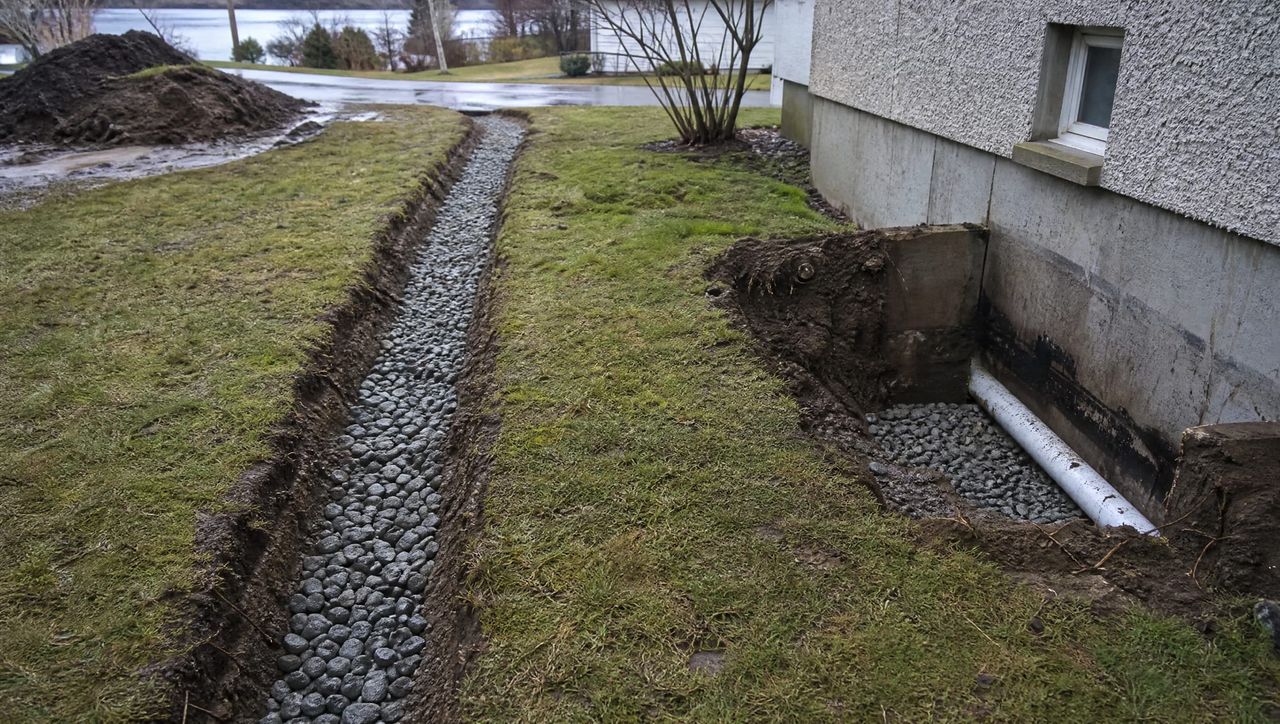
Perimeter drains run continuously around the entire foundation, following the footing line on the exterior side of the wall, or in some older interior retrofits, along the inside of the footing under the basement slab.
French drains go wherever surface water collects or moves: along the base of a retaining wall, across a sloped backyard, beside a driveway, or around a window well. A property can have a French drain and no drainage problem at the foundation at all, or a foundation problem with no French drain in sight.
Because the two systems solve different problems, a home can reasonably have both: a perimeter drain protecting the foundation and a separate French drain managing a wet corner of the yard.
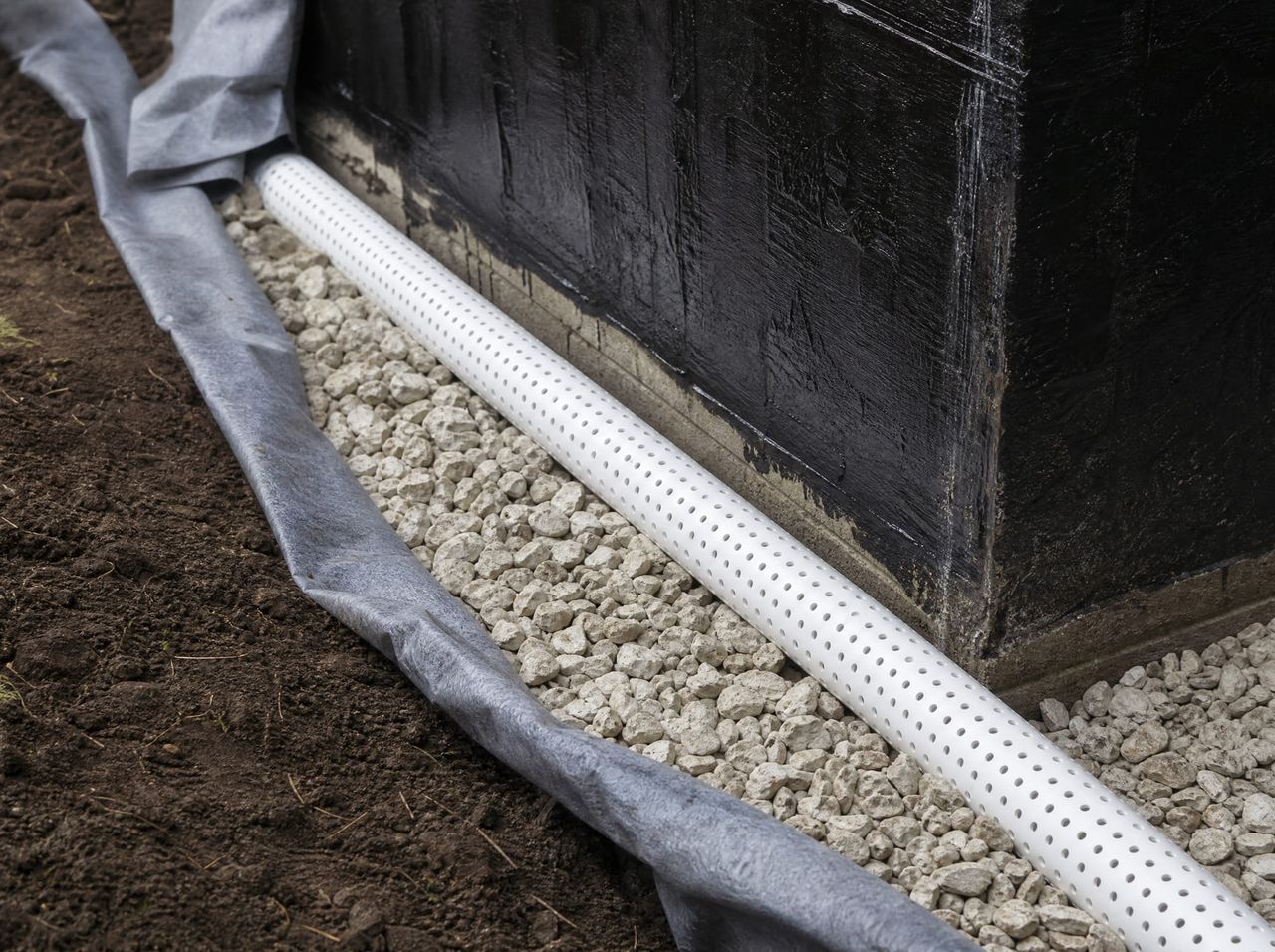
A perimeter drain's job is to relieve hydrostatic pressure, the force groundwater puts on a foundation wall when it has nowhere else to go. Left unmanaged, that pressure pushes moisture through cracks, cold joints and porous concrete into the basement.
A French drain's job is to move water that is on or near the surface before it pools, saturates the ground, or runs toward a structure. It protects landscaping, hardscaping and retaining walls, and indirectly a foundation if the surface water it intercepts would otherwise have soaked into the soil beside the house.
Neither system waterproofs a wall by itself. Waterproofing is the membrane or coating on the wall itself; drainage of any kind is what keeps water from reaching that wall under pressure in the first place.
A French drain does not replace a failed perimeter drain. If your existing foundation drainage has collapsed, filled with sediment or rotted out, redirecting surface water somewhere else in the yard does nothing for the pipe that is supposed to relieve pressure at the footing. That requires repairing or replacing the perimeter drainage itself, whether through drain tile repair or a full replacement, not a trench somewhere else.
The other common mix-up is interior versus exterior weeping tile. An exterior system sits outside the foundation wall at the original footing, and is the system most homes are built with. An interior system is a retrofit: a channel cut along the inside edge of the basement slab, draining to a sump pump, installed when excavating outside is not practical. Both get called weeping tile in casual conversation, but they sit on opposite sides of the same wall.
If you are not sure which system a previous owner installed, a basement leak detection assessment identifies what is actually there before any repair is planned.
Weeping tile is a perforated pipe laid in gravel around a foundation footing to collect groundwater and carry it away before it pressures the foundation wall.
Start with what the water is actually doing. Water pooling on the surface, running off a slope, or collecting beside a driveway after rain is a surface-water problem, and a French drain or improved grading is usually the right tool.
A musty basement smell, damp foundation walls, efflorescence, or a sump pump that runs constantly during storms points to groundwater and hydrostatic pressure at the foundation, which is a perimeter drain problem rather than a surface one. If any of that sounds familiar, our guide to signs your perimeter drains are failing covers what else to watch for.
Homes on sloped lots in Burnaby and across the North Shore often have both kinds of water to manage: surface runoff moving downhill toward the house, and groundwater pressing against the foundation from the saturated soil around it. Treating only one does not fix the other.
Symptoms alone do not tell you which system is failing, or whether one exists at all. Some older homes never had a French drain installed even where the yard clearly needs one, and some past additions turn out to be a garden-bed drain with no connection to the foundation system whatsoever.
A camera pipe inspection run through the accessible drain lines shows the pipe material, condition and where it actually runs, which settles the question directly instead of guessing from symptoms at the surface. Drainage Pro runs a camera before recommending any repair, for exactly this reason.
If you want a second opinion on a quote that recommends French drain work for what sounds like a foundation drainage problem, or the reverse, book an inspection and we will tell you what is actually down there before anyone starts digging.
| Detail | Weeping tile / perimeter drain | French drain |
|---|---|---|
| What it is | Perforated pipe in gravel around the foundation footing | Perforated pipe in a gravel-filled trench, positioned to intercept water anywhere on a property |
| Depth and location | At or below the basement floor, following the whole foundation | Wherever surface or shallow water needs to be captured, often shallower |
| What it protects | The foundation wall, against hydrostatic pressure and groundwater | Yards, slopes, retaining walls and hardscaping, and sometimes the foundation indirectly |
| When it fails | Cracked, collapsed, root-filled or sediment-choked pipe under the house | Clogged gravel or pipe, or a trench never sized for the water it needs to move |
| Relative repair cost | Higher, since it usually requires excavation at the foundation | Lower, since it is typically a shorter, shallower trench away from the house |
Cost here is relative, not absolute. A perimeter drain repair almost always costs more than a French drain because it means excavating along the foundation, sometimes on more than one side of the house, while a French drain is typically a shorter trench somewhere in the yard. For what drives the cost, see our guide to perimeter drain replacement cost in Vancouver. Either way, get a written, itemized quote and confirm on camera which system it actually addresses before you approve the work.
Tell us the address and what you're seeing — a backup, a wet wall, a smell, a sinking lawn. We'll tell you what the next step is and what it costs, before anyone digs. Not sure yet? Ask us a question first.
Filed under: terminology, perimeter drains
Weeping tile is a perforated pipe laid in gravel around a foundation footing to collect groundwater and carry it away before it pressures the foundation wall. Perimeter drain, drain tile and weeping tile are names for the same pipe at the footing.
Interior weeping tile is a retrofit: a channel cut along the inside edge of the basement slab that drains to a sump pump, installed when excavating outside is not practical. Exterior weeping tile sits outside the foundation wall at the original footing, which is how most homes are built. Both get called weeping tile, but they sit on opposite sides of the same wall.
A French drain is a gravel-filled trench with a perforated pipe at the bottom, built to intercept surface water or shallow groundwater wherever it collects on a property. It can sit anywhere water is a problem, such as a sloped yard or the base of a retaining wall, and is not necessarily connected to the foundation.
A perimeter drain runs continuously around a foundation footing to relieve hydrostatic pressure against the wall. A French drain is positioned wherever a specific surface or shallow-water problem exists, which may be nowhere near the house. They solve different problems and one cannot substitute for the other.
No. If water is entering through the foundation because the perimeter drain has collapsed, filled with sediment or rotted out, redirecting surface water somewhere else in the yard does not relieve the pressure at the footing. That requires repairing or replacing the perimeter drain itself.
Repair
Spot repair, one side or full renewal, scoped from camera footage of your drain tile and the age of the pipe around it.
Inspect
A stain on the wall is rarely where the water got in. We trace the route first, so the repair is aimed at the cause.
More guides from the crew that does the digging
Browse all drainage guidesTalk to the crew
Mon–Fri 7:30am–5pm · Sat–Sun 8am–5pm
Water where it should not be? A person answers, not a call centre. Photos by text tell us the most.
Call (604) 210-3892 Fastest way to reach us Text us Send photos of the wet spot